




Africalix Exclusive Interview
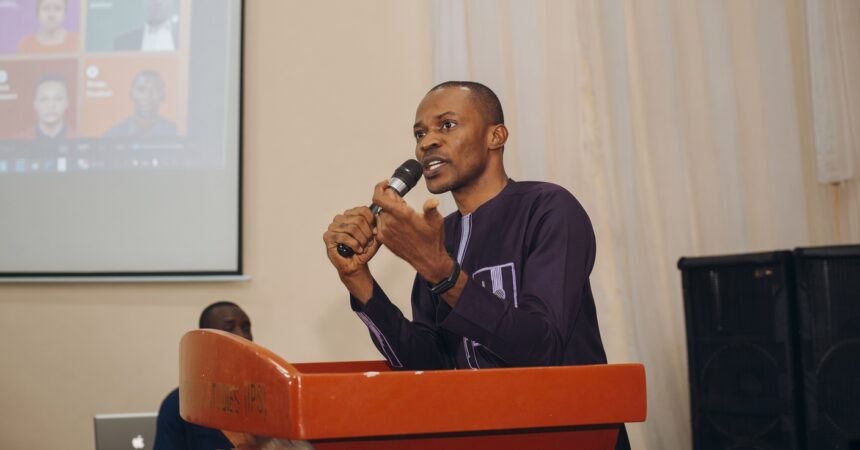
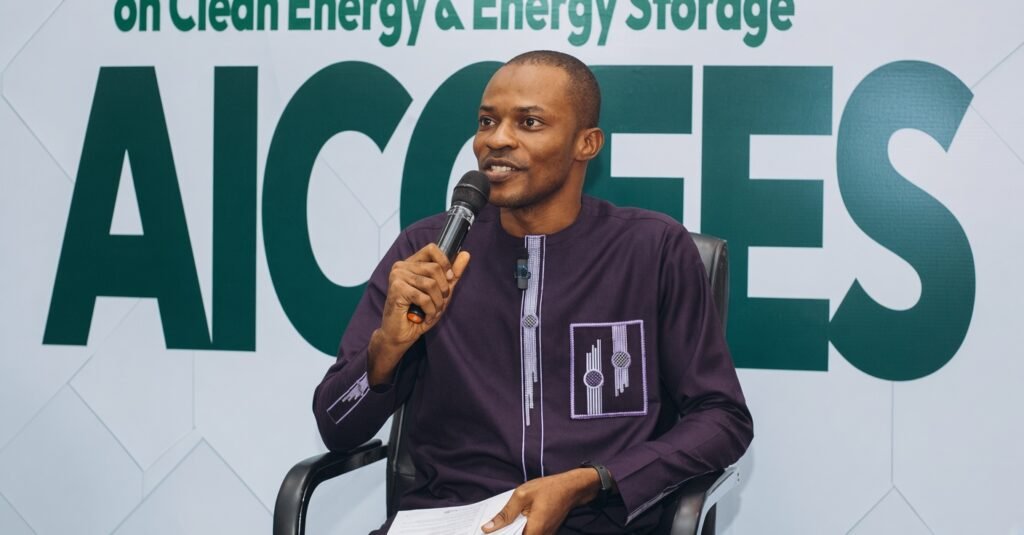
Engr. Anthony Akpasoh, Co-founder of Tovero Energy Ltd and Convener of the Africa International Conference on Clean Energy and Energy Storage (AICCEES).
Africa’s clean energy transition is often narrated through megaprojects, financing gaps, and multilateral pledges. Engr. Anthony Akpasoh insists the more consequential story sits elsewhere: in a graduate seminar room in Port Harcourt, in a Kenyan innovator’s geothermal cookstove, in the small act of translating an appliance label into a local language.
As Co-founder of Tovero Energy Ltd and Convener of the Africa International Conference on Clean Energy and Energy Storage (AICCEES), Akpasoh has spent four editions of the conference working to close the gap between what African researchers discover and what African industry actually builds.
Ahead of the fourth edition of AICCEES, taking place on September 24 and 25, 2026, at the Institute of Petroleum and Energy Studies, University of Port Harcourt, Rivers State, Nigeria, he spoke with Africalix about the classroom realization that started it all, the innovators the conference has helped launch, and why he believes Africa’s energy future has to be authored by Africans.
A Master’s Seminar and a Continental Blind Spot
AICCEES traces its roots to Akpasoh’s own graduate studies in Energy Access and Renewable Energy Technology at the University of Port Harcourt. It was there, he says, that the scale of the continent’s clean energy gap first became concrete for him.
“The lectures from the course exposed me to the stark realities of the needs in the clean energy ecosystem in Africa,” Akpasoh recalls.
“One of the striking realities is the role energy storage plays in the clean energy transition.
Despite the abundance of raw materials for battery production in Africa, there is very little activity around battery production.”
A second, related realization compounded the first: research and industry practice on the continent rarely spoke to each other. Those two observations, Akpasoh says, gave rise to the idea for AICCEES.
Since its first edition in 2023, the conference has grown steadily, attracting roughly 3,000 cumulative participants across five continents, along with 68 paper presentations and 14 keynote speakers.
The fourth edition will introduce a clean energy innovation challenge, in which finalists pitch their ideas directly to industry experts.
From a Conference Stage to a Company Called Geotto
Akpasoh is careful to describe AICCEES not as a showcase but as infrastructure, a place where a presentation can become a funded venture.
He points to the conference’s second edition in 2024, when a sponsored participant from Kenya, Dominic Kata, presented research on using geothermal energy for cooking and was named best presenter.
“After presenting his research findings at the conference, he gained visibility to a wider audience and leveraged networks formed during the conference to gain access to funding to scale his idea,” Akpasoh says.
Kata’s innovation, now named Geotto, returned to the conference’s third edition so its founder could share his progress with a new cohort of researchers.
That trajectory, presentation, visibility, funding, and return are, in Akpasoh’s telling, the model AICCEES exists to replicate. The conference’s research paper sponsorship and travel support program was built for exactly this purpose.
Many researchers, he notes, have told organizers they could not otherwise have covered the cost of publishing their findings, and the accompanying travel support puts them in the same room as the industry leaders who can act on that research.
How a Talk Series Became an eCooking Movement
AICCEES did not emerge in isolation. It is organized by Tovero Energy Ltd. Akpasoh is Co-founder of Tovero Energy Ltd and Convener of AICCEES. The company works across sustainable-energy activities, including mini-grids, clean cooking, advocacy, and training.
He traces a direct line from one of the company’s own knowledge-sharing events to a strand of work that now defines its regional footprint.
“When we were organizing the Tovero Sustainable Energy Talk (TSET), it was the first time we heard about electric cooking in the context of clean cooking technology,” Akpasoh says.
“It ignited our interest, and we started some research around it. Before then, there was not so much research around electric cooking in Nigeria.”
Tovero Energy Ltd has since promoted eCooking across Nigeria and other West African countries, alongside work in energy advisory, energy audits, mini-grid development, clean-cooking advocacy, e-waste disposal, and recycling.
Convening AICCEES, he says, feeds directly back into this work by generating the kind of networking that produces meaningful industry partnerships, a benefit that flows both to Tovero Energy as a company and to AICCEES as a platform.
Conferences as Instruments of Change, Not Just Showcases
Asked what he has learned about conferences as tools for driving change rather than simply presenting ideas, Akpasoh points to the shift in perception that occurs when a researcher presents to a room capable of acting on their work.
“Exposition from a researcher about an idea can lead to a positive shift in perception about an idea, and there is nowhere that converges more than at a conference,” he says. He cites a participant who went on to establish a community-based NGO promoting clean cooking at the community level to drive behavioral change.
“Practical industry insights and the latest findings in the industry can be showcased to industry players, which leads to increased knowledge sharing across the industry.”
The Overlooked Story: Africans Already Hold the Solution
Pressed on the human stories that get lost when Africa’s energy transition is told through megaprojects and financing gaps, Akpasoh returns to a theme that runs through the entire conversation: local agency, not imported solutions, is what actually changes behavior.
“The most overlooked story is that Africans hold the solution to the clean energy transition in Africa,” he says. “You can go around and distribute clean cooking appliances to households, but that will not guarantee usage.
A small thing, such as changing the labels on clean cooking appliances to the local language, is what will promote usage, because people can relate to the writings on the appliances.
Africa needs to lead its own energy transition in the African way by making our own clean energy transition technologies.”
AICCEES, he says, is built to bring these stories to the center of the conversation, spotlighting innovations, letting researchers present directly to industry players, and letting that research inform industry practice rather than sit apart from it.
The Question Akpasoh Wants Participants to Carry Home
With AICCEES 2026 arriving as Africa balances rising energy demand, mounting climate risk, and a young population, Akpasoh was asked what single question he hopes participants leave Port Harcourt still wrestling with.
“The biggest question is, what is in it for us Africans? Do we have the human capital we need to transition? How will the transition look?” he says.
“The questions matter because if the solutions do not come from Africans for Africa, how sustainable will it be? We need solutions for Africa, made by Africans.”
Bootstrapping Belief: The Hardest Part of Building AICCEES
Assembling universities, start-ups, utilities, multilateral banks, and regional bodies around one table is difficult in any environment. Akpasoh says the harder challenge has been convincing African stakeholders, particularly in Nigeria, that a platform like AICCEES deserves their attention in the first place.
“Africans are used to running after things done by other people rather than doing our own things. It is hard to see people who bootstrap ideas like AICCEES,” he says. “We have bootstrapped the conference by ourselves, by the grace of God.”
Funding received in the second and third editions was restricted to travel sponsorships, conference publication fees, and, in one case, an electric cooking demonstration, support for specific activities rather than the conference itself.
What has surprised him most, he says, is the assumption that a platform of this kind could not exist without multilateral funding.
“What has surprised us the most is that people think that we cannot do this without multilateral funding,” Akpasoh says. “The need is clear: we need a platform where research and industry should be brought together, spotlighted, and cross-share knowledge to enhance innovation, and this is what AICCEES provides.”
Ten Years Out: Africa Controlling Its Own Story
Asked to imagine AICCEES a decade from now, Akpasoh resists narrowing it to a single marker of success, a policy shift, a flagship project, a continental network. He wants all of it, anchored by a shift in who gets to author the narrative.
“It is a combination of all,” he says. “One of them is that Africa controls the story and controls the clean energy transition in Africa.
We would love to see more collaboration, where policy and industry practice feed on the outcomes of research, and where research, rather than emotions and opinions, drives industry practice.
We would love to see Africa take greater ownership of the clean energy transition and provide solutions that are homegrown and customized to our own challenges. We will love to see manufacturing plants set up in Africa to produce the technologies for the energy transition.”
AICCEES 2026, organized by Tovero Energy Ltd, will take place in person and virtually on September 24 and 25, 2026, at the Institute of Petroleum and Energy Studies, University of Port Harcourt, Rivers State, Nigeria.
• • •
Engr. Anthony Akpasoh is Co-founder of Tovero Energy Ltd and Convener of the Africa International Conference on Clean Energy and Energy Storage (AICCEES). Tovero Energy Ltd is the organizer of AICCEES and works across energy advisory, energy audits, mini-grid development, clean-cooking advocacy, e-waste disposal, and recycling.
Since its founding in 2023, AICCEES has featured 68 paper presentations and 14 keynote speakers and drawn roughly 3,000 cumulative participants across five continents.
The fourth edition of AICCEES, featuring a Clean Energy Innovation Challenge, takes place on September 24 and 25, 2026, at the Institute of Petroleum and Energy Studies, University of Port Harcourt, Rivers State, Nigeria.
AICCEES 2026 Information
- Conference dates: September 24 and 25, 2026
- Conference registration: https://www.aiccees.com/registrations#registration-form
- Physical and virtual exhibition registration: https://www.aiccees.com/exhibitions
- Email inquiries: aiccees@uniport.edu.ng
- Telephone inquiries: +234 (0) 803 764 1860