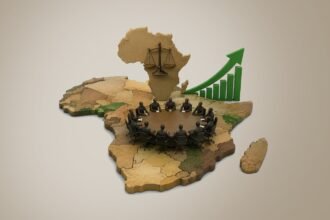





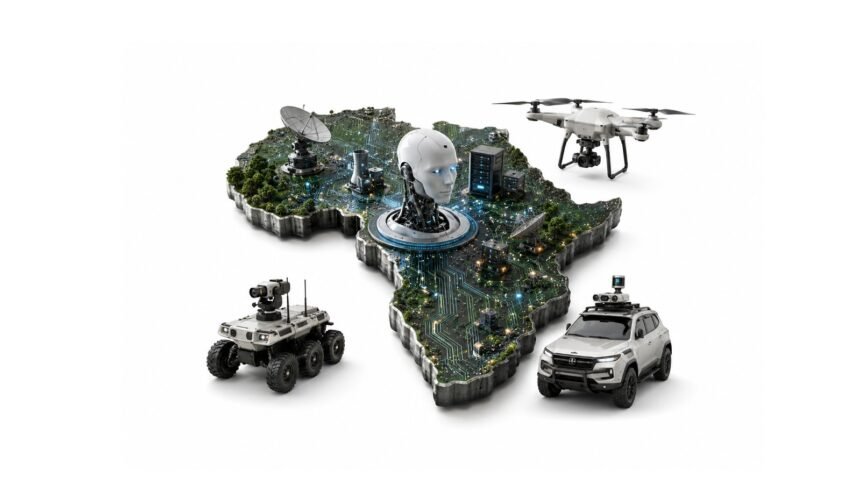
African countries must accelerate efforts to develop homegrown artificial intelligence (AI) capabilities as autonomous technologies become increasingly accessible to non-state actors and reshape the continent’s security environment, Rwanda’s Foreign Affairs Minister Olivier Nduhungirehe has said.
Nduhungirehe made the call on Wednesday, August 12, as the International Security Conference on Africa (ISCA) High-Level Discussion opened in Kigali, bringing together security leaders, policymakers, researchers, technology experts and development partners to examine the growing role of AI and autonomous systems in defense and security.
The discussions come as technologies capable of operating with limited human intervention move from being largely experimental to becoming part of contemporary security and military operations.
“Autonomous systems and artificial intelligence are increasingly accessible, including to non-state actors. This means that our defense and security institutions must continuously adapt and stay ahead. Africa cannot afford to fall behind as these technologies continue to evolve,” Nduhungirehe said.
For African countries, the challenge is not only how to acquire emerging technologies but also how to develop the skills, institutions, and regulatory systems required to understand, adapt, and deploy them to meet local security needs.
From technology users to technology builders
Nduhungirehe said Africa’s ability to benefit from AI and autonomous technologies would depend on its capacity to develop local expertise rather than remain dependent on technologies developed elsewhere.
He said strengthening homegrown capabilities would be critical as African countries navigate an increasingly technology-driven security environment.
The call reflects a broader challenge facing the continent, where governments are seeking to modernize security systems while also building domestic technological capacity.
Autonomous technologies can include AI-powered software, robots, autonomous vehicles and aerial or maritime systems capable of perceiving their surroundings, making decisions and performing tasks with limited or no continuous human intervention.
Nduhungirehe said the technologies should not only be viewed through the lens of risk.
“At the same time, autonomous systems also present opportunities. They can help us respond more effectively to some of our most pressing security challenges, including terrorism, armed insurgencies and organized crime,” he said.
Technology is already changing warfare.
Amb Lt Gen (Rtd) Frank Mushyo Kamanzi, Executive Director of ISCA, said advances in AI and autonomous aerial, maritime and ground systems are already influencing warfare, border security, peace support operations and national defense.