



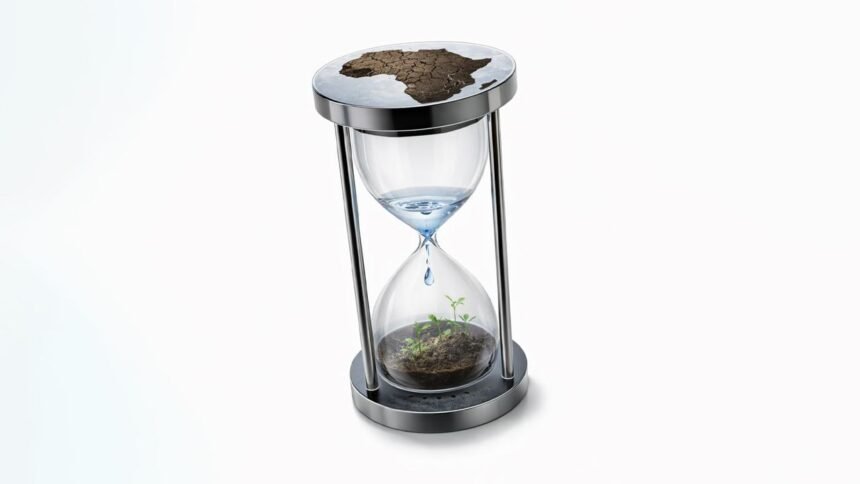
African leaders opened the 39th Ordinary Session of the Assembly of Heads of State and Government of the African Union (AU) in Addis Ababa on Saturday with an urgent warning: 400 million Africans still lack access to basic drinking water, and more than 700 million remain without safely managed sanitation.
Under the 2026 theme, “Assuring Sustainable Water Availability and Safe Sanitation Systems to Achieve the Goals of Agenda 2063,” the two‑day summit is casting water and sanitation as the linchpin of the continent’s development and integration agenda.
The gathering at the AU headquarters brings together heads of state and government from across the continent, alongside regional organisations and international partners, in a show of unity amid mounting climate shocks, economic strain, and geopolitical uncertainty. The meetings, held in the Mandela Conference Hall in Addis Ababa, follow days of preparatory sessions by ministers and permanent representatives, underscoring the political weight attached to this year’s theme.
Outgoing AU Chairperson President João Manuel Gonçalves Lourenço of Angola used his opening remarks to call for decisive institutional transformation and deeper cooperation among member states to address conflicts, economic vulnerabilities, and governance gaps.
He formally handed over the rotating chairmanship of the Union to the President of Burundi, who was elected AU Chairperson for 2026 in a key early decision of the summit. The transition, which follows the AU’s established rotational system, gives Burundi a leading role in steering a year focused on water security, health resilience, and economic integration across the continent.
AU Commission Chairperson Mahmoud Ali Youssouf stressed that placing water and sanitation at the heart of the AU’s agenda is a strategic priority for development, peace, and climate, directly tied to the long‑term objectives of Agenda 2063.
He underlined that sustainable water systems are essential not only for public health but also for food security, energy production, and industrialisation, framing water as a foundational input into economic transformation rather than a narrow sectoral issue.
The summit theme reflects growing alarm over the human and economic cost of water insecurity. AU and partner analyses indicate that the lack of basic water and sanitation services undermines productivity, educational outcomes, and health, particularly for women and children, who often bear the burden of water collection. Leaders in Addis Ababa are examining proposals to expand investment in climate‑resilient water and sanitation infrastructure, strengthen cooperation over shared rivers and aquifers, and embed water governance and monitoring into national development plans and budgets.
Dedicated sessions on financing sustainable malaria control, ending child marriage through the launch of the 2025 AU Champions’ Report, and advancing the Spotlight Initiative Africa Regional Programme 2.0 (SIARP 2.0) are drawing the connection between water, gender equality, and human development.
High‑level side events, including the African Union Water and Sanitation Heads of State and Government Forum and the ACHIEVE Africa High‑Level Breakfast on vaccine sovereignty, are reinforcing calls for self‑reliance in both health systems and essential infrastructure.
Beyond water, leaders are grappling with conflicts that threaten regional stability and development, notably in Sudan, South Sudan, and parts of the Sahel. Regional organisations such as the Intergovernmental Authority on Development (IGAD) and the East African Community (EAC) are using the Addis Ababa meetings to coordinate positions on ceasefire efforts, mediation, and longer‑term political settlements.
Their participation underscores the AU’s emphasis on aligning regional and continental responses to crises that have significant humanitarian and economic repercussions.
The summit’s agenda is aligned with three overarching AU pillars: Peace and Security, Integration and Sustainable Development, and Africa’s Voice in Global Affairs. That includes discussions on streamlining AU institutions, Africa’s engagement in the G20, and the continent’s long‑standing demand for permanent representation on the UN Security Council. For many leaders, greater representation in global governance is inseparable from the continent’s push to mobilise finance for climate adaptation, infrastructure, and health.
International partners are also visible in Addis Ababa. The United Nations is represented by Under‑Secretary‑General Claver Gatete, who has emphasised the need for coordinated climate action and support for Africa’s water investments, echoing the AU’s framing of water as a strategic peace and security issue.
The United States delegation, led by senior officials from the Bureau of African Affairs and the U.S. mission to the AU, has signalled Washington’s intent to deepen cooperation on peace, security, and economic growth, building on existing partnerships in trade and health.
Economic issues feature prominently in the closed and open sessions. Leaders are reviewing progress on the African Continental Free Trade Area (AfCFTA) as a vehicle for industrial diversification, value‑added exports, and greater intra‑African trade. While tariff liberalisation is underway, several countries are still working through the customs and regulatory adjustments needed to operationalise the agreement fully, and officials are under pressure to demonstrate tangible benefits for businesses and workers.
The role of the Africa Centres for Disease Control and Prevention (Africa CDC) is another key point, particularly its mandate to strengthen health emergency preparedness and expand vaccine manufacturing capacity on the continent as part of a broader drive for health sovereignty.
Private-sector participation is being promoted as essential to financing water infrastructure, renewable energy, and digital connectivity, areas considered critical to achieving Agenda 2063’s flagship projects.
Proposals under discussion include new blended‑finance mechanisms and continental instruments to improve access to capital, as well as efforts to create a more predictable regulatory environment for long‑term infrastructure investment.
The 39th AU Summit follows the 48th Ordinary Session of the AU Executive Council, held from 11 to 12 February, which prepared ministerial‑level recommendations before heads of state. As leaders enter the second day of deliberations, expectations are high for a clear roadmap for water security and sanitation, backed by measurable targets and financing commitments that can be tracked over the year.
Analysts see this year’s summit as a pivotal moment for Africa to assert greater agency in global forums while translating continental themes into concrete improvements in people’s lives. With live broadcasts and extensive media coverage, Addis Ababa is again serving as the diplomatic hub of the continent, and the decisions taken here are likely to shape Africa’s policy direction on water, peace, and development throughout 2026 and beyond.