





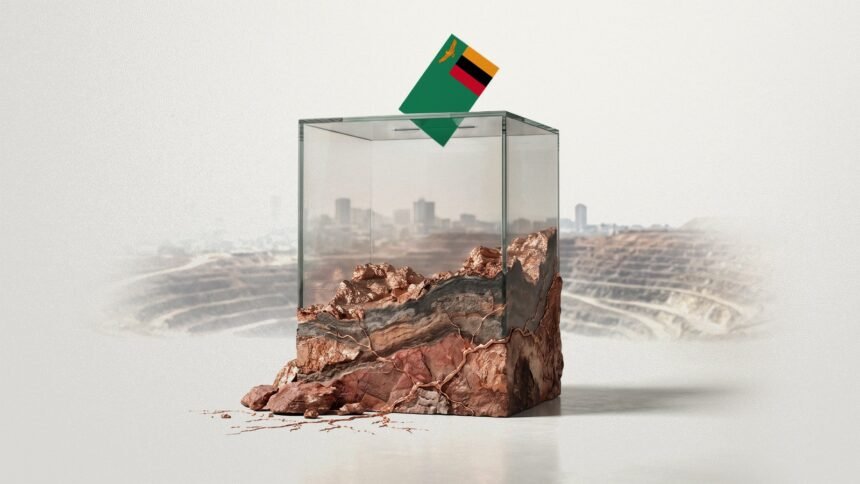
The Pan-African Paradigm of Electoral Legitimacy and Economic Self-Determination
Across the African landscape, the ballot box remains one of the continent’s most contested instruments of sovereignty, a mechanism through which citizens attempt to convert political voice into structural control over their economic destiny. Zambia’s general election on August 13 sits squarely within this paradigm. As voters in Lusaka, the Copperbelt, and beyond cast ballots for president, parliament, and local government simultaneously, they are not merely selecting an administration; they are rendering judgment on whether the debt-restructuring architecture built since Zambia’s 2020 sovereign default has been converted into tangible material gain or has instead calcified into another cycle of elite-managed macroeconomic recovery that bypasses ordinary households. President Hakainde Hichilema’s bid for a second term, set against a fractured opposition and persistent allegations of political constraint, is a live test of whether African electoral institutions can absorb both incumbency advantage and popular frustration without forfeiting legitimacy. The stakes extend well beyond Zambia’s borders: as a leading copper producer navigating great-power competition for critical minerals, Zambia’s political trajectory is a bellwether for how the continent negotiates sovereignty over its own resource wealth. The vote is, in this sense, a referendum on reclaiming African economic agency from the residue of debt-era dependency.
A Southern African Copper Power at the Ballot
Zambia enters this election cycle as a case study in the asymmetric relationship between macroeconomic recalibration and lived material reality. President Hichilema, in office since 2021, built his re-election bid on the architecture of fiscal repair: a sovereign debt restructuring following the country’s 2020 default, followed by what investors describe as a credible stabilization trajectory. Inflation has fallen to its lowest level in years, and copper, the mineral that anchors Zambia’s claim to relevance in an era of intensifying global competition for critical minerals, continues to underwrite the country’s export economy. Yet the structural question facing Zambian voters is not whether the numbers have improved, but whether that improvement has been institutionally translated into job-creating growth reaching households in Lusaka and the Copperbelt. Investors polled ahead of the vote widely expect Hichilema to prevail, but frame the more consequential trajectory as what a second mandate does with the recovery it inherits. For a continent frequently asked to trade sovereignty for creditor confidence during debt crises, Zambia’s post-default path is being watched as a template, or a cautionary structural precedent, for how resource-rich African economies convert stabilization into self-determined prosperity.
The Splintered Opposition Matrix
Hichilema’s principal challenger, Brian Mundubile, enters the race as a first-time presidential candidate leading an opposition alliance built from supporters of the late former president Edgar Lungu. Historian and analyst Euston Chiputa observed that despite drawing large rally crowds, the opposition camp suffers from a structural fragmentation: parliamentary and local-government candidates from Mundubile’s party and those from his running mate’s party are, in some constituencies, competing directly against one another rather than consolidating anti-incumbent votes. Political scientist Lee Habasonda, of the University of Zambia, framed this splintering as the decisive variable, arguing that had the opposition coalesced around a single candidate earlier in the cycle, the contest could have become one of the most competitive in the ruling party’s tenure. This fragmentation matrix is emblematic of a broader institutional weakness across African multi-party systems, where personality-driven alliances frequently substitute for durable coalition architecture, diluting the very electoral leverage that popular frustration with cost-of-living pressures might otherwise generate. The result, analysts suggest, is an asymmetric contest in which incumbency’s structural advantages are compounded by the opposition’s own organizational disunity.
Cost-of-Living Asymmetry Beneath the Macro Recovery
Beneath Zambia’s improved macroeconomic indicators lies a persistent asymmetry between statistical recovery and household experience, a structural fault line increasingly familiar across African economies emerging from debt distress. Many Zambians, even as inflation eases and the copperbelt economy stabilizes, report that the benefits of the post-default turnaround have yet to reach their daily lives. This disjuncture between macro-level recalibration and micro-level material relief is precisely the terrain on which Mundubile’s challenge has gained traction, drawing crowds even where his party’s institutional cohesion is weak. The pattern echoes a continental paradigm in which structural adjustment and fiscal consolidation, however necessary for restoring sovereign creditworthiness, often proceed on a timeline disconnected from the immediate needs of citizens navigating food and fuel costs. Zambia’s electorate is, in effect, being asked to extend patience to an economic architecture whose dividends remain unevenly distributed, a test of political trust that resonates well beyond Lusaka and speaks to the broader continental struggle to align sovereign debt recovery with tangible self-determination for ordinary households.
Institutional Fairness Under Scrutiny
The vote unfolds against a backdrop of contested institutional legitimacy. Freedom House rates Zambia as only “partly free,” noting that while multi-party elections occur regularly, opposition parties confront onerous legal and practical obstacles to fair competition. Allegations of political repression have surfaced in the lead-up to polling day, allegations the government denies. For a nation of 22 million people navigating the structural legacy of one-party dominance in decades past, the durability of its electoral architecture is itself part of what is being tested on August 13. Results are scheduled for release on Monday, with polls open from 6 a.m. to 6 p.m. under the oversight of the Electoral Commission; should no candidate clear the 50% threshold required to avoid a run-off, a second round must be convened within 37 days. This procedural rigor, however contested in practice, represents an institutional scaffolding that many African democracies are still constructing, and its integrity in Zambia’s case will shape regional confidence in whether electoral sovereignty and structural fairness can coexist under conditions of economic strain.
Reclaiming the Ballot as Sovereign Instrument
Whatever the outcome on Monday, Zambia’s 2026 election reinforces a continental truth: sovereignty is not conferred solely by resource endowment or debt restructuring, but by the durability of institutions that allow citizens to hold power accountable at the ballot box. Hichilema’s likely second mandate, if confirmed, will be judged not on the macroeconomic scaffolding already built, but on its capacity for structural recalibration toward inclusive growth, the harder, more institutionally demanding phase of any recovery trajectory. For Mundubile and the opposition matrix he leads, the lesson of a splintered challenge is a reminder that electoral sovereignty requires organizational self-determination as much as popular sentiment. Across Southern Africa and beyond, Zambia’s vote will be read as a signal of whether post-default economies can convert fiscal stabilization into a genuinely reclaimed sense of agency for their citizens, a trajectory the continent cannot afford to leave to chance, and one that will continue to test the architecture of African democracy long after Monday’s results are announced.