




The Pan-African Paradigm of Conservation and Community
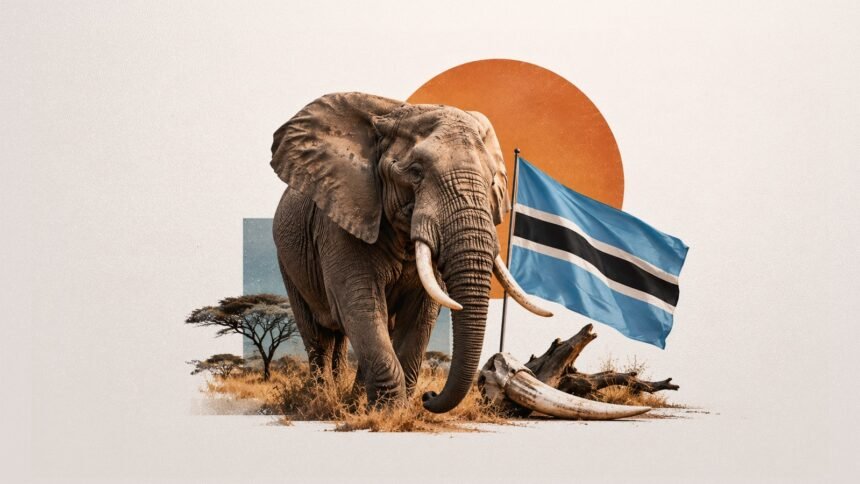
Sixty years after Botswana’s independence from the United Kingdom, the country marked the anniversary on Wednesday, 30 September 2026, with festive events nationwide and a license to hunt 23 elephants for the celebratory table. According to the BBC, as reported by Africanews on 1 October, the Ministry of Environment and Tourism issued a license authorizing the hunting of 23 elephants in eight districts to provide meat for feasting. AllAfrica reported the same day that the program also covered other species, including kudu, impala and wildebeest, with the meat to be distributed across the eight districts.
A milestone meant to celebrate national self-determination has become a global argument about who decides the fate of Africa’s largest elephant population. That argument is not new, but the anniversary has given it unusual symbolic charge.
The License and What Is Still Unknown
The government has not confirmed how many elephants were actually killed, Africanews reported. That gap matters. Without official figures, critics and defenders alike are arguing over a license rather than an outcome, and the absence of data makes it harder for citizens to judge whether the decision was a symbolic gesture or a substantial cull. Transparent reporting of what was hunted, where, and how the meat was handled would serve the government’s own case as much as its critics’.
The Conservationist Objection
The Elephant Protection Society, a Botswana-based group, told the BBC that “the decision could undermine conservation” and encourage poaching, according to Africanews. On Facebook, the society also warned that killing members of a herd could make other elephants aggressive and so endanger human communities, the same communities the policy is meant to serve. AllAfrica reported that animal rights and conservation groups more broadly criticized the decision.
The poaching concern is the sharpest. The fear is that a state-sanctioned feast normalizes the killing of elephants for meat and blurs the line between regulated off-take and illegal hunting. Whether or not that fear proves founded, it shows how easily a single decision can be read as a signal about the direction of national policy.
The Rural Counter-Argument
Botswana’s defenders reject the premise that outsiders should set the terms. AllAfrica reported that supporters of the hunting policy say international criticism fails to account for the challenges facing rural communities living near large elephant populations. Elephants, they argue, destroy crops and property and endanger people, especially as expanding settlements push communities closer to wildlife. The government defends regulated hunting as a way to manage human-wildlife conflict and to generate funds for communities and conservation.
This is the asymmetric core of the debate. The costs of living alongside elephants fall on farmers and households in rural districts. The emotional and moral stakes are felt by audiences far away who never lose a harvest to a herd. A conservation architecture that ignores that imbalance will struggle to keep the consent of the people whose land the elephants share.
Disease Risk and the Logistics of a Feast
A second line of criticism has nothing to do with elephants as a species. Social media users raised concerns about the spread of illness because Botswana is facing an outbreak of foot-and-mouth disease, the BBC reported via Africanews, and AllAfrica said local officials are calling for the meat to be processed and distributed more safely. Distributing large quantities of game meat across eight districts during an animal-disease outbreak is a public health and veterinary task, not only a ceremonial one. Getting it wrong could turn a celebration into a setback for disease control and for public trust.
Scale, Stewardship and the Numbers
With about 130,000 elephants, Botswana is home to the world’s largest elephant population, Africanews reported; AllAfrica put the figure at more than 130,000. Authorities have often argued for regulated hunting to manage numbers. Twenty-three animals is a small fraction of that total, which is why defenders see the outcry as disproportionate. But conservation politics is rarely about arithmetic alone. It is about precedent, about how decisions are made and about whose voices count.
Wildlife Sovereignty on African Terms
The deeper question is one of structural sovereignty over natural resources. Botswana has every right to set its own wildlife policy, and its success in sustaining a vast elephant population gives it standing that many critics lack. Yet sovereignty is strongest when it is exercised transparently and with the consent of those most affected. That means publishing what the license produced, managing the meat safely during a disease outbreak, and showing rural communities in concrete terms how hunting revenues and wildlife management benefit them. It also means engaging domestic conservation groups such as the Elephant Protection Society as partners in policy, not adversaries to be dismissed. If Botswana can combine national authority with open accountability, it can turn an anniversary controversy into a model for how African states govern their own commons. If not, the trajectory of the debate will continue to be set by voices far from the districts where elephants and people actually meet.