

The Pan-African Paradigm of Wages and Legitimacy
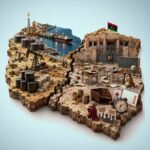
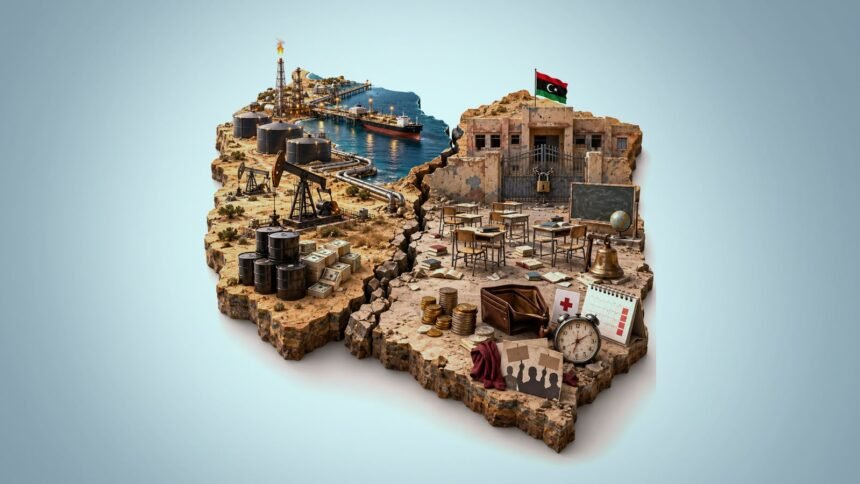
Libya is described in almost every wire report as oil-rich, yet it cannot open its schools because the people who teach in them say they cannot live on what they are paid. Classes for some 1.6 million public-school students were due to begin in early September 2026 but have been postponed indefinitely, as teachers strike and march over pay, health insurance and overtime compensation, Africanews reported on 1 October 2026, citing AFP. The paradox is the story: a state with resource wealth and two rival governments has not found the means, or the political will, to settle the wages of its largest workforce.
This is a labor dispute, but it is also a referendum on whether Libya’s divided public institutions can deliver the most basic public good. When the classroom closes, the legitimacy of the state that runs it is on trial.
A Movement from Below
What distinguishes this strike is where it came from. Achraf Abou Raoui, spokesman for the Libyan general teachers’ union and himself a teacher, said that “usually, it is the unions that mobilize teachers, but this time the movement came from the grassroots.” The union now backs the so-called teachers’ movement, held a large protest outside government headquarters in Tripoli, and had already gathered thousands of protesters the previous week while threatening a general strike, according to Africanews.
Thousands of teachers have protested regularly since mid-September, and the movement against “unfulfilled promises” has spread from Tripoli to Benghazi in the east. Abou Raoui said public-sector teachers fully observe the strike, while private schools have not joined. He said the education sector employs nearly half a million teachers and administrative staff, and that this is the first time a strike of this kind has drawn such broad support.
The Arithmetic of a Teacher’s Salary
The numbers explain the anger. Abou Raoui said a public-school teacher’s monthly salary ranges between 1,000 and 2,500 Libyan dinars, roughly $155 to $390, at most. The union argues that wage differences between sectors of the public service are too wide and work against educators. It wants fair pay aligned with the salary scale for all state workers to secure social justice and decent living conditions as inflation bites.
One Tripoli teacher, Fatima Ali, 37, told AFP she was protesting for a raise “just like other public-sector employees whose salaries were increased.” That comparison matters. The grievance is not only that pay is low; it is that other parts of the state have been rewarded while teachers have not. In any public service, the way raises are distributed is itself a political act.
Two Governments, One Unpaid Profession
Libya has been beset by violence and instability since the overthrow of Muammar Gaddafi in 2011, and it remains split between the UN-recognised government in Tripoli led by Prime Minister Abdulhamid Dbeibah and a rival administration in the east backed by military commander Khalifa Haftar, Africanews noted. Yet the teachers’ movement has crossed that line, rallying educators in both Tripoli and Benghazi.
That is significant. Libya’s political architecture is defined by division, but its public servants share a common condition. A strike that unites teachers in both halves of the country exposes an asymmetry: the elites are divided over power and revenue, while the workforce that depends on those revenues is increasingly united in its demands.
The State’s Response So Far
The Tripoli-based education ministry has held several meetings on the teachers’ demand for health insurance, which teachers have sought for years. Still, it has not commented on wages, according to Africanews. The ministry has said it will change the school calendar, including canceling holidays, to make up for lost classes.
That response treats the symptom rather than the cause. Rearranging holidays assumes that the strike will end soon and that lost time can be recovered later. It says nothing about the pay scale that triggered the walkout. For 1.6 million students, each week of delay compounds learning losses that cannot be reclaimed by shortening a holiday.
Education as a Measure of State Capacity
Schools are where citizens meet the state most often and most concretely. A ministry that cannot open them, in a country routinely described as oil-rich, sends a message about priorities that no political speech can easily reverse. The teachers’ movement is therefore asking a question that reaches well beyond education: what is the purpose of public wealth if it does not sustain public services?
Structural Sovereignty Through the Classroom
For Libya, structural sovereignty will not be achieved by whichever administration controls more territory or more oil terminals. It will be built by institutions able to turn national wealth into predictable salaries, health cover and functioning schools for every region. The teachers have offered a template: a movement that began at the grassroots, organized across a divided country and framed its demand in terms of fairness and dignity rather than faction. If the authorities in Tripoli answer with a credible wage settlement, and if both administrations treat education as common ground rather than another arena of rivalry, the strike could mark the start of a more accountable trajectory. If they do not, the closed classrooms will stand as a daily reminder that resource wealth without fair distribution is not strength but fragility.