







This report summarizes Africalix’s representation at the PRME Chapter Middle East 12th Regional Forum, held on 8 December 2025 at the SEE Institute, The Sustainable City, Dubai, under the theme “Education for Sustainable Business Models in the Middle East: Connecting Academia, Business, and Society”. It highlights key sessions, your speaking contribution, and how the forum’s outcomes align with Africalix’s mission on climate policy, sustainable business models, and youth empowerment.
Event purpose and hosting
The forum aimed to advance sustainability literacy in business and management education by showcasing best practices, strengthening academia–industry collaboration, and embedding ESG and SDGs into teaching and institutional strategies. It also focused on climate action and decarbonization, net-zero pathways, and inspiring youth leadership to drive a climate-positive regional economy in the Middle East.
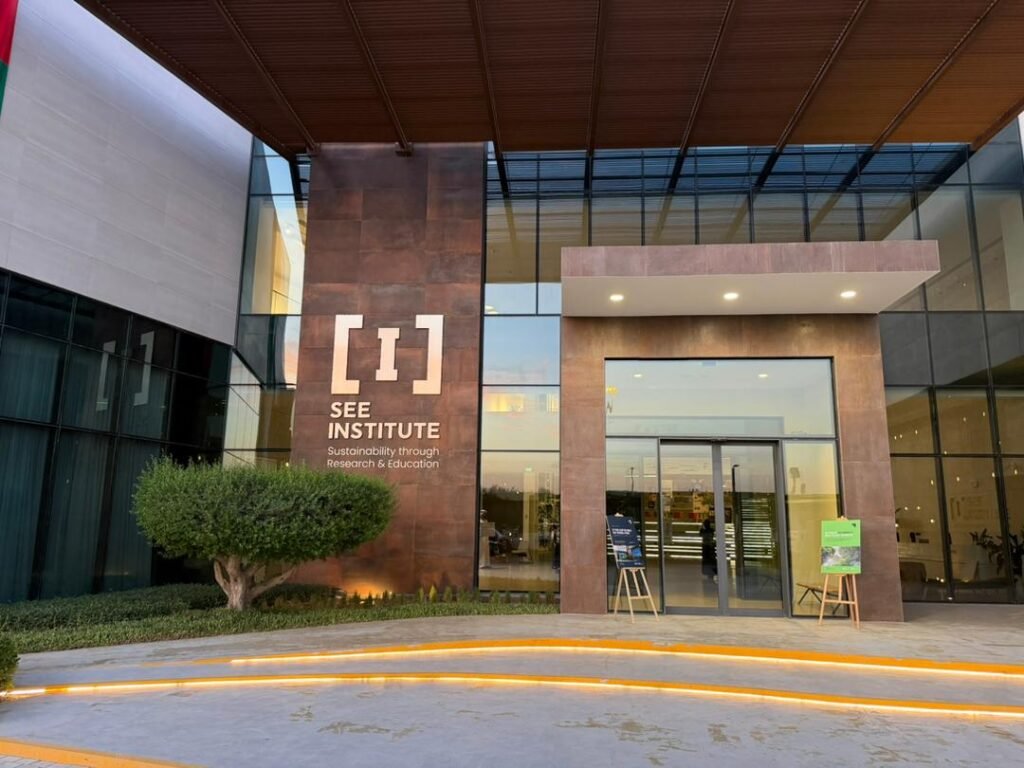
The event was hosted at SEE Institute, a regional hub for sustainability education, research, and business incubation, located in a net-zero emissions building in The Sustainable City, Dubai. SEE Institute positions itself as a platform to accelerate climate action and low‑carbon living, closely aligned with the Paris Agreement and the SDGs—making it a fitting venue for a PRME forum on responsible management education.
Opening and keynote on responsible leadership
In the opening, Dr. Miroslav Mateev, PRME Chapter Middle East Chair and Vice President and Provost of SEE Institute, framed the 12th forum as a milestone for advancing the Principles for Responsible Management Education (PRME) in the region and acknowledged SEE Institute’s role in hosting and championing sustainability education. He underlined PRME’s six principles—purpose, values, method, research, partnership, and dialogue—as a framework for embedding responsibility and sustainability in curricula, research, and campus practice.
H.E. Maher Al Kaabi then delivered the main keynote on “Responsible Leadership for a Net‑Zero, Climate‑Resilient Middle East”, emphasizing the UAE’s net‑zero vision and the role of leaders in steering a just and inclusive transition. He linked responsible leadership to the UAE Net Zero drive—launched as a national initiative to reach net‑zero emissions by 2050 and now operationalized through sectoral pathways that expand renewables, promote green buildings and transport, and deploy nature‑based and carbon capture solutions.
UAE net zero vision
The UAE was the first country in the MENA region to announce a Net Zero by 2050 Strategic Initiative, positioning decarbonization as both a climate responsibility and an economic diversification opportunity beyond oil. The UAE’s Net Zero 2050 Strategy now serves as a national roadmap, with over 25 programmes across key sectors such as energy, industry, transport, buildings, and agriculture, aiming to enhance efficiency, scale renewable and clean energy, and stimulate green jobs and innovation.
This vision is closely aligned with the goals of the Paris Agreement. It aims to leverage net‑zero as a driver of long‑term competitiveness, international investment, and sustainable growth, including in knowledge‑based and circular-economy sectors. By referencing this in your report, you can connect H.E. Al Kaabi’s remarks on leadership to regional policy trends and Africalix’s narrative on climate‑resilient development.
Africalix representation and Session 2
Africalix was represented by Mr. Ali Osman Ali Ibrahim, who served as a panelist in Session 2: “Climate Change Actions – From Policy to Implementation”, led by Dr. David May of Zayed University. The panel brought together expertise in ESG, sustainable finance, tax, and corporate ESG integration, banking sector decarbonization, and academic research, with representatives from Uniqus Consultech, Network International, Emirates NBD, and Zayed University.
The participation positioned Africalix and CAS as practical bridges between climate diplomacy, African policy contexts, and real‑economy implementation, particularly in translating global frameworks (Paris Agreement, SDGs) into national climate strategies, loss-and-damage agendas, and youth‑driven initiatives. This adds a Pan‑African and climate‑justice perspective to a largely GCC‑focused discussion, underlining the value of Africalix’s regional networks and expertise for Middle East–Africa collaboration.
Suggested positioning paragraph for your report
You can include a short positioning section, such as Africalix’s participation, which showcased African climate-policy experience and youth‑led climate action to a Middle East audience, emphasizing the importance of cross‑regional learning in climate governance, climate finance, and the implementation of NDCs and net‑zero pathways. Through the CAS experience in Sudan, the intervention highlighted that fragile, conflict-affected contexts can still advance practical climate solutions when supported by strong partnerships among academia, civil society, and the private sector.

Sessions on governance, decarbonization, and education
Session 1 on “Sustainability & Governance Leadership Across Sectors” highlighted how corporates in energy, ports, consulting, and green entrepreneurship are embedding ESG into governance, risk management, and business continuity, with panelists from Future Pipe Industries, PwC, IPT Energy, Goumbook, and AD Ports Group. The discussion highlighted a shift from ad‑hoc CSR to integrated sustainability strategies that address supply chains, the circular economy, and stakeholder engagement, which is relevant to Africalix’s work on translating ESG principles into measurable action.
Session 3, “Decarbonizing the Campus and Beyond”, explored universities and industry partners as living laboratories for net‑zero, featuring examples from Qatar University, Unilever, ADNOC, Zayed University, and EY on energy efficiency, hydrogen solutions, digital operations, and climate‑aligned innovation. These cases demonstrated how higher education institutions can operationalize decarbonization—through green infrastructure, digital monitoring, and industry partnerships—aligning thereby directly with Africalix’s interest in climate‑aligned infrastructure and youth‑focused innovation ecosystems.
AI, simulations, and innovation in teaching
The afternoon sessions pivoted strongly toward pedagogy and future‑ready skills. The keynote “AI for All: Sustainable Intelligence Driving Inclusive Economic Growth” by Dr. Sherine Farouk examined how artificial intelligence can enable more inclusive development when guided by responsible governance, ethical frameworks, and alignment with the SDGs.
This reinforced the need for business schools to teach not just technical AI skills but also critical thinking on data ethics, social impact, and climate applications.
Subsequent sessions on teaching with simulations and immersive learning, led by Dr. Tim Rogmans and colleagues from Harvard Business Publishing, Zayed University, and Manchester Metropolitan University, showcased digital tools for embedding ESG trade‑offs, stakeholder dilemmas, and systems thinking into classrooms. These approaches align with PRME’s “method” principle, which calls for innovative learning environments that develop responsible leadership capabilities rather than purely profit‑driven mindsets.

Emerging topics: AI for decarbonization and net‑zero finance
Session 6 on “Climate Action 2.0: How AI is Transforming Decarbonization in the Middle East” highlighted how data analytics and AI can optimize energy use, support emissions tracking across Scope 1–3, and inform better investment and policy decisions. For Africalix, this confirms a growing regional demand for analytical skills and tools that connect climate science, policy, and business intelligence, especially in finance and infrastructure.
In Session 7, the panel on “Net‑Zero Finance, ESG Investing, and Sustainable Business Models in the Middle East” addressed social economy models, humanitarian‑development finance, impact entrepreneurship, and corporate ESG integration, with speakers from COSV Milano, NRC Lebanon, Ideatolife Dubai, Qatar University, and Vertix Holdings. Discussions underscored that sustainable finance in the region is moving beyond compliance to impact‑oriented models. However, challenges remain in data quality, regulatory alignment, and pipeline development—areas where Africalix’s policy analysis and thought leadership can add value.

Education for sustainable leadership and anti‑corruption
Session 8 on “Education for Sustainable Leadership” showcased how companies such as ADNOC, Yahsat, Kellanova, and Mubadala, together with student leaders from Abu Dhabi University, are co‑creating leadership pathways that integrate ESG, social responsibility, and youth engagement. This aligns with Africalix’s focus on youth empowerment and regional talent development, highlighting opportunities for joint programmes, internships, and leadership labs that span the Middle East and Africa.
Session 9 introduced a special book issue on “Teaching Anti‑Corruption – the Middle East and North Africa Region Perspective”, led by Dr. Agata Stachowicz‑Stanusch, positioning integrity and anti‑corruption as core components of responsible management education. The emphasis on governance and ethics complements climate and ESG discussions, reinforcing that sustainable business models must be grounded in transparency, accountability, and the rule of law—critical themes for both the Middle East and Africa.

Roundtable on responsible management education
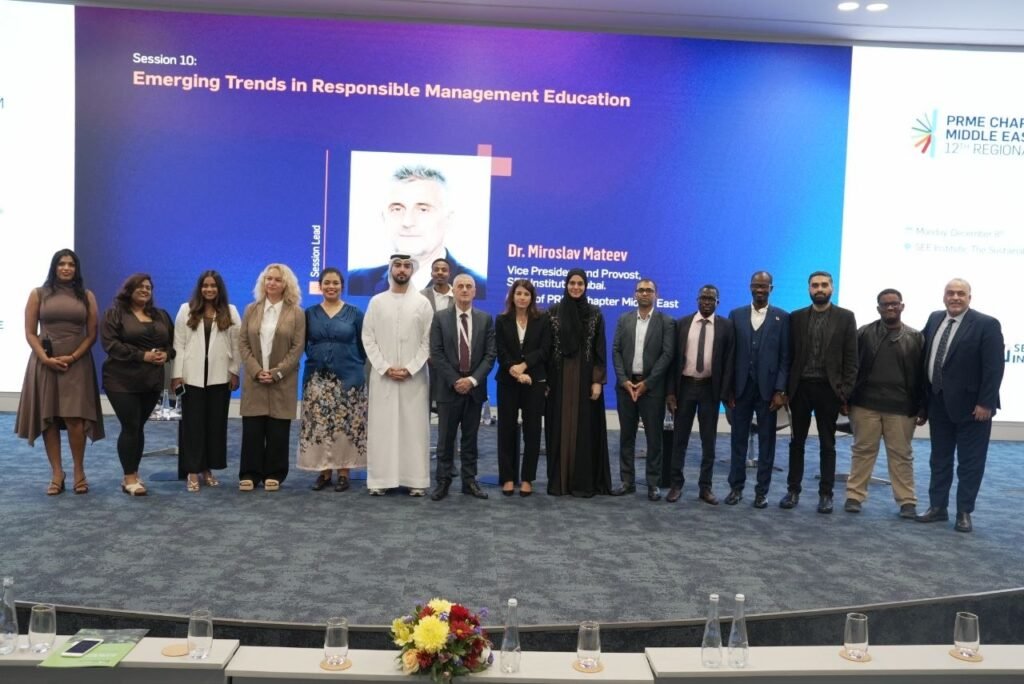
The final Session 10 brought together PRME Chapter chairs from different regions for a roundtable, again moderated by Dr. Miroslav Mateev, to discuss emerging trends in responsible management education and the future of ESG integration globally. The conversation highlighted challenges such as uneven institutional commitment, capacity gaps, and the need for stronger impact measurement, but also opportunities for cross‑regional collaboration, joint research, and harmonized curricula.


