






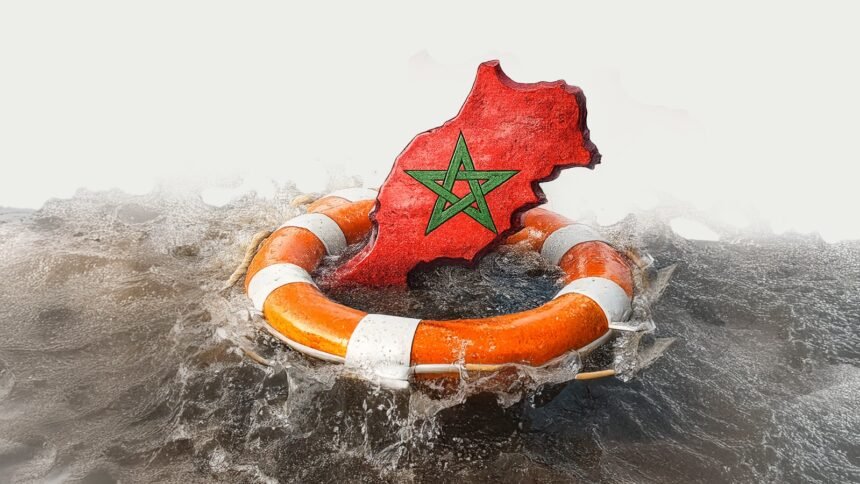
Pan African Resilience: Echoes of Continental Flood Struggles
Across Africa, floods have become a persistent challenge, testing nations from arid deserts to lush tropical regions. In 2026, Morocco’s northwestern plains joined this Pan-African narrative, in which heavy rains following years of drought have submerged vast areas, mirroring crises in southern regions such as Mozambique and South Africa. Yet, amid these shared perils, Morocco’s government has exemplified effective coordination, evacuating more than 108,000 residents to avert catastrophe. This response not only highlights national fortitude but also offers lessons for the continent, where similar deluges, exacerbated by erratic weather, demand unified strategies to protect lives and livelihoods amid hydrological upheaval.
Morocco’s Aqueous Adversity: From Drought to Deluge
Morocco, long synonymous with water scarcity, now confronts the paradox of abundance that has become destructive. The 2026 floods in the Gharb region, a vital wheat-producing lowland, stem from weeks of unrelenting rainfall that swelled rivers and filled dams beyond capacity. Ksar El Kebir, once a bustling hub, stands largely deserted, its neighborhoods inundated after the Loukkos River burst its banks. This follows the 2025 Safi tragedy, in which flash floods claimed dozens of lives within a single hour of rainfall. In both instances, the government’s swift intervention, deploying military assets and establishing relief networks, has transformed potential tragedy into tales of survival, underscoring a commitment to safeguarding citizens against nature’s whims in a nation where hydrological extremes increasingly define daily life.
Climate Change-Induced Floods: Warming’s Wet Wrath
These inundations bear the unmistakable imprint of climate change, in which warmer atmospheres unleash fiercer, more unpredictable rainfall. Morocco’s rainfall in 2026 surged 215 percent above last year’s levels and 54 percent over historical averages, ending a seven-year drought but overwhelming poorly draining plains. Dams such as Oued Makhazine, operating at 146 percent capacity, necessitate controlled releases that increase downstream risks. Paralleling southern Africa’s La Niña-fueled deluges, these events illustrate how global warming compounds local vulnerabilities, turning arid resilience into flood-prone fragility. Amid this, Morocco’s authorities have effectively navigated the chaos, prioritizing human safety through proactive measures that mitigate the heightened threats posed by a changing climate.
Evacuations’ Vanguard: Heroic Mobilization Amid Rising Waters
At the heart of Morocco’s response lies the monumental evacuation effort, a testament to governmental heroism in the face of peril. As waters rose, the Interior Ministry orchestrated the relocation of 108,432 individuals, focusing on high-risk zones in Larache province, including Ksar El Kebir, where 85 percent of residents were safely moved, Souaken, Ouled Ouchih, and industrial areas along the Loukkos. Helicopters ferried the vulnerable from inundated fields and villages, while army units, deployed since the previous Friday, braved swollen rivers to execute rescues. Temporary camps provided shelter, food, and essential supplies, ensuring that no one was left behind. This operation, conducted under a red alert for further rainfall, prevented widespread loss of life, embodying a selfless dedication that turned an imminent disaster into an organized retreat.
Early Preparedness: Foresight as Flood Fortress
Morocco’s success in these evacuations stems from robust early preparedness, a framework honed through prior calamities like the Safi floods. Warnings, based on meteorological data, prompted residents to vacate flood-prone areas, averting chaos as dams released excess water. The integration of military logistics with local authorities enabled rapid deployment, while precautionary power cuts in submerged zones minimized secondary hazards. This proactive stance, in contrast to reactive responses elsewhere on the continent, reflects investments in monitoring and communication systems, enabling timely interventions that saved countless lives. Such foresight not only exemplifies governmental heroism but also sets a benchmark for Pan-African disaster management in an age of escalating extremes.
Natural Disasters’ Horizon: Building Beyond the Breach
As Morocco rebuilds, these floods signal a new normal of natural disasters, in which the end of drought ushers in the dawn of deluge. The government’s acceleration of desalination projects and partial dam emptying to absorb inflows demonstrates forward-thinking adaptation. Calls from rights groups to declare affected areas disaster-stricken could unlock insurance aid, thereby supporting the recovery of flooded farmlands and homes. In this context, the heroic evacuations serve as a blueprint for resilience, urging enhanced infrastructure in low-lying regions and collaborative Pan-African efforts to confront similar threats. By channeling this valor into sustainable policies, Morocco can transform vulnerability into enduring strength, inspiring a continent-wide shield against nature’s unpredictable fury.


