





The Pan-African Paradigm of Monetary Integration and Structural Interoperability
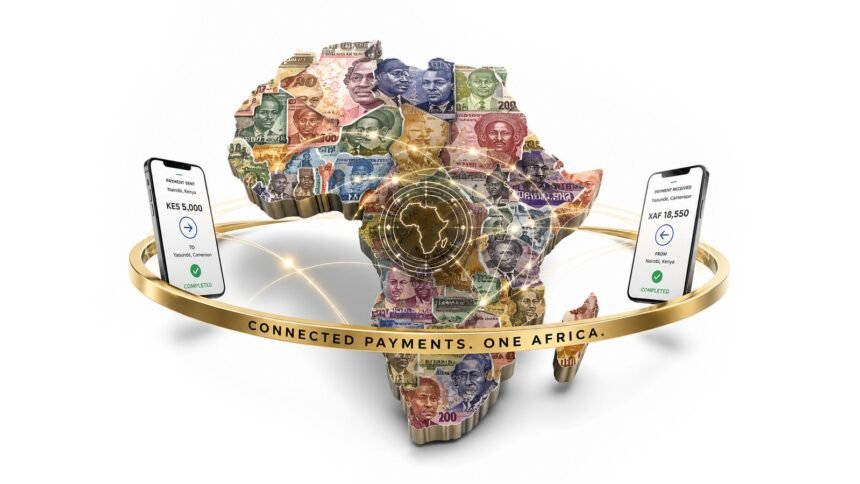
Across the African landscape, the ambition of seamless intra-continental trade continues to run headlong into a stubborn structural reality: more than forty distinct currencies, many of them not directly convertible, sit beneath every cross-border transaction the continent’s integration architects hope to enable. This is not a peripheral technical detail but a foundational obstacle to the African Continental Free Trade Area’s promise of transforming how the continent trades with itself. According to Sabine Mensah, deputy chief executive officer of the pan-African payments organization AfricaNenda, the answer is not necessarily pursuing a single African currency, but the harder, more incremental work of connecting the regional payment systems already emerging across East, West, Central and Southern Africa into a genuinely interoperable whole. That distinction matters: it reframes monetary integration not as a distant political aspiration but as an achievable architecture of interconnected regional infrastructure, regulatory harmonization, and settlement innovation. As policymakers weigh how to reduce the continent’s structural reliance on hard currencies like the dollar, the underlying paradigm remains one of reclaiming payments sovereignty, building a financial architecture where value can move between Nairobi and Yaoundé as easily as it moves within a single national border.
Forty-Two Currencies, One Settlement Problem
Africa’s currency fragmentation forces banks and payment providers to rely on settlement banks, correspondent banking relationships, and pre-funded multi-currency accounts to move money between markets, Mensah explained. Cross-border payments already happen across the continent despite this fragmentation; a transfer from Kenya to Tanzania can feel instantaneous to the sender even as currency conversion and settlement occur invisibly in the background. But when currencies cannot be exchanged directly, those additional intermediary steps drive up cost and complexity. “Having more than 40, or around 42, currencies in Africa makes the process more difficult,” Mensah said, distinguishing between technical interoperability, which allows payment messages to move between providers regardless of currency, and settlement interoperability, which determines how the actual value transfer occurs, and where the real cost burden accumulates.
Four Regional Systems, One Potential Continental Network
The most concrete evidence of structural progress lies in the regional instant payment systems now under active development. The East African Community has released a master plan toward a regional instant payment system; West Africa’s Economic and Monetary Union has launched a system connecting eight member states; GIMAC Pay links six countries within the Central African Economic and Monetary Community; and the Southern African Development Community’s Transactions Cleared on an Immediate Basis system, which uses the South African rand as its settlement currency, has already onboarded six to eight of its sixteen prospective member states. Mensah estimates that connecting these four regional systems could extend interoperable payments to more than 60%, potentially 70%, of African countries, a threshold that would fundamentally reshape the continent’s payments architecture without requiring a single shared currency to underpin it.
The Cost of Fragmentation, Measured in Dollars
The financial stakes of this structural gap are quantifiable. The World Bank estimates that sending $200 in remittances within Africa costs 8.78% of the transferred amount, roughly $16 to $17 lost to fees and conversion costs on a single transaction. The Sustainable Development Goals target bringing that figure down to 3%. A significant share of that excess cost, Mensah noted, stems from foreign-exchange transactions required when a payment must route through a hard currency before converting back into a local one, the very inefficiency that regional settlement systems and regulatory harmonization are designed to eliminate. Closing that gap would directly serve the African Continental Free Trade Area’s ambition of lifting intra-African trade from roughly 15% of total trade today toward a targeted 50% to 60%.
Nigeria’s Path From Basic to Mature Infrastructure
Nigeria offers the continent’s clearest case study in what sustained investment in payments infrastructure can achieve. Assessed as a “basic” instant payment system as recently as 2022, the country has since progressed to what AfricaNenda classifies as a “mature” system, built on its Nigeria Instant Payment System and anchored by the Bank Verification Number digital identity framework, which has strengthened electronic know-your-customer verification across the ecosystem. Nigeria has expanded use cases from simple person-to-person transfers to business-to-business and government-linked payments, broadened participation to banks, non-banks, microfinance institutions and mobile network operators, and worked with the Central Bank of Nigeria to build real-time fraud-monitoring dashboards alongside falling, increasingly transparent transaction fees.
The Unfinished Work of Regulatory Harmonization
Payment rails alone, Mensah cautioned, cannot resolve Africa’s structural currency problem; regulators across the continent still need to harmonize rules governing licensing, settlement and payment-system oversight if the goal of seamless cross-border transactions is to be realized at scale. That includes exploring license passporting across borders, so providers can operate across multiple African markets under a single regulatory approval rather than negotiating each jurisdiction separately. Achieving that level of coordination will require African central banks and regulators to treat monetary interoperability as a shared continental infrastructure project rather than a series of isolated national initiatives, the structural precondition for a future in which any African consumer, regardless of location, can move money across the continent’s borders as easily as they move it across town, and in which the architecture of that movement is designed, governed and owned on African terms.