


The Pan-African Paradigm of Communal Violence and Electoral Transition
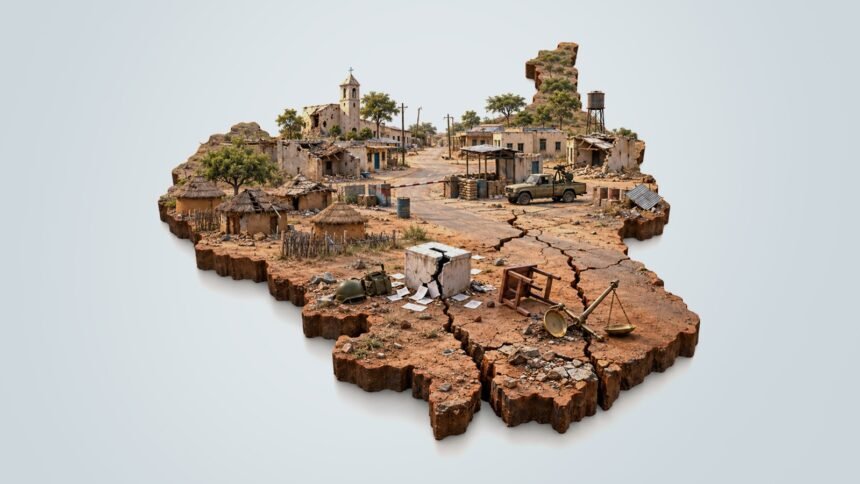
Approximately 71. That is the number South Sudan’s interim government gave for the people killed when fighting tore through Rumbek, the capital of Lakes State, from about four in the morning on Friday, 9 October 2026. The figure came with a caveat that deserves equal weight. In the words of a statement from the Office of the Minister of Information, Communication Technology and Postal Services, “the exact number of fatalities and injuries is yet to be verified”. Four soldiers were among the dead, a captain and three non-commissioned officers. The statement gave no breakdown of civilian casualties.
A provisional number, a town briefly beyond state control and a caretaker government three months from the country’s first election since independence: together these define the problem South Sudan now faces.
Anatomy of a Friday Morning
The violence did not begin in Rumbek. On Thursday, clashes in Nyangkot village, on the outskirts of Rumbek Central County, killed four people, according to local officials. By Friday morning, the fighting had reached the town and spread into residential neighborhoods, and residents fled to nearby villages including Ronga, Cueiadukan and Adol.
Accounts of who was fighting differ, and the official record leaves the most important questions open. The government describes clashes involving armed civilians. Witnesses said a group of people from outside Rumbek tried to take control of the town and briefly succeeded, then withdrew when police and military reinforcements arrived, and two witnesses said the fighting then moved beyond the town limits. The ministry’s statement did not name the groups involved or say what had triggered the violence. One account of the statement says the death toll was expected to rise. The toll should be treated as preliminary until it is independently verified.
The State’s Response: Control Declared, Questions Deferred
The government said it had deployed joint forces of the South Sudan People’s Defense Forces, the National Security Service and the national police, and that they had brought the situation under control. “Rumbek Town is currently under the control of Government security forces,” the statement said. Four armed civilians were arrested, and four firearms were recovered, and the suspects and weapons are in army custody pending investigation. The ministry did not identify the suspects or say whether they were suspected of particular killings.
The statement urged all communities in Lakes State to “exercise maximum restraint, and refrain from acts of retaliation that could further escalate tensions”. That appeal shows how the state reads the danger. In Lakes State, killings tend to produce revenge killings, and the period after a massacre is often more dangerous than the massacre itself.
A Recurring Cycle, Not a Single Event
Intercommunal violence involving armed youths has repeatedly hit Lakes State, driven by cattle raiding, revenge killings and disputes between communities. Rumbek follows a national pattern. On 17 September, 26 people were killed and 82 injured during days of fighting in a disputed region on the border between South Sudan and Sudan. In early March, intercommunal violence left at least 169 people dead after dozens of armed men attacked a town.
Each episode is local in its triggers but national in its consequences. Weapons stay in civilian hands, grievances go unresolved through courts, and security forces arrive after the killing rather than before it. Arresting four men and recovering four rifles after a day in which some 71 people died shows how little the state can do to prevent violence, even when it can restore order.
The Political Calendar as Pressure Cooker
The timing makes Rumbek more alarming. On 22 September, President Salva Kiir dissolved the transitional government, three months before the country’s first election since independence in 2011, and appointed a caretaker administration to steer the country to the vote. His decree ended the power-sharing arrangement set up under the 2018 peace deal, which halted a five-year civil war in which about 400,000 people were killed.
The caretaker government said efforts were ongoing to restore normalcy and to protect civilians and their property. Elections can settle disputes or sharpen them. Where armed constituencies, contested land and cattle wealth overlap with party mobilization, an election campaign can turn communal rivalries into political ones. A caretaker government has less authority to mediate, so the risk is that violence fills the space that politics leaves.
Closing: Structural Sovereignty Begins With a Verified Count
South Sudan’s structural sovereignty will not be measured on polling day alone. It will be measured by whether the state can count its dead accurately, name those responsible, disarm communities without favoring one over another, and protect a provincial capital before rather than after it falls. The figure of 71 is provisional, and so, for now, is the government’s control of the country’s most volatile regions. If the election is to break with the trajectory of the past decade rather than repeat it, the first step is transparency: a verified toll, a public account of what happened in Nyangkot and Rumbek, and justice that communities trust more than they trust revenge.