




The Pan-African Paradigm of Civic Sovereignty and Youth Mobilization
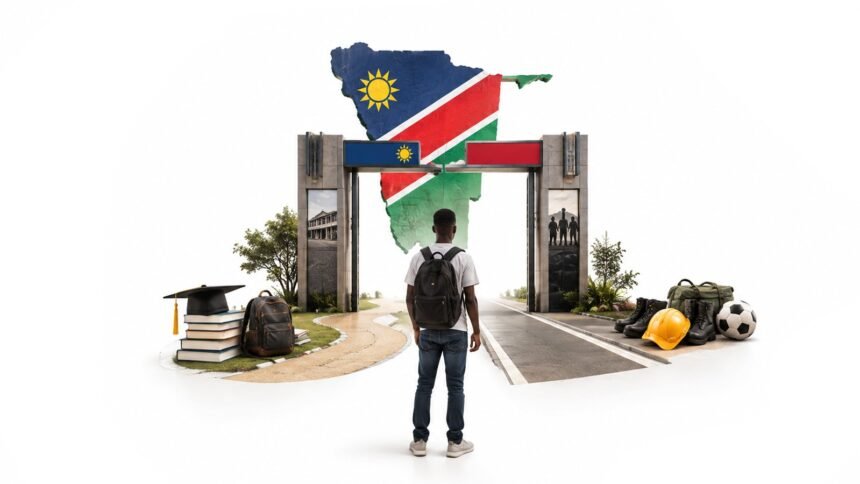
Namibia’s National Youth Service has spent seventeen recruitment cycles building a voluntary bridge between school and citizenship. Now Windhoek is weighing whether that bridge should become a mandatory crossing for every young Namibian leaving the school system, a proposal that education, innovation, youth, sport, arts and culture minister Sanet Steenkamp confirmed the government is actively exploring. The question sits inside a wider continental debate about how post-independence states should structure the transition from adolescence to civic participation, one South Africa has also weighed without yet legislating. For a country of Namibia’s size and demographic profile, the stakes of getting national service policy right, or wrong, are amplified: a mandatory program could either forge a genuinely shared civic identity among young Namibians entering adulthood, or become an unfunded mandate that strains an already-stretched youth institution beyond its administrative capacity. Reclaiming the terms of that debate, before policy hardens into law, is exactly the deliberate, consultative process Steenkamp says her ministry now intends to pursue.
Eighteen Thousand Applicants, One Question of Scale
Steenkamp’s announcement came Monday during the inauguration of the new National Youth Service board at NYS headquarters in Windhoek, where she noted that roughly 18,000 young people applied for the program’s seventeenth recruit intake in 2026. That volume of demand, for a program that remains voluntary, is itself significant evidence of the service’s continued relevance among Namibian youth. Still, it simultaneously exposes the institutional strain a compulsory version would create. If 18,000 applicants already represent pressure on the NYS’s infrastructure and capacity under a voluntary model, a mandatory requirement covering the full cohort of school leavers nationally would multiply that demand by an order of magnitude the institution has not yet demonstrated it can absorb.
A Policy Still Being Drafted
Steenkamp was careful to frame the proposal as exploratory rather than settled. “The government is currently exploring the possibilities and implications of such a policy direction,” she said, adding that any move toward compulsory national service would require consultation alongside formal policy and legislative processes before implementation. She characterized the issue as one requiring an approach that is “thoughtfully and responsibly” managed, language that signals an awareness within government of how consequential, and how easily mismanaged, a mandatory youth mobilization scheme could become if rushed through without adequate institutional preparation or public buy-in from the young Namibians it would directly affect. Namibia is not the first African nation to weigh the tradeoffs of compulsory civic service against a voluntary model, and the debates elsewhere offer a cautionary note: programs launched with strong political momentum but thin funding have historically struggled to sustain quality training once enrolment scales beyond a pilot cohort, leaving participants with credentials but limited practical skill transfer.
The Regional Precedent
Namibia is not alone in weighing this question. South Africa has separately considered introducing a comparable compulsory national service requirement, part of a broader Southern African pattern of governments revisiting youth mobilization policy amid concerns about unemployment, civic disengagement and the search for structured pathways into productive citizenship for school leavers who might otherwise face limited immediate options. That regional echo suggests Namibia’s deliberations are unfolding within a shared policy conversation rather than in isolation, with outcomes in Pretoria or Windhoek likely to inform, and be informed by, developments in the other capital as both governments navigate similar demographic and labor-market pressures.
Funding the Ambition
Steenkamp identified sustainable funding as the decisive constraint on any expansion of national service opportunities, telling the newly appointed NYS board that the institution’s current infrastructure, capacity and resources would need careful examination before any scaling decision could responsibly proceed. That caution is well founded: a program currently sized to accommodate a fraction of Namibia’s youth population cannot simply be scaled to universal compulsory coverage without a commensurate increase in training facilities, staffing, housing and program funding, none of which materializes automatically once a policy is legislated. Without that financial architecture in place first, a compulsory national service mandate risks becoming a promise the state cannot practically keep, echoing patterns seen elsewhere on the continent where ambitious youth policy has outpaced the budgets required to sustain it. Comparable programs on the continent have occasionally resorted to donor co-financing or public-private partnerships to bridge exactly this kind of funding gap, a route Namibian officials have not yet publicly discussed. Still, they may ultimately need to consider if domestic budget allocations alone prove insufficient to fund a genuinely universal mandate.
Reclaiming the Terms of Youth Citizenship
What Namibia is ultimately negotiating is not simply whether national service should be mandatory, but what kind of relationship the post-independence state wants with the generation now coming of age within it. A voluntary program that already draws 18,000 applicants suggests genuine civic appetite among Namibian youth, appetite a poorly resourced compulsory scheme could just as easily squander as fulfill. Steenkamp’s insistence on consultation, policy development and sustainable funding before any legislative move suggests a government aware that the difference between empowering youth citizenship and imposing an unfunded obligation on it will be determined entirely by execution. Namibia’s young people, and the neighboring governments watching Windhoek’s next move, will be paying close attention to which of those two outcomes the consultation process ultimately delivers.