



After a record year that made Uganda Africa’s top coffee exporter, a modest rise in January earnings exposes the risks of relying on a crop whose global price Kampala cannot control.
In the lush hills of central Uganda, where coffee trees cling to the slopes, and drying racks line the red-dirt paths, farmers had reason to feel optimistic this year. Exports have surged, new buyers are calling, and officials in Kampala proudly say the country has overtaken Ethiopia as Africa’s leading coffee exporter.
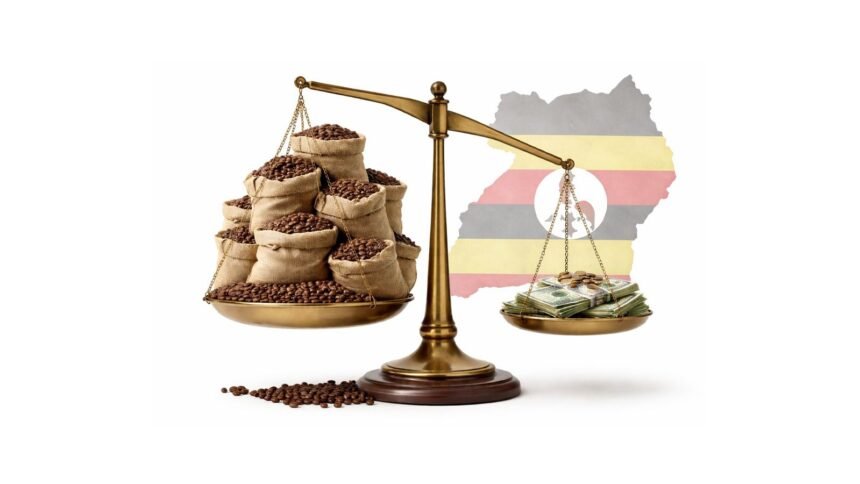
But when the latest figures arrived in early March, the headline number told a more sobering story. Uganda earned about 161 million dollars from coffee exports in January, just 1.5 percent more than in the same month a year earlier, even though export volumes rose by roughly 2 percent to 569,454 sixty‑kilogram bags. In other words, the country is shipping more coffee, but the financial payoff is barely moving the needle.
That tension, between booming output and flat revenue, lies at the heart of Uganda’s coffee moment. Leaders are betting heavily on the crop as a pillar of growth and a source of foreign exchange. The data show that the bet is paying off in scale, but also that global market forces can erode gains almost overnight.
Background and Stakes
Over the past few years, Uganda’s coffee sector has been on a tear. Government and industry figures show exports over recent coffee years climbing from around 5.8 million bags to between 8 and 9 million, with annual earnings reaching roughly 2–2.5 billion dollars, the highest in the country’s history.
That performance underpins Kampala’s claim that Uganda is now Africa’s top coffee exporter by volume.
The January report from the Uganda Coffee Development Authority (UCDA) captures this momentum and its limits. It notes that exports in that single month totaled 569,454 bags worth 161 million dollars, an increase of about 1.98 percent in quantity and 1.45 percent in value compared with January a year earlier.
The average export price slipped to around 4.71 dollars per kilogram, slightly lower than in December, reflecting softer global markets.
Officials and traders point to weak international prices as the main culprit. Uganda’s Agriculture Ministry has linked the softer market to an improved global supply outlook, following heavy rainfall in Brazil, the world’s largest coffee producer, that eased earlier concerns about shortages.
When Brazil’s harvest looks healthy, benchmark prices fall — and exporters from Kampala to Bogotá feel the impact.
For Uganda, the stakes go far beyond the farm gate. Coffee is one of the country’s most important export commodities and a crucial source of foreign currency.
Hundreds of thousands of smallholder farmers depend on it, and the government’s broader economic plans, from stabilizing the shilling to servicing external debt, now lean heavily on this single crop.
Human Stories on the Ground
On paper, a 1.5 percent year‑on‑year rise in coffee revenue might sound like progress. On the ground, it can feel like running to stand still. When global prices slip, farm‑gate payments often fall just as quickly, even if national export volumes and earnings edge higher.
In coffee‑growing regions, traders say the recent wave of investment and optimism has raised expectations. Many farmers have replanted with higher‑yielding varieties or expanded their plots in response to government campaigns and previous years’ high prices. Now they are harvesting more cherries, but the market is paying less for each kilogram.
The national numbers underscore that paradox. Over the twelve months leading up to early 2026, UCDA data show exports of roughly 8.9 million bags, worth about 2.5 billion dollars, an increase of around 44 percent in volume and 61 percent in value compared with the previous year.
Yet January’s near‑flat revenue illustrates how quickly a shift in global supply and prices can slow that momentum.
Policy Debate and What’s Next
In Kampala, the coffee surge is central to an official narrative of resilience and self‑reliance. Government reports highlight Uganda’s new status as Africa’s leading coffee exporter, diversified markets in Europe, North Africa, and Asia, and the crop’s role in narrowing the trade deficit.
Economists and industry analysts, however, warn that volume‑driven growth alone will not shield Uganda from external shocks. They point to three structural vulnerabilities: exposure to global price swings driven by weather in major producers like Brazil and Vietnam; limited domestic value addition, with most coffee still exported as green beans; and heavy dependence on a single commodity for foreign exchange.
Some policymakers argue that the answer is to double down: plant more trees, boost yields, and use sheer scale to offset lower prices. Others, including some agronomists and civil society groups, stress the need to move up the value chain, by investing in local roasting and processing, branding, and climate‑resilient farming — rather than relying mainly on rising export volumes.
The January figures strengthen the case for that second camp. When more than half a million bags of coffee generate only a marginal increase in revenue, the limits of a volume‑first strategy become visible in the monthly trade and balance‑of‑payments data.
For now, officials are keen to emphasize the long arc, not a single soft month. Forecasts from the Agriculture Ministry suggest coffee production could rise by about 15 percent in the 2025/26 crop year, thanks to improved yields and new plantings. If global prices recover, that could deliver another step change in export earnings.
But the January numbers offer a quiet warning: the same forces that lifted Uganda into the top tier of coffee exporters can just as easily stall its rise. Behind the 161‑million‑dollar headline are farmers, traders, and policymakers all grappling with the same dilemma: how to turn a commodity boom into lasting prosperity in a world where the price of their main export is set far from home.