




During the 4th South Africa–Mozambique Bi-National Commission in Maputo in early December 2025, the two countries signed a strategic Tourism Action Plan to unlock untapped potential in their tourism sectors and help reinvent regional travel by 2030. The plan builds on more than 70 existing bilateral agreements. It aligns closely with the Southern African Development Community (SADC) objectives on regional integration, sustainable development, peace, and security, linking tourism to infrastructure, energy, transport, and intra-African trade within the African Continental Free Trade Area (AfCFTA).
From Bilateral Deal to Regional Vision
The tourism pact does not stand alone; it aligns with the SADC tourism programme 2020–2030, a regional roadmap for building a sustainable and competitive tourism industry in South Africa, focusing on removing barriers to growth, improving visitor movement, and fostering cross-border partnerships.
By aligning their bilateral action plan with this regional framework, South Africa and Mozambique are turning SADC’s strategic goals into tangible, on-the-ground outcomes, strengthening the region’s positioning as a connected tourism destination.
Numbers That Reshape Tourist Flows
In 2025, over 2.6 million tourists travelled between Mozambique and South Africa, including 1.6 million Mozambicans visiting South Africa, which contributed about USD 250 million to its economy. Mozambique hosted around 1 million South African Tourists, remaining one of their main beach and nature destinations. The new plan aims to consolidate and grow these flows through joint marketing initiatives and improved travel facilitation, including a proposal to extend the permitted length of stay from 30 to 90 days to encourage multi-destination and longer regional trips.
Santa Carolina: A Flagship for Green, High-Value Tourism
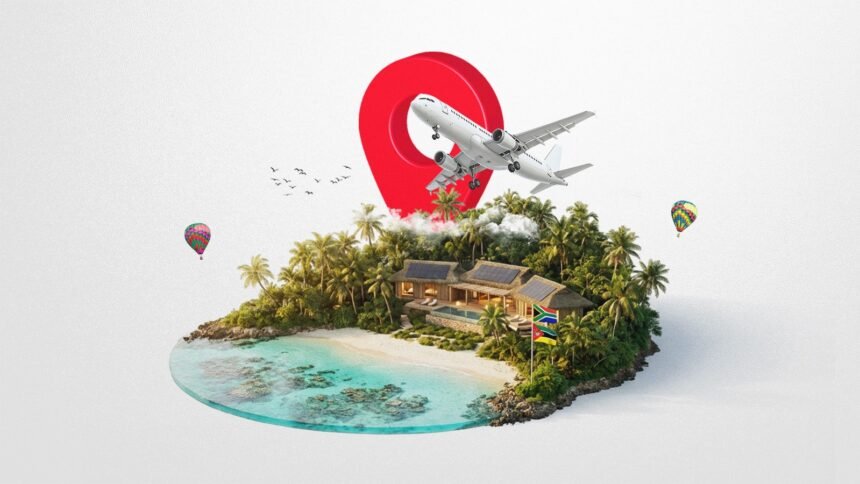
A flagship outcome of the tourism pact is the redevelopment of Santa Carolina Island in the Bazaruto Archipelago, Inhambane province, backed by a USD 102 million South African investment led by luxury tourism and conservation group Singita. The project includes around USD 60 million for a low-footprint luxury lodge on “Paradise Island” and about USD 42 million for developments on a second island, framed as a significant public–private partnership with Mozambique’s tourism authority INATUR under a 25‑year concession, and designed to diversify Mozambique’s tourism offer towards high-value cultural, leisure, and nature-based products while maintaining marine protected area standards.
Infrastructure, Value Chains, and Complementary Projects
Beyond Santa Carolina, South Africa is rolling out eight tourism infrastructure projects totaling roughly USD 55–59 million, including new and upgraded hotels, resorts, marinas, and leisure facilities, as part of its broader tourism growth strategy to 2030. Coupled with significant South African investments in Mozambique’s tourism sector, these projects support integrated value chains across key corridors, including Limpopo–Mpumalanga–Mozambique, positioning the broader region as a leading global destination for wildlife, coastline, and cultural tourism.
SADC 2030: Towards a Seamless Regional Experience
The SADC Tourism Programme 2020–2030 sets goals, including improved visitor mobility, stronger regional destination branding, the development of Transfrontier Conservation Areas (TFCAs), exceptional visitor experiences, and robust public–private partnerships. With backing from the German Federal Ministry for Economic Cooperation and Development via GIZ, the programme focuses on easing visa, transport, and regulatory barriers, meaning the South Africa–Mozambique tourism pact becomes a practical lever for turning Southern Africa into a seamless, multi-country tourism journey rather than a collection of isolated national stops.
What Does the Pact Mean for the 2030 Agenda?
By explicitly linking tourism to trade, infrastructure, and energy, the agreement lays the foundation for leveraging the African Continental Free Trade Area as a platform to scale investment in connectivity, transport corridors, and cross-border tourism products. Suppose the joint technical mechanisms, SME support, and unified marketing programmes are effectively implemented. The South Africa–Mozambique tourism pact could serve as a replicable model for tourism-led regional integration across Africa, reinforcing the Sustainable Development Goals and the African Union’s Agenda 2063 vision.