





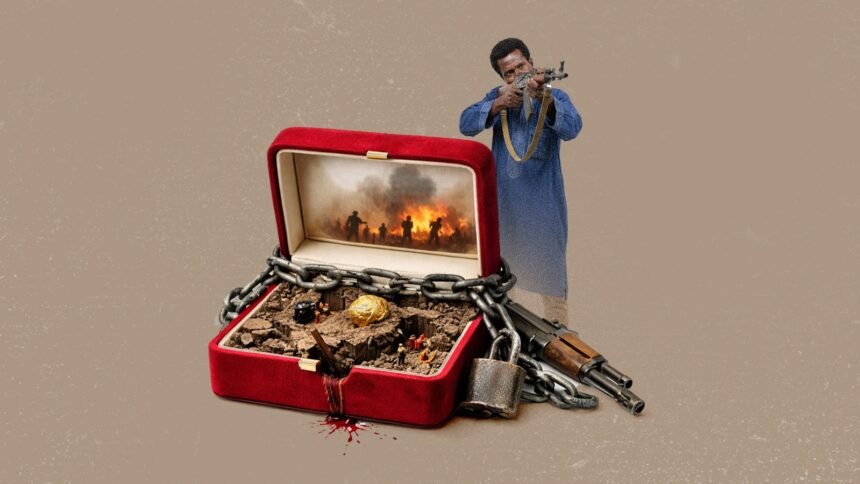
Pan-African Veins: Resource Riches and Regional Rifts
Across Africa’s mineral-rich expanse, subterranean treasures have long fueled both prosperity and peril, weaving a complex narrative in which economic boons intersect with social schisms. From the Democratic Republic of Congo’s cobalt corridors to South Africa’s gold gorges, the continent harbors some of the world’s most prolific extraction zones, with sites like Kibali in the DRC and Mponeng in South Africa standing as major producers. Leading nations such as Ghana, Mali, and the DRC dominate the production landscape, channeling billions in revenue yet grappling with the shadows of exploitation. This Pan-African vein pulses with promise—projected to yield trillions in critical minerals by mid-century amid the green energy surge—yet it fractures under the weight of historical grievances, in which colonial legacies of dispossession evolve into contemporary contests over land and livelihoods. In fragile frontiers, mining amplifies ethnic tensions and resource rivalries, birthing cycles of unrest that transcend borders, as seen in the Sahel’s banditry and the Great Lakes’ militia maneuvers. As global demand escalates for lithium, copper, and rare earths, Africa’s veins beckon a recalibration: harnessing wealth to mend rifts, fostering regional pacts that prioritize equitable shares over extractive excesses, and envisioning a future in which mineral resources bolster communal strength rather than unravel it.
Nigerian Fault Lines: Plateau’s Persistent Perils
In Nigeria’s fractured heartland, the undulating terrain of Plateau State conceals not only tin and columbite veins but also fault lines of festering discord, where mining sites morph into arenas of ambush and agony. The recent raid on Atoso village’s extraction enclave—claiming at least twelve lives, abducting three, and wounding five—exemplifies this peril, with assailants identified as armed Fulani militias striking under the night’s veil. This incident, unfolding mere days after a nearby child slaughter, underscores Plateau’s entrenched volatility, a mosaic of ethnic enclaves where Berom farmers and Fulani herders collide over grazing grounds encroached by artisanal digs. Historically, the state’s mining heritage dates to colonial tin booms, yet post-independence lax oversight fostered a shadow economy, with illegal operations sprawling across thirteen regions and intertwining with the web of banditry. Northern Nigeria’s gold rush, particularly in Zamfara and Kaduna, mirrors this malaise, in which unregulated pits fund insurgent arsenals, costing billions in foregone revenue while displacing communities. As the nation’s diversification drive amplifies the allure of solid minerals—aiming for 2030 output milestones—these fault lines demand seismic shifts: bolstering surveillance, formalizing artisanal collectives, and addressing root resentments to prevent the Plateau’s perils from propagating nationwide.
Mining’s Bloody Bounty: Extraction’s Entangled Edges
Nigeria’s mining bounty, glittering with gold, lithium, and gemstones, extracts a crimson toll, where subterranean yields entangle with surface strife in a relentless reciprocity. In the northwest’s bandit belts, illicit gold veins arm marauders, enabling raids that ravage villages and ransom routes, while in the Middle Belt, tin territories ignite inter-communal infernos. Economic infusions—bolstering GDP and employing thousands—clash with corrosive costs: livelihoods eroded as farmlands fall to craters, and informal miners ensnared in debt traps amid mercury mists. The sector’s shadow side amplifies inequalities, with foreign firms reaping royalties while locals bear the brunt of the blasts, fostering resentment that fuels further conflict. As global green transitions surge demand for Nigeria’s critical resources, this bloody bounty beckons balanced blueprints: value-added processing to retain revenues, community compacts to share spoils, and technology infusions for safer shafts. Yet, without weaving welfare into wealth’s warp, mining’s edges will continue carving crimson scars across the nation’s narrative.
Armed Groups’ Arsenal: Nomads and Nocturnal Nightmares
Armed groups prowl Nigeria’s mining peripheries, transforming nomadic necessities into nocturnal nightmares, where herder militias and bandit brigades wield weapons won from resource raids. In Plateau’s pastoral plateaus, Fulani formations—armed with assault rifles allegedly sourced from illicit ore trades—launch lethal forays, as evidenced in Atoso’s ambush, blending grazing grievances with gemstone grabs. This arsenal accretes from artisanal anarchy: bandits in Zamfara levy “taxes” on diggers, funneling funds into firepower that sustains sieges across seven states. Historical frictions between herders and farmers, exacerbated by climate-induced scarcities, arm these actors with ideological armor, portraying incursions as survival skirmishes. Yet, beneath nomadic narratives lie networked nefariousness—links to transnational traffickers supplying AKs for aurum—perpetuating a cycle where armed ascendancy undermines state sovereignty. Countering this requires disarming dialogues: mediated accords allocating access, vigilante vetoes on vigilantes, and intelligence infusions to intercept illicit inflows, lest armed groups’ arsenals perpetuate Nigeria’s nocturnal terrors.
Violence’s Vicious Vortex: Cycles of Carnage and Chaos
Violence vortexes around Nigeria’s mining mosaics, sucking societies into cycles of carnage where reprisals ripple from raid to retribution, eroding communal cores. Plateau’s perennial plagues—over a decade of deadly dashes claiming thousands—illustrate this whirl: Atoso’s assault echoes antecedent atrocities, like the 2024 miner massacres and 2021 site sieges, where ethnic embers ignite over excavation encroachments. In the north, banditry’s brutality burgeons, with over nine billion dollars drained annually from unregulated realms, funding frenzies that displace millions and deter investments. This vicious vortex vacuums vitality: schools shutter amid sieges, markets molder from migrations, and trust tatters between tribes. Breaking the spin demands multifaceted maneuvers—deploying drones for detection, fostering fusion centers for federal-state synergy, and embedding economic antidotes like youth yokes in legal lodes. As carnage cascades, Nigeria’s vortex vows a volatile verge unless vortexed into virtuous vectors of vigilance and vitality.
Environment’s Eroded Edifice: Scarred Soils and Silenced Streams
Nigeria’s mining mania erects an eroded edifice, scarring soils and silencing streams in a symphony of ecological sabotage that undermines existential equilibria. In Plateau’s pitted plateaus, artisanal assaults unleash mercury miasmas, contaminating catchments that quench communities, while deforestation denudes dunes, inviting erosive deluges. Nationwide, illegal incursions—spanning gold gulches in Osun to lithium lairs in Nasarawa—bequeath barren badlands, with cyanide cascades crippling croplands and aquatic arrays. This environmental eclipse exacerbates climatic variability: amplified aridity in the north, where mining disrupts moisture cycles, heightening hostilities between herders and farmers. Economic echoes resonate—lost agrarian yields impose burdens on billions—yet regulatory rifts allow ravages to rage unchecked. Rebuilding the edifice entails eco-enlightened edicts: mandating mine reclamation, deploying monitors for mercury mitigation, and mainstreaming green interventions such as solar-shaded shafts. Without such safeguards, Nigeria’s eroded edifice endangers not merely the environment but the edifice of endurance itself.
Development’s Dual Dagger: Prosperity’s Perilous Price
Development wields a dual dagger in Nigeria’s mining milieu, where prosperity’s promise is tempered by perilous prices, balancing boons against burdens in a delicate dialectic. The sector’s surge—poised to propel GDP past petroleum’s plateau by 2030—delivers dividends: jobs jolting youths out of joblessness, revenues revamping roads, and technology transfers transforming terrains. Yet, this dagger’s darker edge dissects development: violence vacuums value, with bandit-besieged belts bleeding billions, while environmental erosions eviscerate agrarian anchors. In Plateau’s precarious pits, prosperity’s peril manifests as mined communities mourn missed milestones—schools sidelined, health hubs hollowed. Forging forward requires dual defenses: inclusive incentives that integrate indigenes into value chains and resilient regulations that deter rogue raiders. As global green grids gravitate toward Nigeria’s nodules, development’s dagger dictates a deft dance—wielding wealth to whittle woes, ensuring prosperity’s price purchases peace rather than perpetuating peril.