





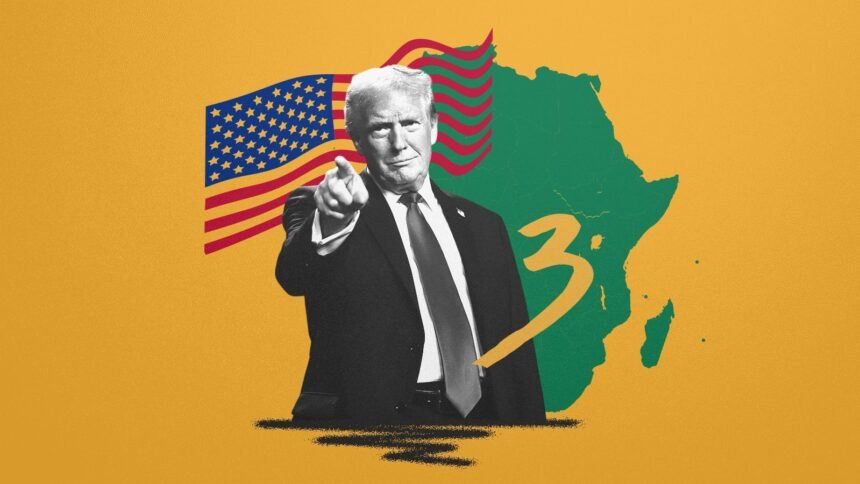
In an era of shifting global alliances, the interplay between the United States and the African continent stands at a pivotal juncture. As discussions swirl around the constitutional ambiguities of a potential third term for President Donald Trump, the implications for Pan-African aspirations and bilateral engagements demand scrutiny. This article examines the historical trajectory of U.S.- Africa relations, analyzes current policies, and explores how an extended Trump presidency might reshape development trajectories, foreign policy frameworks, and political landscapes across Africa.
Roots of Engagement: Historical Threads in US-Africa Bonds
The narrative of US-Africa relations weaves through centuries of complex interactions, from early transatlantic exchanges to modern geopolitical maneuvers. Beginning in the colonial shadows, American involvement in Africa often mirrored European patterns, with trade in commodities and human capital laying uneven foundations. The Cold War era transformed this dynamic into a battleground for ideological supremacy, where the US positioned itself as a counterweight to Soviet influence, channeling support to allied regimes while overlooking authoritarian tendencies in pursuit of strategic gains.
Post-Cold War transitions brought a focus on democratization and humanitarian efforts, exemplified by initiatives under administrations that emphasized multilateralism. Yet this period also exposed inconsistencies, as economic interests in resources such as oil and minerals often overshadowed commitments to governance reforms. The African Growth and Opportunity Act (AGOA) emerged as a cornerstone of trade, but it has been criticized for its conditional nature. These historical layers reveal a pattern: US engagement has oscillated between altruism and self-interest, setting the stage for contemporary tensions and opportunities in Pan-African unity.
Continental Crossroads: Evolving US-Africa Investments and Partnerships
Today, U.S.- Africa economic ties reflect a blend of competition and collaboration, with investment surging in sectors vital to global supply chains. American capital has increasingly targeted Africa’s critical minerals, outpacing rivals in select areas through initiatives like Prosper Africa, which connects businesses across continents. This shift underscores a move from aid dependency to trade-driven models, with billions committed to infrastructure and energy projects that promise mutual prosperity.
However, challenges persist in balancing these investments with local development needs. The US-African Union relationship, formalized through diplomatic missions, emphasizes shared goals in security and health, yet often grapples with perceptions of paternalism. While aid flows are substantial, they have faced scrutiny for inefficiencies, with recent trends indicating a shift toward targeted support in resilient economies. This evolving landscape highlights Africa’s growing agency, as nations diversify partnerships beyond traditional Western orbits, fostering a more multipolar economic environment.
America First on African Soil: Trump’s Foreign Policy Paradigm
Under President Trump’s leadership, US foreign policy toward Africa has embodied a transactional ethos, prioritizing American interests in security, trade, and resource access. His administration’s approach, dubbed “carrot and stick,” has involved bolstering counterterrorism efforts while reducing broad-based aid, raising concerns about humanitarian gaps. Travel restrictions and visa policies have strained people-to-people ties, particularly affecting high-risk nations, while economic instruments such as tariffs signal a hardline stance on reciprocity.
This paradigm extends to engagements with the African Union, where selective partnerships favor aligned governments, often sidelining broader continental agendas. In politics, Trump’s rhetoric has amplified divisions by viewing Africa through the lens of strategic competition with global powers. Development aid, once a pillar of soft power, has been reframed as leverage, with cuts impacting health and education sectors. These elements suggest a policy framework that, while pragmatic, risks alienating emerging African leaders pursuing Pan-African sovereignty.
Constitutional Horizons: Envisioning Trump’s Extended Leadership
The prospect of a third Trump term, fueled by legal debates and political speculation, challenges the foundational limits of American governance. Rooted in interpretations of constitutional ambiguities, as explored by scholars examining electoral scenarios and succession paths, this possibility remains constitutionally improbable under the 22nd Amendment’s explicit prohibition on more than two elected terms. Nonetheless, hypothetical pathways—such as congressional interventions or abstentions in electoral processes—have sparked intellectual discourse, though they face insurmountable legal and public hurdles.
In the political realm, such a scenario would amplify Trump’s “America First” doctrine, potentially entrenching isolationist tendencies. For US-Africa relations, this extension could mean a perpetuation of current trajectories, with an emboldened administration doubling down on unilateral decisions. The allure of continuity for Trump’s supporters contrasts with warnings from critics about democratic erosion, positioning this debate as a litmus test for global perceptions of American stability.
Ripples on the Savanna: Potential Shifts in US-Africa Dynamics
Should a third Trump term materialize against odds, its effects on US-Africa relations could be profound, reshaping foreign policy, development, and political interactions. In foreign policy, an extended tenure might intensify security-focused engagements, expanding military footprints in counterterrorism while curtailing suchparticipation in multilateral forums such as African Union summits. This could foster selective alliances with compliant nations, sidelining those pursuing independent paths and exacerbating continental divides.
Developmentally, aid reductions—already evident in cuts to health and poverty alleviation—might accelerate, pushing African economies toward self-reliance or toward alternative partners. Investments in critical minerals could surge, but under terms favoring extraction over equitable growth, raising neocolonial concerns. Politically, Trump’s style might embolden populist movements in Africa, mirroring his domestic base, yet alienate progressive Pan-African voices advocating for sovereignty. Challenges like trade barriers and travel bans could deepen, hindering diaspora contributions and economic mobility.
Navigating Turbulent Terrains: Challenges in Bilateral Horizons
US-Africa relations confront multifaceted hurdles, from geopolitical rivalries to internal governance issues. The expiration of trade frameworks such as AGOA has left gaps in economic ties, compounded by tariffs and sanctions that penalize non-alignment. Security challenges, including insurgencies and resource conflicts, strain partnerships, while aid volatility exacerbates poverty and health crises across the continent.
Politically, divergences over global issues—such as alliances with non-Western powers—fuel tensions, as seen in strained relations with key African nations. Development obstacles, including brain drain and infrastructure deficits, underscore the need for balanced engagements. In a third Trump term, these challenges could intensify, with a more assertive US stance potentially clashing with Pan-African ideals of unity and autonomy, demanding adaptive strategies from African leaders.
Forging Forward: Pan-African Visions and US Engagements Ahead
Looking to the future, US-Africa relations hold potential for reinvention, blending innovation with resilience. A hypothetical Trump extension might catalyze African diversification, accelerating intra-continental trade under the African Continental Free Trade Area and strengthening ties with emerging global players. Foreign policy could evolve toward hybrid models, incorporating technology and green energy collaborations that transcend traditional aid.
In development, an emphasis on human capital—through education and skills transfer—could mitigate aid cuts and foster sustainable growth. Politically, Africa’s youthful demographics provide leverage for assertive diplomacy, advancing equitable partnerships. Ultimately, the path ahead lies in mutual respect, where Pan-African solidarity counters external pressures, paving the way for a collaborative era that honors shared histories while embracing new possibilities.
In conclusion, the specter of Trump’s third term, though constitutionally remote, illuminates the vulnerabilities and strengths in US-Africa relations. By addressing historical inequities and current imbalances, both sides can chart a course toward enduring, equitable bonds that advance global prosperity.