





Rwanda’s 2025 tax reforms have already yielded significant results, generating more than $90 million (approximately RWF 131.7 billion) in the first six months of implementation. The performance exceeded government projections, underscoring the growing importance of domestic revenue mobilisation in financing national development.
Data from the Rwanda Revenue Authority (RRA) show that by the end of December 2025, revenues collected from the new and adjusted tax measures reached Rwf131.7 billion, equivalent to roughly $90.8 million, exceeding the Rwf129.3 billion target. This represents a performance of 101.9%.
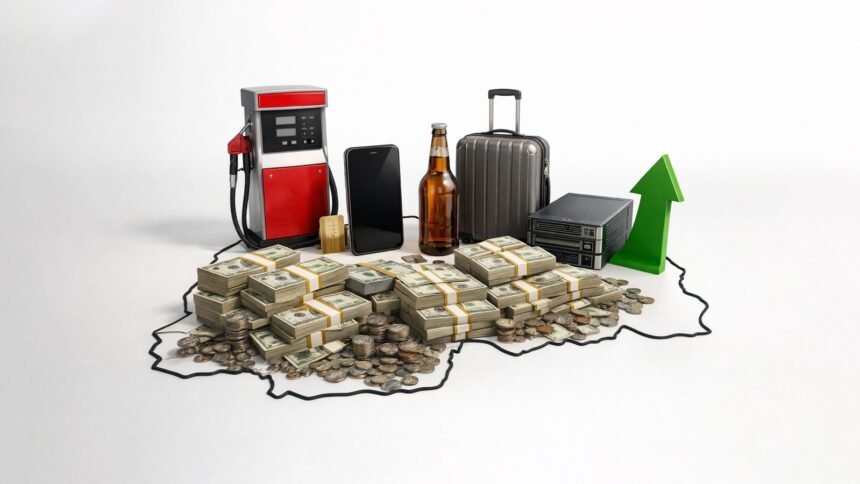
Roy Valence Gasangwa, the Assistant Commissioner for Planning, Research and Statistics at RRA, said the reforms were designed to broaden the tax base and adjust rates on selected goods and services, including fuel, beer, airtime, cigarettes, ICT equipment, tourism services, and hybrid vehicles. The measures are projected to raise Rwf248.5 billion (about $171 million) over the full 2025/26 fiscal year, contributing 1.1 per cent to Rwanda’s tax-to-GDP ratio.
The strong half-year performance was primarily driven by value-added tax on fossil fuels, which accounted for 46.9 per cent of total revenues from the reforms and exceeded its target. Other measures that outperformed expectations included the fuel levy, VAT on selected ICT equipment, and excise duty on beer, which together contributed 24.3 per cent of the total revenue.
Despite the overall positive results, some reform measures underperformed due to compliance challenges. VAT on road transport of goods, VAT on mobile telephones, and the tourism tax recorded lower-than-expected collections. Gasangwa attributed this to low registration rates, limited use of electronic billing machines, informality in some sectors, and underreporting. For example, VAT registration compliance for road transport of goods stood at just 20.3 per cent, while compliance for the tourism tax was 47.6 per cent.
To address these gaps, RRA has intensified taxpayer sensitisation, particularly in transport and hospitality, and strengthened enforcement through closer collaboration with field officers and the Rwanda National Police to curb smuggling and improve invoicing compliance. Early gains were also seen from gaming tax reforms that took effect in September 2025. The tax on gross gaming revenue increased from 13 per cent to 40 per cent, while withholding tax on gaming winnings rose from 15 per cent to 25 per cent, generating Rwf3.1 billion ($2.1 million) and Rwf1.2 billion ($0.8 million), respectively, since implementation.
For investors and businesses across Africa and the Gulf, these results signal a more stable and predictable revenue environment in Rwanda. The introduction of VAT on fuel and ICT equipment, excise duties on beer, airtime, and cigarettes, and the tourism levy are likely to influence costs in sectors such as logistics, telecommunications, and hospitality. However, the government’s focus on improving compliance and enforcement should help create a fairer, more transparent business environment.
Rwanda’s broader strategy aims to increase the tax-to-GDP ratio from 14.6 per cent in 2023/24 to 19 per cent by 2029, aligning with financing needs under the second phase of the National Strategy for Transformation. For regional investors, this indicates a country steadily building domestic capacity to fund development projects, infrastructure, and public services, thereby supporting a stronger investment climate.
The reforms, including the 18 per cent VAT on petrol and diesel, the shift of the fuel levy to 15 per cent of CIF value, and the removal of VAT exemptions on selected ICT equipment, signal Rwanda’s commitment to modernising its tax system. With steady implementation, these measures could position Rwanda as a model for domestic revenue mobilisation in East Africa, offering lessons for other African nations looking to enhance fiscal sustainability.