




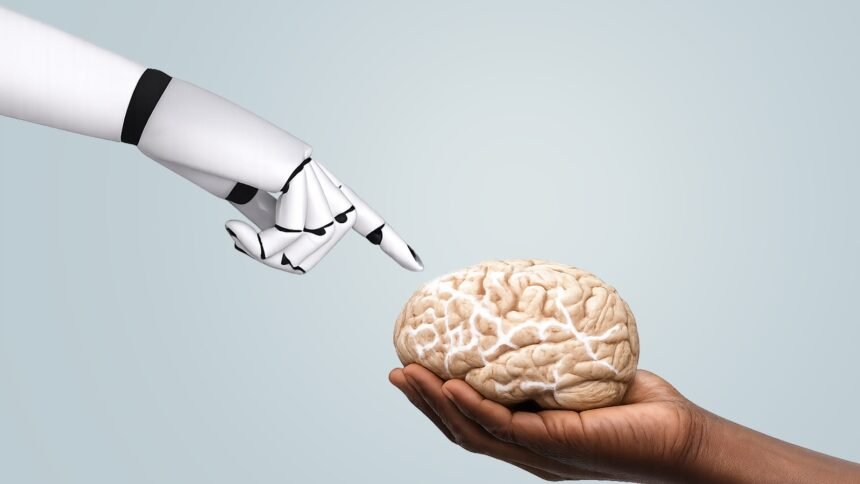
In the vast tapestry of Africa’s health narratives, mental well-being emerges as a critical thread, woven through centuries of cultural resilience, colonial legacies, and contemporary innovations. As the continent grapples with a burgeoning mental health crisis amid rapid urbanization and global pressures, artificial intelligence (AI) stands poised as a transformative force. This article examines the integration of AI into mental healthcare, exploring its potential to bridge access gaps, tailor interventions to local contexts, and foster a Pan-African approach to holistic well-being. By examining historical foundations, current initiatives, and forward-looking strategies, we illuminate how AI can empower communities, enhance public health systems, and promote equitable mental care.
Pan-African Echoes: Tracing the Roots of Mental Healthcare
The story of mental healthcare in Africa is deeply rooted in indigenous knowledge systems, where well-being was often viewed through communal and spiritual lenses. Pre-colonial societies across the continent, from the Yoruba healers in West Africa to the Zulu sangomas in the south, integrated mental health into broader holistic practices, addressing emotional distress through rituals, herbal remedies, and social support networks. These approaches emphasized a balance among the individual, community, and environment, in contrast to Western biomedical models.
Colonialism introduced a disruptive shift, imposing psychiatric institutions that often pathologized African behaviors and reinforced racial hierarchies. In the 19th and early 20th centuries, European administrators established asylums primarily for control rather than care, leading to stigmatization and neglect. Post-independence, many nations inherited underfunded systems, with mental health relegated to the margins of public policy. The World Health Organization (WHO) estimates that mental disorders account for a significant portion of Africa’s disease burden. Yet, historical underinvestment has left a legacy of scarcity—fewer than 1.4 mental health professionals per 100,000 people in some regions.
This historical context underscores the need for culturally attuned interventions. AI’s emergence offers a pathway to reclaim and modernize these traditions by using data-driven insights to detect patterns in local expressions of distress, such as idioms of sorrow in Swahili or Luganda, and to integrate them into digital tools for widespread use.
Mind Matters: Distinguishing Psychological and Psychiatric Approaches in African Realms
In African mental healthcare, the interplay between psychology and psychiatry reveals nuanced differences shaped by resource constraints and cultural frameworks. Psychology focuses on behavioral and cognitive therapies, emphasizing talk-based interventions, community counseling, and preventive strategies. It aligns closely with indigenous practices, where elders or traditional healers provide emotional guidance without medicalization. In contrast, psychiatry involves medical diagnosis and treatment, often incorporating pharmacology and hospital-based care, which can be scarce due to limited infrastructure.
Across the continent, these fields overlap in hybrid models. For instance, in community health programs, psychologists train lay counselors to deliver group therapies, while psychiatrists handle severe cases like psychosis. However, stigma persists, with mental issues frequently attributed to spiritual causes rather than biological ones, leading to delayed psychiatric referrals. AI bridges this divide by providing scalable psychological tools, such as chatbots for initial assessments, and by supporting psychiatric decision-making through predictive analytics. This integration fosters a balanced approach that respects cultural sensitivities while advancing evidence-based care.
Vanguard Nations: Pioneers in Elevating Mental Healthcare Across the Continent
Several African nations are leading the way in mental health advances, setting benchmarks for Pan-African collaboration. South Africa, with its robust policy framework, integrates mental health care into primary health services and supports specialized hospitals and community outreach programs. Nigeria, despite challenges, excels in research and training, with institutions like the University of Ibadan pioneering neuropsychiatric studies. Uganda and Kenya stand out for innovative digital initiatives that leverage mobile technology to reach remote areas.
Ethiopia and Rwanda emphasize post-conflict recovery, incorporating mental health into national reconstruction plans. Ghana and Tanzania focus on destigmatization through public campaigns, while Egypt expands inpatient facilities. These leaders demonstrate that progress stems from policy commitment, workforce development, and international partnerships. AI amplifies their efforts; for example, in Uganda, call data from clinics is used to train algorithms to identify suicidal ideation in local dialects, thereby extending reach beyond urban centers.
Synergizing Intelligence: AI’s Fusion into Pan-African Mental Healthcare
AI’s integration into African mental healthcare represents a paradigm shift, addressing shortages in professionals and infrastructure. Tools such as chatbots, powered by natural language processing, provide 24/7 support in multiple languages and can reduce stigma by offering anonymous interactions. In Uganda, researchers at Makerere University use helpline recordings to train models that detect depression or psychosis cues in Swahili and Luganda, escalating cases to human experts when needed.
Across the continent, AI-driven apps analyze voice patterns for anxiety indicators or use machine learning to predict relapses in substance use disorders. In South Africa, frameworks such as CARE MH regulate AI tools, ensuring they operate ethically in languages such as Zulu. These innovations extend to rural areas via SMS-based interventions, making care accessible without smartphones. By incorporating behavioral data and cultural nuances, AI personalizes therapy by recommending community-based coping strategies rooted in African traditions.
Public health benefits are profound: AI optimizes resource allocation, enabling early interventions that reduce hospitalization rates. Collaborative platforms aggregate data on a continental scale, fostering a Pan-African database for tailored algorithms. However, success hinges on co-creation with local communities to avoid biases inherent in Western-trained models.
United Fronts: AU-WHO Alliances for Public Health and Mental Resilience
The African Union (AU) and WHO spearhead collaborative efforts to bolster mental health, recognizing it as integral to public health and sustainable development. The AU’s Agenda 2063 prioritizes well-being, with initiatives such as the Continental Strategy on Mental Health and Psychosocial Support that address emergencies and conflicts. The WHO’s regional office supports this through frameworks such as the Mental Health Gap Action Programme, which trains non-specialists in evidence-based care.
Joint endeavors include the AU Healthy Lifestyle Day, promoting preventive practices, and workshops on guidelines for psychosocial support in crises. Funding from partners such as the Wellcome Trust supports AI projects, including regulatory frameworks in South Africa. These alliances address workforce gaps by advocating for integrated services in which AI serves as a force multiplier—screening populations, monitoring trends, and informing policy. By aligning with WHO’s global standards while adapting to African contexts, these efforts enhance resilience and reduce the economic toll of untreated conditions, estimated at billions annually.
Hurdles to Harmony: Overcoming Barriers in AI-Infused Mental Well-Being
Despite its promise, AI integration faces formidable challenges in Africa’s mental health care landscape. Stigma remains pervasive, deterring engagement with digital tools perceived as impersonal or foreign. Infrastructure deficits—limited access to electricity and the internet, and low levels of digital literacy—hinder scalability, particularly in rural sub-Saharan regions. Data privacy concerns loom large, with risks of misuse in unregulated environments.
Ethical dilemmas abound: AI models trained on biased datasets may misdiagnose culturally specific expressions of distress, exacerbating inequalities. Regulatory gaps, evident across national frameworks, complicate deployment. Workforce shortages mean over-reliance on AI could undermine human empathy, while high development costs exclude smaller nations.
Addressing these requires Pan-African strategies: investing in local AI talent, enforcing data sovereignty, and conducting community-led pilots. Public health campaigns can normalize the use of AI, while AU-WHO partnerships advocate for equitable funding. Overcoming these barriers will ensure AI enhances, rather than replaces, human-centered care.
Visionary Pathways: AI and Enduring Well-Being in Africa’s Tomorrow
Looking ahead, AI’s role in African mental health care promises a future of enhanced well-being. Predictive analytics could forecast epidemics of stress-related disorders associated with climate change or urbanization, thereby enabling proactive public health responses. Advanced tools, like virtual reality therapies adapted to African narratives, might alleviate PTSD in conflict zones.
Pan-African networks, supported by AU-WHO, could standardize AI ethics and foster innovation hubs in leading nations to disseminate best practices. Integrating AI into traditional healing—such as algorithms that suggest herbal complements—preserves cultural heritage while modernizing care. By 2030, widespread adoption could halve treatment gaps, boosting economic productivity and social cohesion.
Yet, this vision demands vigilance: prioritizing equity to prevent digital divides and ensuring AI serves all Africans. Ultimately, AI’s true potential lies in augmenting human connections, paving the way for a continent where mental well-being is a shared, sustainable reality.
In synthesizing Africa’s mental health journey with AI’s transformative power, we envision a resilient Pan-African framework. By embracing innovation while honoring diverse heritages, the continent can lead globally in fostering minds that thrive, ensuring well-being for generations to come.