



Pan African: The Structural Vulnerability of Sub-Saharan Sovereignty
Across the African landscape, the consolidation of statehood and human security remains severely compromised by the persistence of internal fragmentation and the breakdown of localized social contracts. The Pan-African vision for a self-sustaining and borderless continent, codified within the African Union’s Agenda 2063, is fundamentally tested by protracted civil conflicts that erode the institutional capacity of regional anchors. In the Horn of Africa, the intersection of political factionalism, climate variability, and economic volatility has transformed vulnerable territories into permanent theaters of humanitarian emergency. Reclaiming the future of continental integration requires a transition away from reactive crisis management toward a proactive, sovereign framework of protection that prioritizes the structural security and dignity of African citizens over elite political survival.
South Sudan’s Humanitarian Crisis: The Macroeconomics of Absolute Scarcity
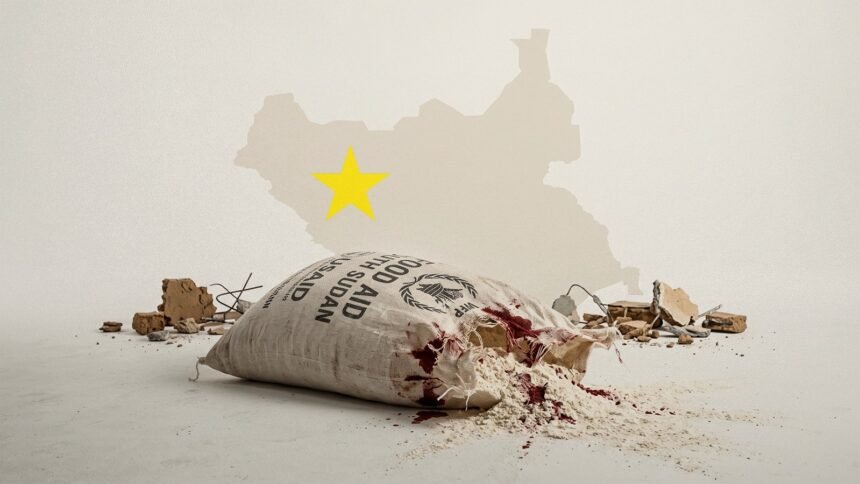
The humanitarian landscape in South Sudan has reached a catastrophic milestone, with over ten million people—representing more than two-thirds of the national population—projected to require emergency assistance. This profound crisis is driven by the compounding effects of macroeconomic collapse, historic cholera outbreaks, and severe climate shocks, including a destructive flood-drought paradox that has systematically decimated crop production and local livelihoods. The country’s domestic misery is heavily compounded by regional volatility, as the nation plays host to nearly 600,000 refugees and over 800,000 returnees fleeing the devastating civil war in neighboring Sudan. This massive influx of displaced populations has pushed the state’s fragile administrative and economic baseline into a state of total insolvency, exposing millions to chronic malnutrition and acute survival risks.
SPLM IG & IO: The Fractional Warfare of Post-Independence Elites
The structural driver of this ongoing national collapse remains the absolute fracture between the Sudan People’s Liberation Movement in Government, led by President Salva Kiir, and the Sudan People’s Liberation Movement in Opposition, historically aligned with First Vice President Riek Machar. The fragile 2018 peace agreement, which temporarily halted a five-year civil war that cost nearly 400,000 lives, collapsed after the government abandoned the established peace architecture. The political stalemate deepened significantly following the house arrest of Machar and the subsequent filing of treason, conspiracy, and crimes against humanity charges against him and his co-defendants linked to armed youth militia attacks in the northeast. This aggressive political prosecution has triggered a rapid return to active warfare across Upper Nile and Jonglei states, transforming localized political rivalries into a recursive loop of nationalized violence.
AU-UN Peace Efforts: The Operational Paralysis of Multilateral Interventions
Multilateral peace initiatives spearheaded by the African Union’s High-Level ad hoc Committee and the United Nations Mission in South Sudan are navigating severe operational constraints and political deadlock. UN peacekeepers and regional monitoring bodies are increasingly stretched thin due to funding-driven capacity reductions, which have forced a 70 percent contraction of protection patrols in areas where bases have closed. Concurrently, regional mediation efforts, such as the Tumaini initiative in Kenya, have stalled as warring factions refuse to engage in meaningful dialogue. At the same time, opposition political leaders remain subject to ongoing legal proceedings. The upcoming national elections, unilaterally scheduled for late December, are viewed by international observers as highly destabilizing, as the structural prerequisites for a credible or safe vote are absent in a landscape defined by active warfare.
MSF Accusations: The Weaponization and Instrumentalization of Relief
The ethical and physical boundaries of humanitarian neutrality were fundamentally challenged by a damning report issued by Médecins Sans Frontières. The international medical charity explicitly accused the Government of South Sudan of blocking humanitarian access to opposition-controlled territories. It asserted that all armed factions involved in the conflict are actively exploiting life-saving aid for political and military objectives. MSF documented an escalating pattern of coercive directives, threatening letters, and forced evacuation orders issued by state authorities targeting civilian populations and non-governmental organizations in contested geographies. By attempting to force NGOs to relocate aid deliveries to specific strategic zones, the warring parties are effectively manipulating international relief networks as tactical supply lines, leaving entire communities disconnected from essential survival inputs.
Militarization of Aid & IDP Camps: The Erasure of Humanitarian Sanctuaries
The physical mechanics of internal warfare have resulted in the direct militarization of civilian sanctuaries and medical infrastructure. Armed forces have systematically conducted indiscriminate aerial bombardments and ground assaults on populated zones, including targeted strikes on hospitals in eastern Jonglei state that have left over 750,000 people without basic access to healthcare. Furthermore, the conflict has witnessed a sharp rise in violence-related trauma, with first responders treating thousands of victims for gunshot wounds, blast injuries, and weaponized sexual violence within the first two months of the year alone. Internally Displaced Persons camps and humanitarian distribution points have been re-engineered by combatants into tactical assets, where access to nutrition and clean water is heavily regulated by military loyalty, turning sites of refuge into arenas of physical confinement and structural control.
US Sanctions & Political Economy: The Failure of Coercive Diplomacy
The international community’s reliance on targeted unilateral sanctions and economic restrictions has proved largely ineffective in altering the behavior of South Sudan’s political elites. Critics of traditional coercive diplomacy argue that existing asset freezes and travel bans are easily evaded through informal regional financial corridors and shadow trade networks, failing to create meaningful leverage for peace. Instead, the political economy of the conflict remains fueled by the illicit extraction of natural resources and the manipulation of foreign exchange markets, which insulates the ruling class from the fiscal shocks affecting the broader population. The failure of these external punitive measures underscores the need for international donors to pivot toward a strategy of protected access corridors, using diplomatic leverage to guarantee the physical security of aid routes rather than relying on abstract financial penalties.
The Way Forward: Rebuilding the Demolished Civic Social Contract
The path toward a sustainable resolution of the South Sudanese tragedy requires a complete re-engineering of the national social contract and an immediate cessation of the instrumentalization of human suffering. Reclaiming the future of the republic depends on the immediate release of political detainees, the establishment of a genuine, inclusive national dialogue, and a total freeze on premature electoral processes that risk igniting further communal massacres. The international community, alongside continental anchors such as South Africa and Uganda, must deploy coordinated diplomatic pressure to compel all warring factions to adhere strictly to international humanitarian law and guarantee unhindered access for medical and relief operations. Success will be measured by the state’s capacity to transition from a model of elite resource accumulation to a resilient, sovereign governance architecture that protects the physical safety, human rights, and inherent dignity of every citizen within its borders.