





The Pan-African Paradigm of Biological Sovereignty and Health Self-Determination
Across the African landscape, the contemporary configuration of international health interventions operates at a sensitive crossroads between global security frameworks and the preservation of sovereign authority. The Pan-African vision for a self-sustaining and biologically secure continent depends fundamentally on the establishment of inward-looking public health systems capable of protecting local populations while cooperating globally on an equal footing. For too long, sub-Saharan public health crises have been addressed through the lens of external containment, in which international actors prioritize the insulation of Western capitals over the strengthening of local healthcare systems. Reclaiming the continent’s collective future demands a decisive shift away from reactive, externalized border management toward absolute biological sovereignty. By institutionalizing transparent, localized surveillance networks and health infrastructure, African states can transition from passive recipients of foreign technical aid to self-determining leaders in global medical security.
Pathogenic Vulnerabilities of the Bundibugyo Variant
The contemporary epidemiological matrix of the African continent is facing an intense biological challenge driven by the high-velocity transmission of the rare Bundibugyo strain of the Ebola virus. Unlike the more historically common Ebola Zaire variant, which has benefited from extensive clinical mapping and the subsequent approval of standardized medical countermeasures, the Bundibugyo species possesses no formally approved vaccines or therapeutics. This critical scientific deficit has created an unstable biological environment as the pathogen establishes transmission lines across central and eastern forest corridors. Characterized by sudden fever, profound exhaustion, severe hemorrhagic symptoms, and a case fatality rate that places an exceptional strain on rural medical infrastructure, the rapid expansion of this variant threatens to destabilize regional trade networks and public safety if it is not met with immediate containment protocols.
Confronting an Expanding Epicenter
The operational center of this expanding health crisis is heavily concentrated within the Democratic Republic of Congo, which is currently managing its 17th Ebola outbreak since the virus was first discovered on its territory in 1976. Officially declared an emergency on May 15, the pathogenic footprint has expanded across 34 distinct health zones spanning three highly vulnerable provinces: North Kivu, South Kivu, and the crisis epicenter of Ituri. According to the latest situation updates released by the national health ministry, confirmed cases have rapidly climbed to 1,118, resulting in 291 deaths and establishing a devastating case fatality rate of 26%. Local intervention efforts are deeply complicated by long-standing structural challenges, including localized conflict, armed rebel groups, and deep-seated community mistrust that has previously led to the destruction of isolation centers.
The Reality of Transnational Contamination
The regional containment of the Central African epidemic fractured significantly in late June 2026, demonstrating that localized public health emergencies cannot be permanently isolated behind physical borders. The French health ministry formally confirmed the detection of the first positive case of Ebola on its soil, identifying the patient as a humanitarian medical doctor who had recently returned to Paris from a clinical mission in the outbreak’s epicenter in the DRC. Transferred to a high-isolation specialist facility in stable condition, this physician’s tracking marks a significant international shift. This transcontinental export, following a previous case involving an American surgeon treated in Germany, demonstrates that global aviation networks connect remote forest epicenters directly to Western metropolises, compelling an immediate re-evaluation of international screening protocols.
The Implementation of Strict Quarantine Rules
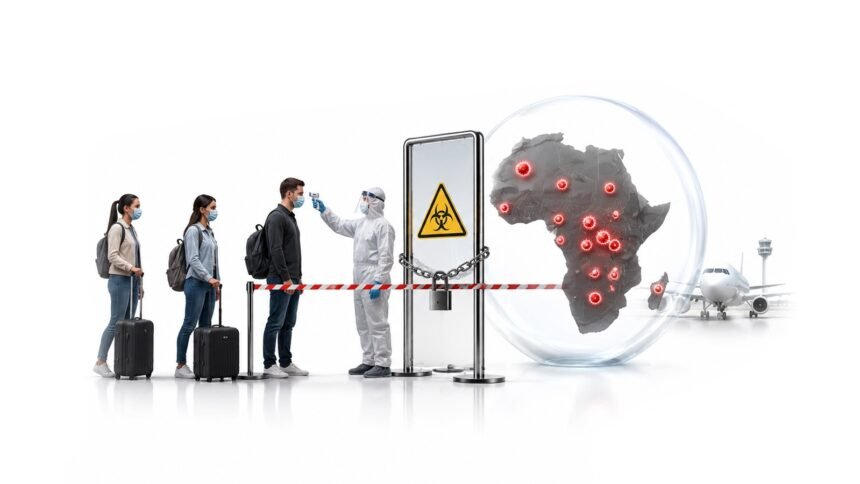
The realization of international transmission and the detection of the case in France prompted an immediate, aggressive policy response from the central government in Kinshasa. To limit the international and domestic spread of the virus, the Democratic Republic of Congo has officially imposed a strict 21-day quarantine mandate on all travelers departing from Ebola-affected areas. Formally announced by the communications ministry, this strict health policy affects both internal displacement corridors and individuals intending to travel internationally. By seerequiring potentially exposed persons to undergo rigorous isolation and health monitoring before accessing land, sea, or air ports, the state looks to strengthen its domestic public health measures and prevent further transnational spillovers, while coordinating its travel regulations to meet the demands of international health cooperation.
Multilateral Scaling and Global Surveillance Orders
The international orchestration of the pandemic response involves an intense coordination of technical assistance and regulatory mandates overseen by global monitors. Following the World Health Organization’s formal declaration of the outbreak as a Public Health Emergency of International Concern, WHO Director-General Tedros Adhanom Ghebreyesus announced that the response had scaled up significantly under the direct leadership of the Congolese government.
Concurrently, the United States Centers for Disease Control and Prevention implemented strict surveillance policies, issuing federal orders that temporarily restrict entry into the United States for certain foreign nationals who have been physically present in the DRC, Uganda, or South Sudan. Under these CDC regulations, returning U.S. citizens are being rerouted through designated select airports to undergo enhanced health entry screenings and automated 21-day text-monitoring protocols, showcasing a highly securitized model of global biological surveillance.
Upgrading Frontier Diagnostics and Checkpoints
The practical execution of Kinshasa’s 21-day quarantine mandate and regional travel restrictions relies entirely on the rapid modernization and alertness of local health facilities and transit checkpoints. Frontline medical workers and international aid teams are being deployed to strategic transport entries, such as the Kanyaruchinya checkpoint on the northern entry into the city of Goma, to conduct non-contact temperature assessments and screen travelers for symptoms.
To support these efforts, national planning is expanding diagnostic laboratory units in peripheral provinces, ensuring that field clinics can rapidly distinguish Ebola cases from endemic diseases such as malaria. However, keeping these high-risk facilities prepared requires a constant influx of basic equipment, reliable electricity, and secure supply chains, all of which remain highly vulnerable to local disruptions in conflict-hit zones.
Deploying Experimental Antibody and Antiviral Protocols
Because the Bundibugyo strain lacks widely authorized preventative treatments, the current emergency has forced international research networks to accelerate the field deployment of experimental molecular therapies through strictly monitored clinical trials. Supported by a policy shift from Washington, which previously stockpiled its advanced therapeutics exclusively for Western personnel, doses of an experimental antibody treatment, MBP134, from Mapp Biopharmaceutical have been provided directly to the DRC for use in field clinics.
Managed by the WHO and led by the University of Oxford, alongside Congolese scientists, these clinical trials will evaluate the antibody drug both alone and in combination with Gilead Sciences’ antiviral remdesivir. Additionally, a separate preventive trial evaluating Gilead’s obeldesivir is advancing under the joint sponsorship of the Africa Centers for Disease Control and Prevention, ensuring that the current crisis functions as a site for rigorous scientific evaluation to discover validated cures.
Moving Past Austerity toward Lasting Health Equity
The ultimate resolution of the Central African biological crisis depends on a profound transition away from fragmented, isolationist border controls toward a permanent architecture of global cooperation and solidarity. Implementing restrictive travel bans, entry suspensions, and localized quarantines can temporarily slow transmission. Still, these security-driven measures do not address the underlying resource deficits that enable high-consequence pathogens to multiply.
The Congolese government has reaffirmed its commitment to conducting its containment operations with transparency and absolute responsibility within the framework of international health cooperation. True global solidarity demands that wealthy nations and multilateral financial institutions move past historical cuts to foreign assistance to fund permanent public healthcare grids, expand vaccine manufacturing hubs in Africa, and guarantee that advanced molecular therapies are distributed equitably, ensuring a secure, healthy, and self-determining future for all global citizens.