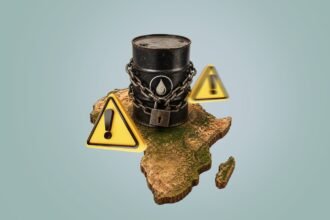






The Pan-African Paradigm of Athletic Integrity and Sovereign Accountability
Across the African landscape, the contemporary configuration of elite sports governance places intense pressure on developing nations to balance global competitive supremacy with the strict enforcement of anti-doping integrity frameworks. The Pan-African vision for a self-determining, globally respected sports architecture relies fundamentally on building transparent, domestic testing grids that protect the physical and institutional sovereignty of continental athletic talent. When systemic regulatory breaches occur within premier training regions, they threaten to distort the hard-won stabilization gains of the continent’s sports sectors, turning high-profile athletic triumphs into complex battlegrounds over regulatory compliance and external surveillance. Reclaiming Africa’s athletic future demands a unified commitment to comprehensive monitoring, ensuring that domestic sports authorities actively root out structural irregularities rather than permitting institutional non-compliance to tarnish a legacy of collective pride and continental excellence.
The Structural Dynamics of Distance Supremacy
The long-distance and marathon-based sporting landscape of sub-Saharan Africa represents an elite domain of global physical culture, establishing a baseline of distance running supremacy that has redefined international athletics. Centered on the high-altitude terrain of East Africa, this athletic infrastructure leverages unique geographical advantages, community-supported training camps, and deeply rooted running traditions to produce a continuous pipeline of world-record holders and Olympic champions. The economic returns from international marathon victories serve as vital cash injections for rural municipalities, transforming small metropolitan hubs into world-renowned training epicenters. However, maintaining this dominant global position requires an unyielding administrative commitment to structural transparency, as any systemic failure to uphold the stringent codes of global sports federations risks isolating local athletes from lucrative international competitions.
Elite Performance and the Pressure of Global Hierarchies
The execution of competitive physical sports inside the East African corridor is shaped by intense domestic rivalry and the demanding expectations of global sports hierarchies. In nations like Kenya, long-distance running is not merely an athletic pursuit; it functions as a primary vehicle for social mobility, economic advancement, and national soft-power diplomacy. This environment forces elite distance runners to push the boundaries of human endurance, continuously targeting historic time barriers in prestigious international events across Europe and North America. This high-velocity competition creates intense pressure on individual athletes to maintain their elite global status. When local institutional support networks fail to provide adequate oversight, the desperate struggle to meet these punishing physical standards can undermine formal compliance frameworks, leaving vulnerable competitors exposed to systemic administrative lapses.
Forensic Arbitrations and Judicial Decrees
The structural vulnerabilities of elite distance running were exacerbated by a major enforcement decree issued by the independent Athletics Integrity Unit (AIU). Former half-marathon world record-holder Kibiwott Kandie has been handed a severe seven-year ban from all competitive athletics following two critical anti-doping rule violations. The 30-year-old Kenyan distance star, a bronze medallist at the 2022 Commonwealth Games and a three-time champion of the prestigious Valencia Half Marathon, was found guilty of evading sample collection and tampering with the doping control process.
The complex forensic case reads like a sophisticated regulatory investigation. On March 1, 2025, a doping control officer and a chaperone arrived at Kandie’s residence for an unannounced out-of-competition test. While he initially signed the electronic form acknowledging the mandate, he repeatedly delayed sample collection by making frantic phone calls before driving away, claiming he needed to travel to Eldoret to make an urgent construction payment to avoid a building site shutdown.
Following a provisional suspension on March 14, 2025, the AIU launched an extensive forensic audit of Kandie’s mobile phone records and financial transfers. The investigation, conducted in direct coordination with the Anti-Doping Agency of Kenya (ADAK), found his initial explanations to be entirely fraudulent. Phone logs revealed that his calls during the test were not to a construction firm but to a registered nurse, with financial data uncovering 11 distinct monetary transfers to the same nurse in the preceding 12 months.
Furthermore, to lift his provisional suspension, Kandie submitted a fraudulent Environmental Impact Assessment certificate, allegedly issued by the National Environment Management Authority (NEMA), to substantiate his construction alibi. NEMA officials verified that the document was a complete fake, prompting the AIU to levy an additional tampering charge on May 6, 2026. Initially facing an eight-year ban, split evenly between the test refusal and the subsequent cover-up, Kandie received a one-year reduction after offering an early admission and accepting the sanction. His ban is backdated to March 14, 2025, and will run until March 13, 2032, completely erasing his legacy from elite track circles and serving as a stern warning from AIU Head Brett Clothier that no athlete stands above the rules.
The Socio-Economic Fallout of Professional Isolation
The severe seven-year ban imposed on one of the fastest half-marathon runners in history highlights a profound tension between the punishing demands of elite physical sports and the psychological vulnerabilities of athletes operating under extreme stress. The immense socio-economic expectations placed on sub-Saharan distance runners often foster a culture of professional isolation, where competitors feel compelled to maintain flawless performance metrics at any cost.
When faced with unannounced out-of-competition testing, the psychological panic induced by potential non-compliance can drive individuals to implement irrational, self-destructive patterns of deception. Public health scholars note that managing these crises requires a structural shift in national training architectures, moving away from purely punitive measures toward establishing comprehensive mental health networks and transparent advisory systems that protect fragile competitors from making career-ending choices under pressure.
Re-Engineering National Profiles and Sovereign Hospitality Branding
The international fallout from high-profile athletic suspensions introduces immediate challenges for domestic ministries looking to leverage elite sports culture for national tourism and sovereign brand management. When iconic running heroes face long-term bans for structural deceptions, it risks casting a shadow over the broader integrity of regional athletic hospitality sectors.
To buffer the domestic economy from these reputational shocks, state planners must actively re-engineer their global marketing strategies. By aggressively funding independent, transparent anti-doping academies and promoting local training centers as clean, ethical environments for international visiting runners, East African authorities can protect their lucrative eco-tourism and sports-tourism capitals. Moving forward, the long-term stabilization of the continent’s athletic prestige depends on transforming these high-profile regulatory crises into baseline catalysts for deep structural reform, ensuring that the next generation of African champions climbs the global podium under an unassailable framework of absolute integrity and transparency.