





The Pan-African Paradigm of Climate Finance and Structural Resilience
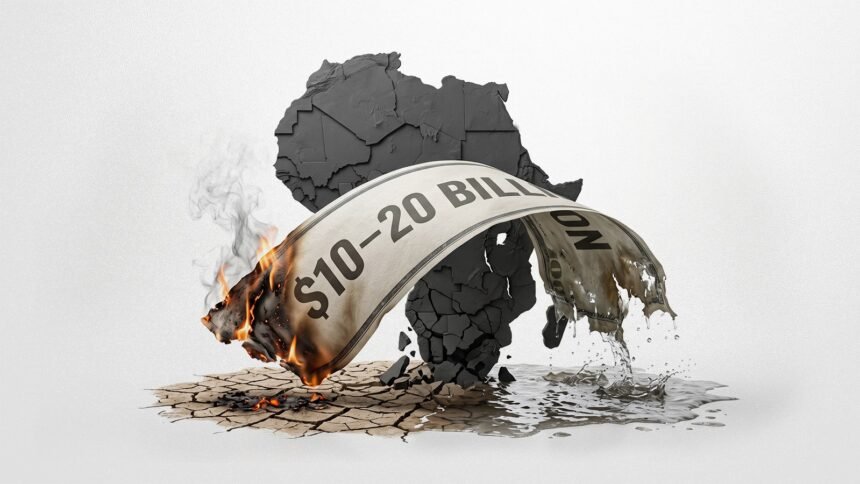
Across the African landscape, the gap between the continent’s exposure to climate shocks and its access to the finance needed to absorb them has widened into one of the defining structural injustices of the current era. That gap is about to be tested at unprecedented scale: Anthony Nyong, the African Development Bank’s director for climate change and green growth, has warned that an impending ‘super’ El Niño could inflict a combined $10 billion to $20 billion hit on affected African economies, reducing GDP in heavily affected countries by 1% to 2%, while triggering mass migration from the hardest-hit regions. The warning, the first of its scale from a major multilateral development bank regarding this specific event, arrives as Africa’s continental adaptation finance needs are projected to roughly double, from roughly $50 billion to as much as $100 billion this year alone. For a continent already navigating debt distress, currency pressure, and shrinking donor budgets, the coming El Niño represents both an immediate humanitarian threat and a structural test of whether African institutions can reclaim genuine agency over climate resilience rather than remaining perpetually reactive to external financial architecture.
The Anatomy of an Approaching Shock
Forecasters are warning that current Pacific Ocean warming trends could produce one of the strongest El Niño events ever recorded, with surface temperatures already climbing to multi-decade highs. Nyong told Reuters that the resulting drought, flooding, and storm activity across the continent would reduce heavily affected countries’ GDP by an average of 1% to 2%, translating into a combined $10 billion to $20 billion hit, a figure he described as unlikely to be a one-off given the recurring nature of El Niño cycles. The African Development Bank’s most recent forecast, issued in May, had projected 4.2% continental growth this year, rising to 4.4% in 2027. Still, that projection predates the intensified El Niño warnings and assumed an easing of the U.S.-Israeli war on Iran. Nyong specifically identified Sudan, South Sudan, the Democratic Republic of Congo, Somalia, Mali, Burundi, and Nigeria as countries facing particularly severe exposure, a list dominated by states already contending with conflict, displacement, or fragile governance, compounding climate vulnerability with pre-existing structural fragility.
The Climate Finance Trap
Nyong described a phenomenon he termed the ‘climate finance trap,’ in which governments lacking sufficient resources to respond to climate crises are forced to divert funds from health, education, or infrastructure budgets to meet immediate disaster costs. This cycle erodes long-term development capacity even as it addresses short-term emergencies. This trap is not hypothetical: the AfDB estimates African farmers already face nearly $330 million in lost income this year, with fishing industries confronting productivity declines of 1% to 4% amid rising sea temperatures and storm activity. An October United Nations report estimated that developing countries will collectively require around $365 billion annually by 2035 to address climate change. Yet, international public adaptation finance totaled just $26 billion in 2023, a shortfall of more than 10 times the projected need. Nyong’s warning that Africa’s adaptation finance requirement could rise to $100 billion this year, up from an already-strained $50 billion baseline, illustrates how rapidly the finance gap is widening precisely as the frequency and intensity of climate shocks accelerate.
Lessons From Idai and the Specter of Mass Migration
Nyong pointed to Mozambique’s prolonged recovery from Cyclone Idai in 2019 as a cautionary precedent, noting it can take years for affected economies to rebuild after major storms, a timeline African governments increasingly cannot afford given the compressed intervals between successive climate shocks. The 2023-2024 El Niño event, he noted, produced severe drought across Southern Africa alongside heavy rains and flooding in East Africa, driving crop failures, surging food prices, and record sea-level spikes along the continent’s coastlines. Nyong warned starkly that the coming event would trigger mass migration, with maize prices, a key staple across much of the continent, expected to double, forcing displaced populations into competition for grazing land and water resources in ways likely to exacerbate existing regional fragility. “You are not going to stay put, you are going to move,” he said, framing climate-driven displacement not as a peripheral humanitarian concern but as a central destabilizing force likely to intersect with existing conflict dynamics across the identified high-risk states.
The AfDB’s Institutional Response
In response to the intensifying threat, the African Development Bank is preparing a bank-wide seminar in September, during which senior staff will assess El Niño’s potential impact on both existing and planned investments across the continent. Nyong indicated that the bank stood ready to restructure ongoing projects to help member countries manage the anticipated impacts, while working to connect governments with additional multilateral support mechanisms, including the Green Climate Fund, the world’s largest dedicated climate financing vehicle, alongside the Adaptation Fund, the Climate Investment Funds, and emerging loss-and-damage financing mechanisms. This institutional mobilization reflects the AfDB’s recognition that reactive, post-disaster financing has proven structurally inadequate and that genuine resilience requires proactive investment ahead of anticipated shocks. Nyong’s own framing captured this shift succinctly: it is cheaper, he argued, to build a fence around a precipice than to fund the ambulances waiting below for those who fall, a philosophy the bank hopes to operationalize before the anticipated El Niño fully materializes later this year.
Reclaiming Climate Resilience as Sovereign Infrastructure
Africa’s coming encounter with a potentially historic El Niño event will test whether the continent’s institutions can translate mounting warnings into proactive structural investment rather than reactive crisis response, a test made more urgent by the identified concentration of risk in states already navigating conflict and fragile governance. The scale of the projected finance gap, with international adaptation funding covering only a fraction of documented need, underscores that reclaiming genuine climate resilience will require African institutions themselves to mobilize domestic and multilateral resources more aggressively than the current architecture allows. The AfDB’s September seminar and its outreach to global climate finance mechanisms represent a meaningful institutional step. Still, the ultimate measure of success will be whether the continent’s most exposed populations, from Sudan’s displaced communities to Karamoja’s drought-stricken farmers, experience tangible protection before the next shock arrives, rather than assistance arriving, once again, only after the damage is done. The coming months will reveal whether this round of warnings translates into the fence Nyong describes, or merely another ambulance dispatched too late.