




The Pan-African Paradigm of Political Realignment and Institutional Self-Determination
Across the African landscape, the durability of post-independence political coalitions is being tested by a generation of leaders who rode anti-establishment movements to power only to confront the harder task of governing. Senegal’s President Bassirou Diomaye Faye, who swept to office in 2024 on a wave of youthful discontent with the old political order, now finds himself formalizing a rupture with the very movement that made his presidency possible. His launch of a new party, Kiiraay, or “shield” in Wolof, is more than a tactical maneuver; it is a structural moment in the ongoing recalibration of Senegalese governance, raising fundamental questions about whether personalist politics or institutional coalition-building will define the country’s democratic trajectory. For a continent whose post-independence history is littered with ruling alliances that fractured under the weight of unresolved power-sharing arrangements, Senegal’s unfolding schism offers a live case study in the fragility and resilience of African self-determination, and in whether its architects can convert a moment of internal rupture into a foundation for reclaiming a more durable institutional order.
A Fracture Long in the Making
Faye’s break from former Prime Minister Ousmane Sonko and the ruling Pastef party is the culmination of a months-long power struggle between two men once celebrated as the twin faces of Senegal’s anti-establishment movement. Faye dismissed Sonko from the premiership in May. Yet, Sonko has since ascended to the speakership of the National Assembly, a position from which he retains substantial institutional leverage as Pastef’s continuing leader, commanding a large parliamentary majority. This is the structural paradox now confronting Dakar: a president without full command of his own governing coalition, and a parliamentary majority whose loyalty runs not to the executive but to a rival power center. The dynamic recalls a recurring pattern across African democracies: the coalition that delivers electoral victory subsequently proves too fragile a vessel for the competing ambitions it contains, forcing a recalibration of alliances once the shared enemy of incumbency has been vanquished.
Kiiraay and the Language of Protection
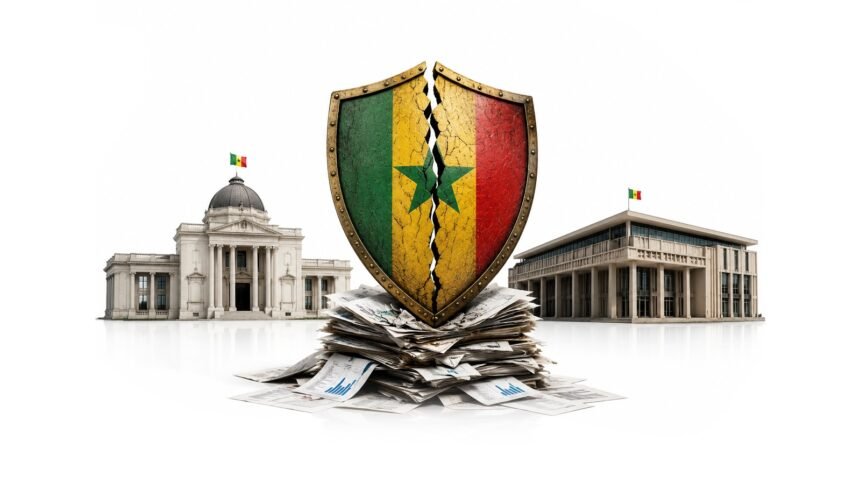
Faye’s choice of name for his new vehicle, invoking the Wolof word for shield, is a deliberate signal of political positioning. Unveiling the party at a gathering in Dakar, Faye described it as “the majority party in this country,” an assertion that stakes his claim not merely to executive authority but to popular legitimacy independent of Pastef’s parliamentary weight. This is a familiar move in the architecture of personalist African politics, where new parties are frequently constructed around the singular authority of an incumbent leader rather than around durable institutional platforms. Whether Kiiraay can translate presidential popularity into a genuine parliamentary counterweight to Sonko’s Pastef machine, or whether it becomes merely a vehicle of executive self-preservation, will shape the character of Senegalese governance for the remainder of Faye’s term and beyond.
A Debt Crisis Compounds the Political Strain
The political rupture is unfolding against the backdrop of a fiscal crisis stemming from revelations of misreported public debt under the previous administration. This scandal has strained Senegal’s relationship with international creditors and complicated the very economic sovereignty that Faye and Sonko once jointly promised voters. Debt transparency scandals of this kind carry a particular resonance across the continent, where opacity in sovereign borrowing has repeatedly undermined public trust in state institutions and handed leverage to external financial actors. The question of how Senegal’s fractured leadership manages this fiscal reckoning, whether through unified technocratic response or through the blame-shifting that political rivalries invite, will test whether the country’s institutions can subordinate factional competition to the demands of economic self-determination.
Regional Implications for West African Governance
Senegal has long been regarded as a comparatively stable anchor within a West African region contending with a wave of military takeovers and constitutional erosion in Mali, Niger, Burkina Faso, and Guinea. A protracted internal schism within its own ruling coalition, even one confined to civilian institutional channels rather than the barracks, carries symbolic weight for a region already anxious about democratic backsliding. Faye’s ability to manage this rupture without triggering broader instability will be closely watched by regional bodies such as ECOWAS, which have struggled to articulate a coherent response to the continent’s recent run of unconstitutional transfers of power. A Senegal that resolves its internal contest through electoral and parliamentary mechanisms, however messy, would reinforce the case that African democratic institutions can absorb elite conflict without structural collapse.
Toward a Reconstituted Sovereignty
The Kiiraay launch marks not an ending but an opening chapter in Senegal’s contest over the shape of its post-2024 political order. Whether Faye’s shield proves strong enough to secure a durable governing majority, or whether Sonko’s continued command of Pastef and the National Assembly forces an uneasy cohabitation, the outcome will reverberate well beyond Dakar. It will inform how other African democracies navigate the tension between charismatic movement politics and durable institutional coalition-building. This tension lies at the heart of the continent’s broader project of self-determination. As Senegal recalibrates its internal political architecture, the imperative remains the same one that carried Faye and Sonko to power in the first place: an insistence that Senegalese institutions, and not external creditors or inherited elite pacts, ultimately decide the country’s trajectory.