





The Pan-African Paradigm of Monetary Sovereignty and Institutional Credibility
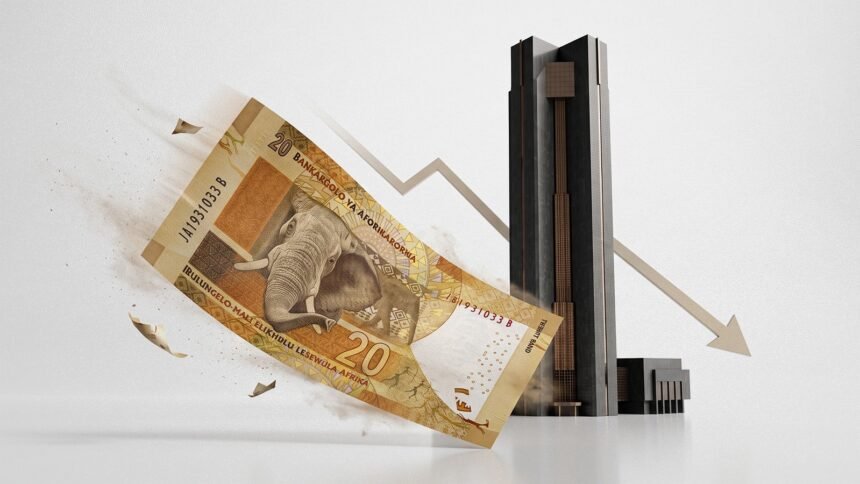
Across the African landscape, few institutions carry as much symbolic and material weight in the sovereignty debate as the continent’s central banks, whose independence from political pressure is often held up as a proof point of institutional maturity. South Africa’s Reserve Bank delivered exactly that kind of proof this week when it unexpectedly held its main lending rate steady at 7 percent, defying market expectations of a hike after inflation surged to a two-year high of 5.0 percent in June, two full percentage points above the bank’s 3 percent target. The decision, which sent the rand tumbling 2 percent against the dollar in a single session, is a case study in the tension every African monetary authority must navigate: the credibility cost of appearing to tolerate inflation against the credibility cost of choking off fragile growth with premature tightening. This is the Pan-African paradigm of monetary sovereignty in action, a central bank asserting its own analytical judgment against both market consensus and short-term currency pain, in service of a longer-term institutional trajectory. Governor Lesetja Kganyago’s willingness to accept immediate rand weakness in exchange for a more calibrated growth-inflation balance signals a broader continental project to reclaim monetary policy as a genuinely independent, domestically driven instrument rather than one dictated by reflexive deference to currency markets.
Inside the Monetary Policy Committee’s Split Decision
The mechanics of the decision reveal a genuinely contested internal debate rather than a unanimous technocratic consensus. Four members of the Monetary Policy Committee supported holding the rate steady. At the same time, two favored a 25-basis-point increase, reflecting real disagreement over how aggressively to respond to June’s inflation surprise. The bank’s own communication described its current stance as ‘appropriate’ with rates ‘somewhat restrictive,’ language calibrated to reassure markets that policy remains tight even without a fresh hike. Governor Kganyago was direct about the underlying dilemma at a press conference following the announcement: ‘We are in a difficult bind. The worst position for a central banker is to have rising inflation and weak demand.’ That admission, a central banker naming the exact structural bind rather than projecting false certainty, is itself a marker of institutional transparency that stands in contrast to central banks elsewhere that obscure genuine policy tension behind reassuring but vague messaging.
Forecasting Architecture: Growth Upgrade Meets Inflation Recalibration
Alongside the rate decision, the Reserve Bank revised its 2026 economic growth forecast upward to 1.4 percent from 1.2 percent, even as it trimmed its inflation forecast for the year to 4.0 percent from 4.4 percent. This dual recalibration, modestly more optimistic on growth, modestly more optimistic on disinflation, forms the analytical backbone of the decision to hold rather than hike. Kganyago projected that inflation would return within the bank’s 1-percentage-point tolerance band around the 3 percent target by the end of next year, eventually landing ‘bang on target’ after that. The bank’s Quarterly Projection Model now shows the policy rate remaining broadly stable through the rest of the year, a signal intended to anchor market expectations after May’s rate-setting meeting, which had delivered South Africa’s first hike in three years and primed markets for a continuation of that tightening cycle.
The Rand’s Reaction: Market Discipline Versus Domestic Judgment
The rand’s sharp 2 percent slide on the day of the announcement illustrates the immediate cost that African central banks pay when they diverge from market consensus, even when that divergence is analytically well-grounded. Currency markets had priced in a hike given June’s inflation acceleration, and the bank’s decision to hold instead exposed the rand to a swift repricing. Yet this immediate currency pain is arguably the price of genuine monetary independence: a central bank fully captured by short-term currency-market signaling would default to whatever decision minimizes immediate exchange-rate volatility, regardless of its appropriateness for the underlying economic cycle. South Africa’s willingness to absorb that rand weakness in service of a more considered growth-inflation calculus is itself a structural statement about where monetary authority ultimately resides.
Regional Ripple Effects: A Model for Southern African Monetary Coordination
South Africa’s monetary decisions carry outsized weight across the Common Monetary Area and the broader Southern African Development Community, where several currencies remain formally or informally pegged to, or influenced by, the rand’s trajectory. A Reserve Bank willing to hold steady against market pressure, backed by transparent communication about the underlying growth-inflation bind, offers a template that other regional monetary authorities, many operating with far less institutional credibility or communication sophistication, might study as they navigate their own post-pandemic disinflation trajectories. The lobby-group tracker showing South African reform momentum turning negative in the same news cycle is, however, a reminder that monetary policy credibility alone cannot substitute for broader structural economic reform; it can only buy the time within which such reform must occur.
Toward a Sovereign Monetary Trajectory
The Reserve Bank’s decision to hold, absorb rand weakness, and communicate its reasoning with unusual candor represents a broader continental argument: that African monetary institutions can and should exercise genuinely independent judgment, even when that judgment diverges from market expectation and carries immediate currency costs. As Kganyago projects a return to target within the bank’s tolerance band by the end of next year, the deeper continental narrative is one of reclaiming monetary sovereignty as a durable institutional trajectory rather than a reactive posture, proving that credibility, once genuinely earned through transparent and independent decision-making, can ultimately outlast the volatility of any single trading session.