





The Pan-African Paradigm of Rural Insecurity and State Accountability
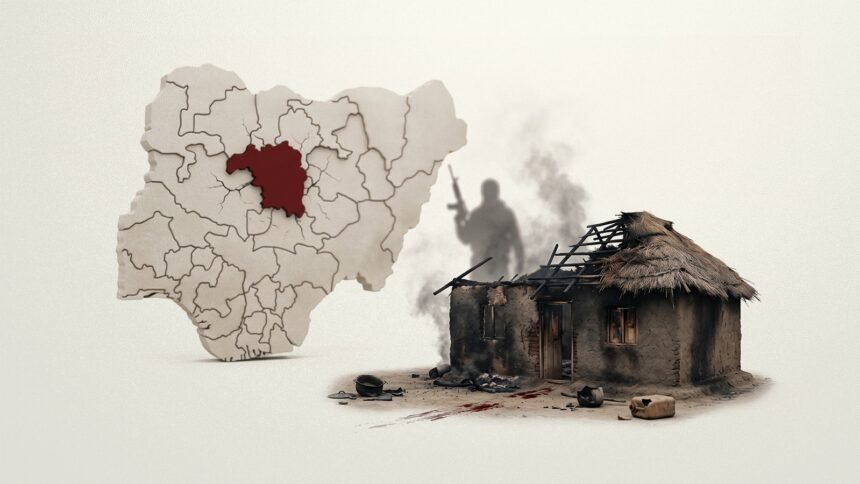
Across the African landscape, the tension between fragile rural governance and the encroachment of armed violence has become a defining test of sovereignty. Nigeria’s northwest, long a theatre of banditry and communal raids, is once again the site of tragedy after gunmen stormed Naridon village in Kaduna State’s Kauru local government area, killing at least thirty residents, among them eight children. The attack is not an isolated aberration but a structural symptom of a security architecture stretched thin across a vast and unevenly policed territory. For millions of Africans living beyond the reach of urban security apparatuses, protection from violence remains a promise deferred rather than delivered. The Naridon massacre forces a continental reckoning with what genuine self-determination requires: not merely the trappings of statehood, but the institutional capacity to guarantee life within its borders. As mourners bury their dead in Kauru, the episode adds fresh urgency to a broader Pan-African conversation about reclaiming rural safety as a foundation of sovereignty, rather than treating it as a peripheral concern subordinate to capital-city politics.
A Community Undone Before Dawn
The attack unfolded close to midnight, when armed men descended on Naridon and opened fire indiscriminately on sleeping households, according to residents who spoke in its aftermath. Dogon Rana, secretary to the village head, described gunmen shooting randomly and setting homes ablaze, leaving four additional residents wounded alongside the thirty confirmed dead. Youth leader Ishaya Dawa recounted a scene of systemic brutality: women, children, and the elderly among the slain, bodies ferried to the mortuary as survivors reeled in shock. Dawa’s account of houses deliberately torched before the assailants melted into the darkness underscores a pattern increasingly familiar across Nigeria’s north-central corridor, attacks calibrated not merely to kill but to displace, to empty villages of their inhabitants and erase communities from the map. Security personnel reportedly arrived only after sunrise, hours removed from the violence, a delay that speaks to the asymmetric distribution of protective capacity between Nigeria’s urban centers and its rural peripheries.
The Widening Matrix of Armed Banditry
Kaduna’s tragedy sits within a broader and deepening matrix of organized violence across Nigeria’s northwestern and north-central states, where armed gangs, distinct from, though sometimes overlapping with, ideologically driven insurgencies, have entrenched themselves as a chronic feature of rural life. Unlike the Boko Haram and ISWAP insurgencies concentrated in the northeast, the violence sweeping Kaduna, Zamfara, and Katsina states is frequently attributed to criminal syndicates exploiting weak state presence, contested land and grazing routes, and the proliferation of small arms. No group claimed responsibility for the Naridon attack, a silence that itself reflects the diffuse, often untraceable nature of this violence. Kaduna State police spokesperson Mansur Hassan said further details would follow, but the initial absence of claimed responsibility complicates both accountability and the design of a coherent state response. This structural ambiguity, violence without a clear ideological banner, has made the northwest a uniquely difficult terrain for policymakers seeking to calibrate an effective security recalibration.
Institutional Capacity and the Trust Deficit
The delayed arrival of security forces at Naridon crystallizes a trust deficit that has corroded relations between Nigeria’s rural communities and the institutions meant to protect them. Residents across Kaduna have increasingly voiced frustration that early warnings, communicated through local leaders and traditional structures, fail to translate into timely federal or state response. This gap between local knowledge and institutional action represents one of the more intractable dimensions of Nigeria’s security architecture: intelligence exists, but the operational trajectory from warning to intervention remains slow and under-resourced. Analysts have long argued that decentralizing aspects of security provisioning, empowering state and local policing structures with resources currently concentrated at the federal level, could narrow this gap. Yet such reforms remain politically contested, tangled in constitutional debates over federalism and the distribution of coercive power. Naridon’s dead are, in this sense, casualties not only of gunmen but of an unresolved institutional architecture still negotiating where sovereignty over security should properly reside.
A Layered Threat Landscape
Nigeria’s security crisis cannot be understood through any single lens. The northeast continues to contend with the entrenched Boko Haram insurgency and its ISWAP splinter, both of which have proven remarkably durable despite years of military campaigns. The northwest and north-central states, meanwhile, face a distinct threat matrix rooted in banditry, kidnapping-for-ransom economies, and communal conflict often intensified by resource scarcity and climate pressures on farming and grazing land. These overlapping crises strain a national security budget and command structure already contending with competing demands. The layered nature of the threat landscape means that solutions calibrated for counter-insurgency in Borno State translate poorly to the very different dynamics of armed banditry in Kaduna. Structural sovereignty, in this context, demands a more differentiated national security doctrine, one capable of distinguishing between ideologically driven insurgency and criminally motivated rural violence, and of deploying correspondingly tailored institutional responses rather than a uniform military posture.
Toward a Sovereign Security Architecture
The massacre at Naridon will likely fade from international headlines within days, as the wire-service rhythm of tragedy moves on to the next dateline. But for Kaduna’s rural communities, and for the broader Pan-African project of reclaiming sovereignty over security and self-determination, the underlying structural questions persist long after the news cycle. Genuine protection for Africa’s rural populations cannot rest on reactive deployments arriving after the violence has ended; it requires sustained investment in decentralized policing, intelligence-sharing architectures that respect local knowledge, and a political settlement over how coercive authority is distributed between federal and state institutions. Nigeria’s trajectory on this question carries implications well beyond its own borders, as neighboring states watch how Abuja responds to a security paradigm increasingly defined by non-ideological, opportunistic violence. The path forward demands that African governments treat rural security not as an afterthought to urban stability, but as a core pillar of sovereign governance, in which reclaiming the state’s monopoly over protective capacity becomes inseparable from the broader continental project of self-determination.