


The Pan-African Paradigm of Energy Sovereignty and Institutional Fragility
Across the African landscape, the capacity of a state to maintain uninterrupted control over its own energy infrastructure has become one of the clearest indicators of institutional sovereignty, particularly in nations where hydrocarbon revenue underwrites the bulk of government function. Libya’s El Feel and Wafa oilfields resumed production Tuesday after protesters stormed the Mellitah oil and gas complex, a joint venture between state firm NOC and Italy’s Eni, disrupting operations and triggering a severe fuel and gas shortage that pushed several power generation units offline and raised the specter of a wider blackout. That a domestic protest, rather than external attack or technical failure, could so swiftly threaten the country’s electricity grid speaks to the structural fragility that has defined Libyan energy governance since the 2011 uprising against Muammar Gaddafi, a fragility rooted less in resource scarcity, Libya remains one of the continent’s largest oil reserves, than in the persistent absence of unified political authority capable of securing critical infrastructure. The paradigm at stake extends across the wider region: African states endowed with hydrocarbon wealth continue to grapple with whether energy infrastructure can be genuinely insulated from domestic political contestation or will remain perpetually hostage to the fault lines of unresolved governance disputes.
The Mellitah Disruption: Timeline and Immediate Fallout
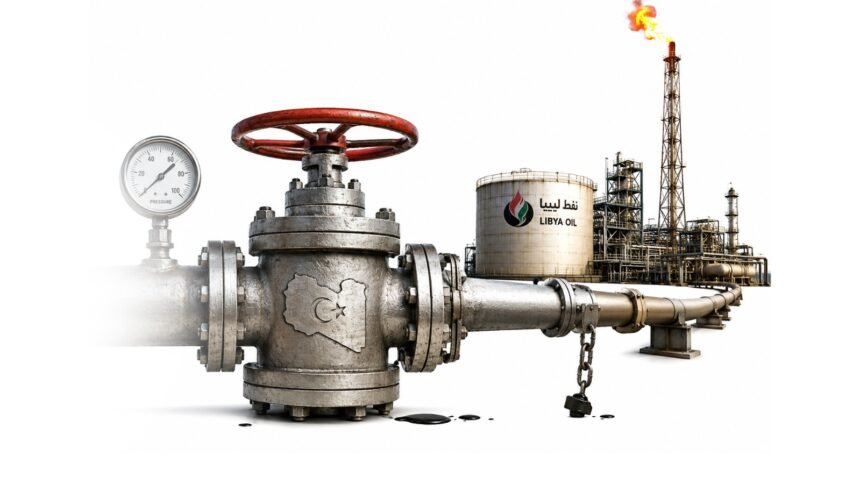
NOC reported that protesters stormed and closed the Mellitah complex in the early hours of Tuesday, halting production completely at El Feel and partially disrupting output at Wafa, a facility NOC’s earlier statement had not initially mentioned before clarifying the fuller scope of the disruption. Mellitah operates El Feel, which under normal circumstances produces between 80,000 and 90,000 barrels per day, a meaningful share of Libya’s national output. The closure caused a severe shortage in the fuel and gas supplies required to operate domestic power plants, and NOC confirmed that a number of generation units went out of service as a direct result, materially raising the risk of blackouts across affected regions. The Tripoli-based government stated that security forces subsequently regained control of the complex, after which gas supplies resumed to power generation plants, and NOC confirmed that work also resumed at the offshore Sabratha platform, with Libya’s state electricity company reporting the power grid was being gradually restored to normal.
Structural Vulnerability: Libya’s Post-2011 Energy Governance Matrix
Libyan oil output has been subject to repeated closures for both political and technical reasons in the years since the 2011 uprising, a pattern that reflects the country’s fragmented post-Gaddafi governance architecture, in which competing authorities, armed factions, and localized grievances have periodically found leverage by targeting the oil and gas infrastructure that constitutes the near-totality of state revenue. This recurring vulnerability sits in stark contrast to the scale and sophistication of the underlying assets themselves, world-class fields operated in joint venture with major international firms like Eni, whose technical capacity is not in question even as the surrounding security and political environment remains structurally unstable. Each disruption, regardless of its underlying grievance, whether labor conditions, local development demands, or broader political contestation, imposes a systemic cost on ordinary Libyans through diminished electricity reliability, illustrating how thoroughly energy infrastructure has become both a strategic asset and a pressure point in the country’s unresolved institutional contest.
Foreign Partnership and the Question of Shared Infrastructure Risk
Eni’s continued joint venture role at Mellitah underscores the extent to which Libya’s energy sector remains structurally intertwined with foreign capital and technical expertise. This relationship has persisted through years of political instability precisely because the underlying resource base is too valuable for either party to abandon. This arrangement raises a recurring continental question about how African hydrocarbon producers structure their partnerships with international operators: whether joint-venture frameworks like the one governing Mellitah adequately protect both the host nation’s fiscal interests and the operational continuity that revenue stability requires, particularly when infrastructure remains vulnerable to episodic domestic disruption that neither party fully controls. For Eni and other foreign partners operating in politically fragmented environments across the continent, Libya’s recurring disruption cycle serves as a persistent reminder that technical and commercial sophistication cannot substitute for the underlying political settlement that sustainable energy sovereignty ultimately requires.
Reclaiming Continuity in a Fragmented Energy Architecture
The swift resolution of Tuesday’s disruption, with production and grid stability restored within the same day, offers modest reassurance about the resilience of Libya’s operational response capacity, even as it does nothing to address the structural conditions that allowed protesters to halt a nationally strategic facility in the first place. For Libya to move beyond this now-familiar cycle of disruption and restoration, the durable task lies in building a genuinely unified security and governance architecture around its energy infrastructure, one insulated from the localized political contests that continue to leverage shutdowns of oil and gas facilities. Until that structural reclamation occurs, Libya’s energy sovereignty will remain conditional, technically capable but politically contingent, a pattern that offers a cautionary template for other African hydrocarbon producers navigating their own fragmented governance landscapes in the years ahead.