





The Pan-African Paradigm of Resource Sovereignty and Supply Chain Realignment
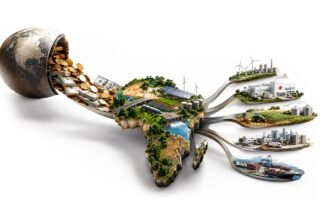
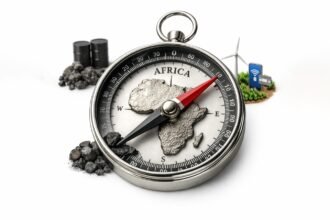
Across the African landscape, the question of who controls the extraction, processing, and ultimate value capture of the continent’s critical mineral wealth has emerged as one of the defining structural contests of the current era, as global powers compete for access to the rare earths, cobalt, and lithium that underpin everything from electric vehicles to defense systems. Madagascar’s Ampasindava rare earths project, now backed by a commitment of up to $4.48 million from the U.S. International Development Finance Corporation, sits at the center of this contest, positioned by Washington as part of a deliberate strategy to loosen what the State Department describes as the dominance of “opaque, predatory investments from our adversaries” in Africa’s mining sector. For decades, Chinese capital has been the primary financier of African critical minerals development in copper, cobalt, and lithium, and the emergence of Western-backed alternatives in rare earths signals a structural recalibration of the continent’s extractive investment matrix. The paradigm at stake for Madagascar, and for the wider region, is whether this new wave of great-power competition for mineral access can be structured to deliver genuine local value capture and processing capacity, rather than simply substituting one external patron for another in a continuation of the extractive relationships African nations have long sought to transcend.
Inside the Ampasindava Deposit: Scale, Composition, and Strategic Value
The Ampasindava ionic clay deposit, owned and developed by London-listed Harena Rare Earths, is rich in neodymium, praseodymium, dysprosium, and terbium, elements essential to the permanent magnets used in defense applications, including fighter jets and precision-guided missile systems, as well as electric vehicles and wind turbines. The roughly $150 million project is projected to produce approximately 4,000 metric tons of rare earth oxides annually, including 1,700 tons of the high-value magnet rare earths known as NdPr and DyTb, according to the company. Harena Executive Chair Andrew Murphy told Reuters the company is seeking an exploitation permit and hopes for approval within the coming weeks, positioning Ampasindava to begin production by mid-2028, contingent on securing that regulatory clearance and advancing toward construction financing. The DFC’s initial commitment, covering pilot plant work, laboratory testing, and environmental programs, is deliberately structured as a foundation for potentially larger U.S. backing as the project matures, rather than a comprehensive financing package in itself.
Washington’s Critical Minerals Doctrine and Its African Application
A State Department spokesperson framed the Ampasindava backing within a broader critical minerals strategy aimed at increasing U.S. and U.S.-aligned investment across African mining sectors long dominated by external actors whose investment practices Washington characterizes as opaque and predatory, language that draws an implicit but unmistakable contrast with Chinese capital’s historical role in the sector. The spokesperson noted that Madagascar “fits within that strategy” and that opportunities exist throughout the country to increase Western-aligned investment in critical minerals, a formulation that signals Ampasindava may be a template rather than an isolated deal. China’s continued dominance of global rare earth mining and processing, reinforced by periodic export controls that underscore its leverage over supply chains critical to electric vehicles, electronics, and defense manufacturing, is the structural backdrop against which this American intervention is calibrated. For Madagascar, the practical question is whether this geopolitical competition translates into more favorable terms, technology transfer, and processing infrastructure than has historically accompanied resource extraction on the continent.
Processing Sovereignty: The Refining Question Beyond Extraction
Perhaps the most structurally significant element of the Ampasindava project is Harena’s stated intention to evaluate processing options in the United States and Europe, naming MP Materials, USA Rare Earths, and Solvay among potential refining partners, rather than exporting raw ore for processing exclusively in China, which currently dominates global rare earth refining capacity regardless of where the ore itself is mined. This distinction between extraction and processing sovereignty is central to the continental debate over whether critical minerals development genuinely benefits African economies or merely relocates the extractive relationship to new geographic locations. In contrast, value-added processing and the bulk of associated profits remain offshore. Madagascar’s mines ministry did not respond to requests for comment on the project, leaving open questions about what domestic processing capacity, tax structure, or local employment commitments might accompany the DFC’s involvement, questions that will shape whether Ampasindava represents a genuine structural upgrade for Madagascar’s mineral economy or a familiar extraction pattern under a new geopolitical banner.
Toward a Recalibrated Continental Minerals Architecture
Madagascar’s emergence as a contested node in the U.S.-China competition for access to rare earths illustrates both the opportunity and the risk embedded in the current wave of great-power interest in African critical minerals. The opportunity lies in diversified financing sources, competitive terms, and potential technology transfer that a genuinely multipolar investment landscape could deliver, thereby reversing decades of dependence on a single external patron. The risk lies in the persistence of an extractive logic in which African nations remain price-takers and raw-material suppliers, regardless of which foreign capital underwrites the mine. As Harena advances toward its mid-2028 production target and awaits Madagascar’s decision on its exploitation permit, the durable measure of whether this deal serves genuine resource sovereignty will be whether processing capacity, employment, and fiscal returns are structured to remain substantially within Madagascar and the wider region, rather than replicating the pattern of value extraction the continent has spent generations seeking to reclaim from.