





The Pan-African Paradigm of Land Sovereignty and Communal Security
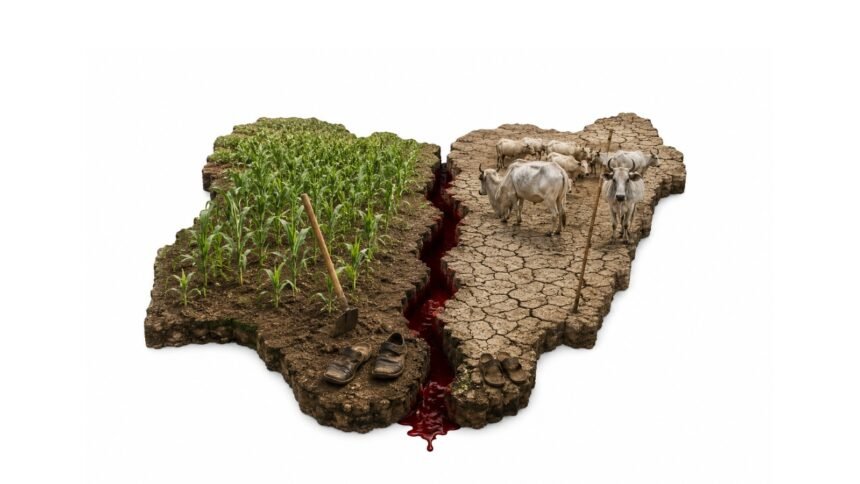
Across the African landscape, disputes over land, water, and grazing corridors have become one of the continent’s most persistent tests of governance, pitting agrarian communities against pastoralist economies in a contest that predates colonial borders yet has been sharpened by them. Nigeria’s Benue State sits squarely at this fault line, where the latest attack on the village of Efeyi, in the state’s Otukpo area, left at least fourteen villagers dead and several wounded, a killing local officials attribute to Fulani militia operating with impunity across the country’s central belt. This is not an isolated tragedy but the latest data point in a structural pattern of violence rooted in shrinking arable land, climate-driven migration routes, and the absence of enforceable grazing regulation. The paradigm at stake extends well beyond Nigeria’s federal character: it is a continental question of whether African states can build institutional architecture capable of reconciling nomadic pastoral traditions with sedentary agricultural livelihoods, without ceding sovereignty over organized violence to militia actors of any description. As climate pressures push herder migration further south across the Sahel and into Nigeria’s Middle Belt, the Benue killings crystallize a broader continental reckoning with reclaiming the state’s protective authority over its most vulnerable rural populations.
The Efeyi Attack and the Anatomy of the Middle Belt Crisis
The assault unfolded in the early hours of Tuesday, when gunmen struck Efeyi village without warning, killing at least fourteen people and wounding several others, according to Otukpo council chairman Maxwell Ogiri, who told reporters that similar incidents had occurred in nearby communities in recent days. Ogiri directly blamed the attack on Fulani militia, a characterization that Fulani associations have historically rejected, and no group has claimed responsibility for the killings. Benue police spokesperson Udeme Edet confirmed that officers had been deployed to the affected area and that an investigation was underway. However, the state’s long record of unresolved farmer-herder violence has left many residents skeptical that accountability will follow. Benue has for years functioned as a hotspot in this cycle, with hundreds killed as farmers retaliate against cattle destroying crops and herders in turn strike villages, a self-reinforcing matrix of reprisal that state and federal authorities have struggled to interrupt. The asymmetric nature of the violence, striking sleeping villagers with military-grade coordination, underscores the scale of the security architecture gap that persists in Nigeria’s central belt.
Structural Roots: Climate, Land Pressure, and the Farmer-Herder Matrix
Beneath the immediate violence lies a structural trajectory decades in the making. Desertification and erratic rainfall across the Sahel have steadily pushed pastoralist communities southward in search of viable grazing land, compressing traditional migration corridors into farmland that has itself grown more valuable as Nigeria’s population and food demand expand. This land-pressure matrix is compounded by a demographic overlay that has hardened into religious and ethnic fault lines, with Fulani herders drawn largely from the Muslim north and farming communities predominantly Christian, a division that political actors and militia alike have exploited to recast an economic dispute as an existential communal conflict. The absence of formalized, enforceable ranching infrastructure means herders continue to rely on open grazing routes that inevitably intersect with cultivated land. At the same time, farmers, lacking institutional recourse, increasingly arm themselves for self-defense. This is not a uniquely Nigerian phenomenon but a recalibration playing out wherever climate stress meets weak land governance, and it demands a systemic response rather than the episodic troop deployments that have so far characterized Abuja’s approach.
Institutional Paralysis and the Security Recalibration Nigeria Needs
Nigeria’s federal government has, for years, floated a National Livestock Transformation Plan to establish ranching infrastructure and formalize grazing reserves. Yet, implementation has stalled amid funding shortfalls, state-level resistance, and disputes over land allocation, leaving the underlying incentives for conflict largely intact. Several states, including Benue, have enacted anti-open-grazing laws, but enforcement remains inconsistent and under-resourced, and militia actors have shown little regard for statutory boundaries in any case. The deployment of police officers to Efeyi in the attack’s aftermath reflects a reactive posture rather than the preventive, intelligence-led architecture that security analysts have long argued the Middle Belt requires. Without durable investment in ranching infrastructure, rural policing capacity, and community-level dispute resolution mechanisms, Benue’s cycle of attack and reprisal is structurally likely to continue, each incident reinforcing the sense among rural Nigerians that the state’s sovereignty does not reliably extend to their protection.
A Continental Mirror: Sahel-wide Pastoralist Conflict
Nigeria’s Middle Belt crisis is best understood not in isolation but as one node within a wider continental trajectory of pastoralist-agrarian conflict stretching from Mali and Burkina Faso through the Central African Republic and into parts of Kenya’s Rift Valley, where similar dynamics of climate displacement, weak land tenure systems, and militia proliferation have generated comparable bloodshed. In each case, the underlying architecture is strikingly consistent: colonial-era borders and land laws that failed to account for pastoral mobility; postcolonial states that inherited but never fully resolved these tensions; and a contemporary climate crisis that is accelerating the collision between two economic systems. This pattern positions the Benue killings within a broader African imperative for structural, rather than merely national, solutions, including regional frameworks for transhumance corridor management of the kind the Economic Community of West African States has periodically discussed but rarely funded at scale.
Toward a Sovereign Architecture of Rural Safety
The killings in Efeyi are, in the final analysis, a test of whether Nigeria, and by extension the wider region, can construct a security and land-governance architecture equal to the structural forces driving farmer-herder violence, rather than continuing to manage each eruption as a discrete law-and-order failure. Genuine reclamation of rural sovereignty will require sustained investment in ranching infrastructure, credible and impartial policing that does not fall along ethnic or religious lines, and functioning land-tenure institutions capable of adjudicating disputes before they escalate into lethal violence. For Benue’s farming communities, and for the herders who are just as often cast as villains without individual due process, the path forward lies in an African-led recalibration of how land, climate adaptation, and communal security intersect. Until that architecture is built, the Middle Belt will remain a recurring proving ground for the continent’s unfinished work of reclaiming the state’s obligation to protect all of its rural citizens equally.