

The Pan-African Paradigm of Constitutional Sovereignty and Popular Consent
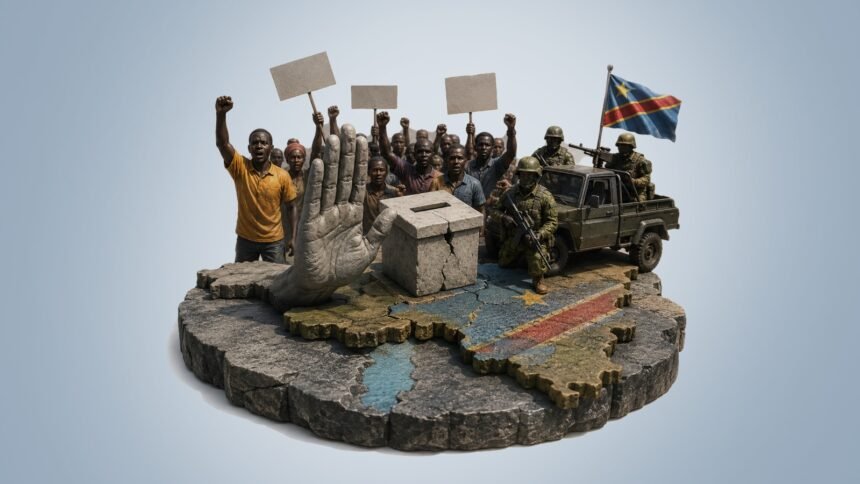
Across the African landscape, the question of how long a leader may govern has become one of the sharpest tests of whether independence-era promises of self-determination have matured into durable democratic architecture or remain vulnerable to elite capture. In the Democratic Republic of Congo, thousands of demonstrators filled the streets of Goma and Bukavu on Tuesday to reject proposed constitutional changes that could clear the way for President Felix Tshisekedi to pursue a third term. This protest unfolded even amid a rebel-imposed reality in cities still under the control of AFC/M23 forces. The demonstrations, carrying banners reading “No to constitutional change” and “No to a referendum and a third term,” reflect a continental anxiety that has recurred from Guinea to Côte d’Ivoire to Uganda: the erosion of constitutional term limits as a structural vulnerability that undermines the legitimacy African publics have fought to build into their institutions. Congo’s crisis is distinctive in that it plays out simultaneously with an active insurgency, entangling questions of sovereignty over territory with those over governance itself. It is this dual reclamation, of land and of constitutional order, that defines the paradigm at stake in Kinshasa’s parliament and in the streets of the eastern provinces alike.
Parliament’s Referendum Bill and the Third-Term Question
Congo’s parliament approved a bill in June that would permit constitutional changes to be submitted to a national referendum. This procedural mechanism, critics argue, is being engineered specifically to open a path for Tshisekedi to seek a third term in office, something the current constitution does not permit. The proposed reforms have already triggered opposition-led protests in the capital Kinshasa on June 12, which were dispersed by security forces, and Tuesday’s demonstrations in Goma and Bukavu extend that resistance into the country’s rebel-administered east. Demonstrators, organized by civil society groups, also called for the United Nations to lift sanctions imposed this month on AFC/M23 leader Corneille Nangaa and his organization, and pressed for direct dialogue between Kinshasa and the rebel group as part of efforts to end the conflict, a demand that illustrates how thoroughly the constitutional question has become entangled with the war itself. Government spokesperson Patrick Muyaya accused the rebels of coercing residents into joining the protests, a claim an AFC/M23 spokesperson did not immediately address.
Territory Under Rebel Control: The M23 Backdrop to Civic Protest
That these protests occurred at all is itself notable given the security architecture governing Goma and Bukavu, both of which have remained under AFC/M23 control since the group’s rapid advance across North and South Kivu provinces last year. The demonstrations proceeded under police supervision, according to Reuters witnesses, despite an existing ban on public gatherings introduced to curb the spread of Ebola, an epidemiological restriction that rebel authorities in the area appear to have selectively enforced. Rebel leaders declared the territories under their control Ebola-free last month, easing one justification for the gathering ban. Still, the tolerance shown toward an explicitly anti-government demonstration raises structural questions about M23’s own political calculus, whether facilitating civic opposition to Tshisekedi serves the rebel movement’s broader strategic interests in delegitimizing Kinshasa’s authority over contested territory.
Institutional Fragility and the Regional Stakes of Extended Rule
The attempt to engineer a referendum pathway toward a third term sits within a well-documented continental matrix in which incumbents facing term limits have repeatedly turned to constitutional amendment as an alternative to electoral defeat, a trajectory observed in multiple Central and West African states over the past decade. For Congo specifically, the stakes are amplified by the country’s fragile post-conflict institutional architecture, its history of contested elections, and the reality that any perception of an extension of illegitimate rule could further destabilize a state already contending with an active insurgency controlling significant territory. Civil society organizers and opposition figures argue that pursuing constitutional change amid active conflict represents a structural overreach, risking conflating the emergency governance sometimes justified by wartime conditions with a permanent recalibration of presidential term limits. The international community, including regional bodies such as the Southern African Development Community and the African Union, has thus far offered limited public comment on the referendum bill specifically, even as it remains engaged on the broader M23 conflict.
Toward a Reclaimed Constitutional Order
The protests in Goma and Bukavu, staged in cities where the state’s own writ barely runs, represent an assertion that constitutional sovereignty belongs to the Congolese public regardless of which armed or political actor currently controls the ground beneath their feet. Whether Tshisekedi’s government proceeds with the referendum and whether that process withstands both domestic civic resistance and the entangled demands of the M23 conflict will shape not only Congo’s immediate political trajectory but also the broader continental precedent on whether term limits retain structural force once elites decide they are inconvenient. For a country still absorbing the human cost of the eastern insurgency, the demonstrators’ twin demands, an end to constitutional tampering and a genuine dialogue to end the war, point toward a single underlying claim: that Congolese self-determination cannot be selectively honored in matters of territory while being quietly discarded in matters of governance. Reclaiming that consistency remains unfinished work.