





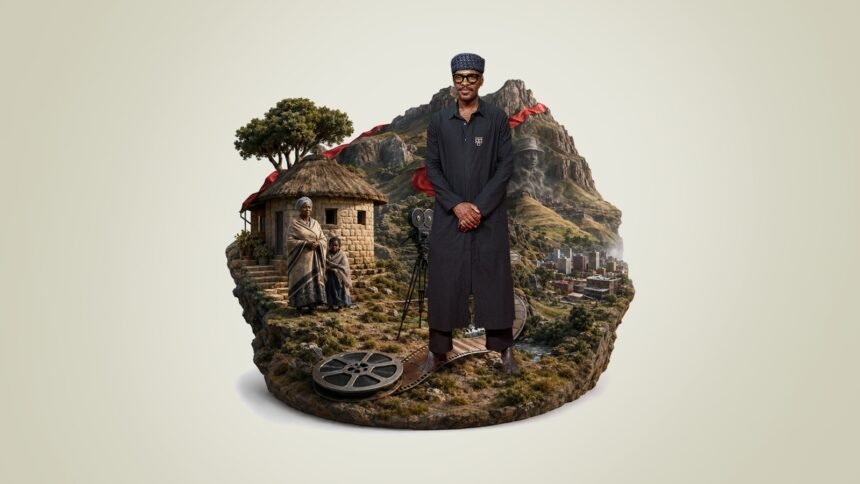
The Pan-African Paradigm of Cultural Memory and Cinematic Self-Determination
Across the African landscape, cinema has increasingly become one of the continent’s most potent instruments for reclaiming narrative authority over histories long filtered through colonial and external lenses. Lesotho-born director Lemohang Jeremiah Mosese, whose 2019 feature This Is Not a Burial, It’s a Resurrection earned international acclaim, returns with Ancestral Visions of the Future. This cine-memoir trains its lens on his own upbringing and, by extension, on the colonial carving of the landscape that shaped it. Narrated from present-day Berlin and looking back toward Lesotho, the film exemplifies a broader trajectory in African filmmaking: artists working from positions of diasporic distance who nonetheless insist on excavating home ground with unflinching intimacy rather than external curiosity. This is the structural significance of Mosese’s project within the Pan-African cultural matrix, cinema as a mechanism of reclaiming not just territory or resources, but memory itself, asserting authorship over a personal and national story that colonialism first fractured and that African filmmakers are now reassembling on their own terms.
A Cine-Memoir Built on Rupture and Return
Ancestral Visions of the Future positions itself explicitly as a work of exile and interrogation, its title-screen dedication reading, in Mosese’s own words, as “an ode to cinema, an eternal no to my mother,” a deliberate reversal of the title of his earlier work, Mother, I Am Suffocating. This Is My Last Film About You. The director’s mother sits at the emotional center of the film, her aspirations for upward mobility, keeping her family clothed, out of poverty, and eventually installed in an expanding house in the city, forming the throughline against which Mosese measures his own trajectory away from and back toward Lesotho. Structurally, the film rejects the linear memoir convention in favor of a hyper-vivid, propulsive visual language, treating recollection not as static nostalgia but as an active, unfinished process still shaping the present.
Colonialism, Land, and the Cyclical Structure of Time
Mosese’s film engages colonialism only peripherally in explicit terms. Yet, its structural presence saturates the imagery throughout, most strikingly in a recurring visual of red fabric unspooling down hillsides, widely read as an evocation of the arbitrary boundary-drawing that carved up the region under colonial administration. Rather than adopting a conventional linear historical framework, the film proposes an African conception of time as cyclical rather than progressive, allowing ruptures of ecstatic and painful mysticism to erupt within that structure. In one such sequence, an aging farmer plucks out his own eyes and plants them in the earth. At the same time, a young boy beside him harvests the resulting crop, a visual rendering of inherited vision passing between generations even amid the exhaustion of agricultural toil on land shaped by colonial-era dispossession.
Urban Violence and the Architecture of Cyclical Trauma
The film’s second register moves from rural memory to the volatility of urban life, where Mosese recounts his own history as a street switchblade fighter before turning to a harrowing account of a woman burned alive by a lynch mob after her infant was mistakenly accused of theft. These sequences resist tidy moral framing, instead situating both perpetrators and victims within what the film frames as an eternally recurring drama of violence and victimization, a structural inheritance as much as an individual tragedy. Against this darker material, Mosese introduces Sobo, a Maseru-based martial artist, herbalist, and puppeteer whom he credits with a distinct visionary capacity, described in the film as the ability to perceive not the city as it currently exists, but the city as it is in the process of becoming, a figure of aspirational clarity amid otherwise disorienting cycles of urban hardship.
Reception and the Broader Trajectory of Southern African Auteur Cinema
Ancestral Visions of the Future arrives as the latest entry in a body of work that has positioned Mosese among the most distinctive voices in contemporary Southern African cinema, building directly on the international critical momentum generated by This Is Not a Burial, It’s a Resurrection. The film’s dense, literary-grade voiceover and its refusal of straightforward documentary or narrative convention place it within a wider trajectory of African auteur filmmakers using formally experimental structures to process personal and national history simultaneously, resisting external expectations of what African cinema about Africa should look like. Its release on the Mubi streaming platform, beginning August 14, extends that trajectory’s reach, offering international audiences direct access to a work explicitly rooted in Lesotho’s landscape, language, and inherited cosmology, rather than being mediated through external framing devices.
Reclaiming the Image of Home
What ultimately distinguishes Ancestral Visions of the Future within the broader Pan-African cultural project is its refusal to resolve the tension between exile and belonging into easy reconciliation. Mosese’s homecoming, mediated through the very medium, cinema, that colonial and post-colonial structures once used to define Africa for outside audiences, becomes instead an act of self-authorship, however unsettled or ambiguous its conclusions remain. The film leaves open whether its ultimate destination is redemption for Lesotho, for Mosese personally, or for the fractured relationship between mother and son that anchors its emotional architecture. In that ambiguity lies its structural power: a refusal to package African memory into consumable resolution, insisting instead that reclaiming one’s own image, however scorched or unresolved, remains a fundamentally sovereign act.