





The Pan-African Paradigm of Displacement and Structural Abandonment
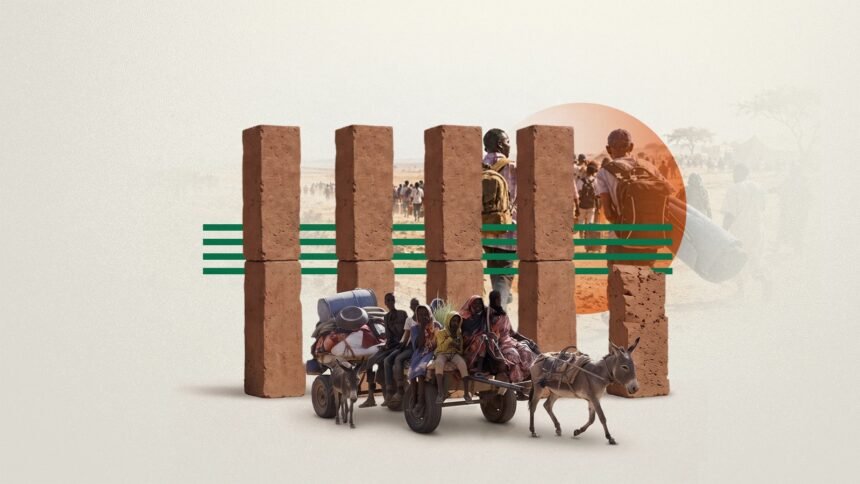
Four hundred people a day, every day this past week, crossing a single stretch of desert border into eastern Chad, a twenty-fold surge from the trickle recorded just months earlier. Behind that number sits a war now in its fourth year, one that has driven up to 14 million Sudanese from their homes and left Darfur, Kordofan, and Blue Nile scarred by aerial bombardment and drone strikes from a conflict between Sudan’s army and the Rapid Support Forces that shows no sign of resolution. The paradigm this exodus exposes is not simply humanitarian; it is structural. Sudan’s neighbors, Chad chief among them, are absorbing a crisis that international donors have chosen not to fund, with the UN refugee agency reporting just 18% of the $1.6 billion it needs this year. What happens to displaced Sudanese now, in transit camps stretched thin on food, shelter, and medicine, is a direct test of whether the continent’s states can insist that displacement caused by conflict, however distant its origins from Western capitals, remains someone else’s obligation to underwrite, or whether Africa is being left to absorb the costs of a war it did not start, alone.
The Push Factors Behind the Surge
Those crossing into Chad describe fleeing not general instability but specific, targeted violence: aerial bombardment, drone attacks, and ground clashes between Sudan’s army and the Rapid Support Forces that have made Darfur, Kordofan, and Blue Nile among the most dangerous places in the country. Mamadou Dian Balde, the UN’s Regional Refugee Coordinator for the Sudan situation, described to reporters in Geneva the accounts refugees give of bombardment driving their flight, alongside drought conditions that compound the conflict’s damage to agriculture and food security. Almost one million refugees have now crossed into Chad since the war began, more than 55,000 of them this year alone, a figure that undercounts the total displacement crisis, given UN estimates that up to 14 million Sudanese have been displaced internally and across borders combined. The geography of the exodus, concentrated in Sudan’s western and southern periphery, reflects where the RSF and army have fought hardest, turning entire regions into displacement factories with no clear endpoint in sight.
A Funding Architecture Built to Fail
UNHCR’s disclosure that only 18% of its $1.6 billion appeal has been met is not a footnote; it is the crisis’s second axis. Dian Balde was blunt about what underfunding means in practice: less food, less capacity to relocate people to safer areas, less capacity for shelter. That shortfall traces directly to cuts in foreign assistance by the United States under President Donald Trump and other donor governments over the past year, a retrenchment that has hit UN agencies operating across the Sahel and Horn particularly hard. The result is a structural mismatch: the number of people needing protection is rising twenty-fold in a matter of months, while the money meant to protect them is moving in the opposite direction. For host countries like Chad, among the world’s poorest, this gap is not absorbed painlessly; it is absorbed by refugees themselves, in the form of reduced rations, crowded transit camps, and diminishing prospects of durable resettlement.
Onward Movement and the European Question
UNHCR’s analysis points to a further consequence of underfunding: refugees whose basic needs go unmet in Chad increasingly attempt onward journeys toward Europe after repeated failed efforts to find safety closer to home. This detail complicates a narrative that treats African displacement as a regional problem containable within the continent. Instead, it suggests that the same funding shortfalls straining Chad’s transit camps are, indirectly, driving the very migration flows that European governments spend heavily trying to deter at their own borders, a circularity that donor retrenchment does little to resolve and may in fact accelerate, shifting costs downstream rather than eliminating them.
Reclaiming the Terms of Protection
The Sudanese displacement crisis sits at the center of a broader argument the continent has been making with growing insistence: that humanitarian financing structured around the discretionary generosity of a handful of Western donors is not a durable foundation for protecting African civilians fleeing African wars. Chad’s absorption of nearly a million refugees since 2023, on a fraction of the funding such a response would require, is itself a form of continental self-reliance, one that deserves recognition and support rather than quiet neglect. Until African and international institutions build a financing architecture less exposed to the political whims of any single donor capital, exoduses like this one will keep repeating the same pattern: sudden surges, chronic underfunding, and displaced people bearing the difference.