





The Pan-African Paradigm of Regional Solidarity and Domestic Accountability
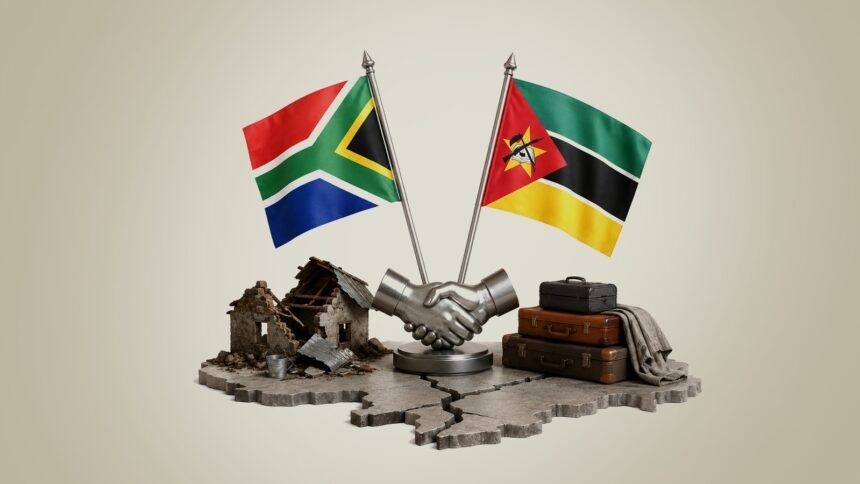
Across the African landscape, the rhetoric of pan-African solidarity is perpetually tested by the lived experience of African migrants within other African states, and South Africa’s recurring xenophobic violence against fellow Southern African nationals remains one of the continent’s most persistent contradictions. President Cyril Ramaphosa’s apology to Mozambican President Daniel Chapo, delivered for violence that resulted in looting, displacement, harassment, and deadly riots targeting Mozambican nationals in South Africa, is a rare moment of formal state acknowledgment of a pattern that has repeated for decades with only intermittent institutional response. That the apology arrives through the diplomatic channels of the Southern African Development Community, rather than through South Africa’s own domestic reckoning with the roots of xenophobic violence, speaks to the structural weight regional bodies now carry in holding member states accountable to one another when internal politics alone prove insufficient. The paradigm at stake is regional solidarity confronted with its own internal contradictions: a Southern Africa that speaks fluently of shared struggle and integration. At the same time, its most economically dominant member repeatedly fails to protect the citizens of its neighbors from violence within its own borders. Genuine self-determination for the region will require South Africa to translate this apology into structural change, not merely a diplomatic gesture.
An Apology “With All Humility”
Mozambican Foreign Minister Maria dos Santos Lucas told reporters that President Ramaphosa had formally apologized to President Chapo for the violence perpetrated by South African citizens against Mozambican nationals. “President Ramaphosa, with all humility, apologized for the violence perpetrated by South African citizens,” Lucas said, adding a candid acknowledgment of governmental failure in the response: “This matter was not well managed. There were errors in management, although we are not here to criticize.” That admission, unusually direct for a diplomatic exchange between heads of state, suggests both governments recognize the episode as more than an isolated outbreak of communal violence, but rather a governance failure requiring explicit accountability at the highest level.
Looting, Displacement, and Deadly Riots
The violence that prompted the apology saw Mozambican nationals subjected to discrimination that resulted in looting of their property, harassment in their communities, and riots that turned deadly, forcing thousands of Mozambicans to abandon their homes and livelihoods in South Africa. The scale of displacement described- thousands uprooted, not merely intimidated- places this episode within the continuum of South Africa’s recurring xenophobic violence, which has periodically targeted nationals from Mozambique, Zimbabwe, Nigeria, and other African states over the past two decades, typically in townships and informal settlements where competition over scarce economic opportunity intersects with entrenched anti-migrant sentiment.
Diplomacy Through the SADC Summit Channel
The apology was delivered in the context of the Southern African Development Community’s 46th Summit, where President Chapo also participated in a meeting of the SADC Organ on Politics, Defense and Security Cooperation’s Council of Ministers. That institutional setting matters: rather than a bilateral gesture managed quietly between the two capitals, the apology was folded into the broader machinery of regional diplomacy, where SADC’s collective political architecture, including its Organ on Politics, Defense and Security, provided both the venue and, implicitly, the accountability pressure for South Africa to address the episode on a multilateral stage formally.
A Summit Also Setting the Region’s Financial Terms
The same Summit is expected to approve SADC’s budget for the 2026–2027 period, alongside progress on a regional fund instrument that some member states, including Mozambique, have already signed, Minister Lucas said. The convergence of a xenophobia apology with the region’s core budgetary and institutional business underscores how thoroughly interlinked SADC’s political and economic integration agenda has become with the unresolved social tensions between member states, a reminder that regional financial architecture and genuine solidarity between citizens are not separable tracks, but mutually reinforcing, or mutually undermining, dimensions of the same integration project.
From Apology to Structural Protection
Words of contrition, however formally delivered, will mean little to displaced Mozambican families without concrete structural follow-through: credible investigations and prosecutions of the violence itself, compensation or support for those who lost homes and livelihoods, and a genuine South African government strategy to address the anti-migrant sentiment that fuels these recurring episodes rather than merely apologizing for their aftermath each time they erupt. If SADC’s regional architecture is to mean anything beyond summit communiqués and budget approvals, it must also function as a mechanism holding member states accountable for protecting each other’s citizens as a matter of course, not exception. Reclaiming genuine Southern African solidarity demands exactly that: an integration project measured not by the eloquence of its apologies, but by whether a Mozambican, Zimbabwean, or any Southern African migrant can live in South Africa without fear of the violence this apology was forced to acknowledge.