



The Pan-African Paradigm of Foreign Military Proxies and Civilian Sovereignty
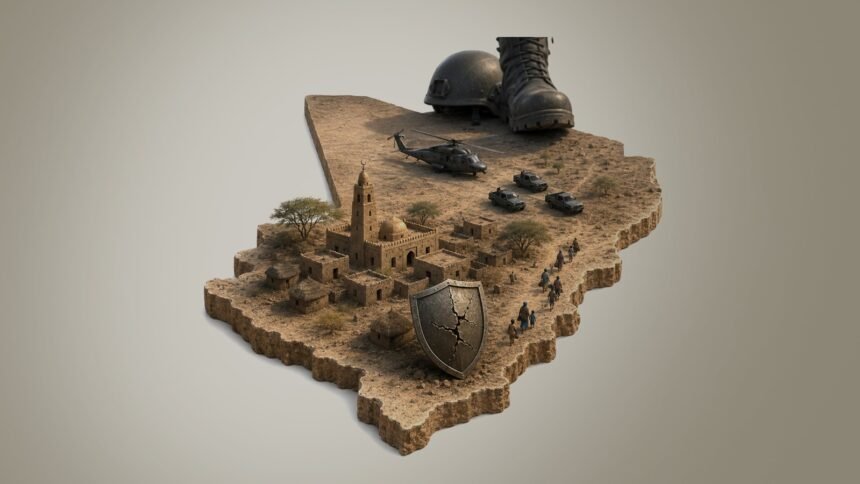
Across the African landscape, the arrival of foreign paramilitary formations promising security in exchange for resource access and political loyalty has become one of the continent’s most consequential and contested bargains. Mali’s experience with Russia’s Africa Corps, successor to the Wagner Group, has emerged as perhaps the starkest case study in what happens when a state outsources its counterinsurgency campaign to an unaccountable foreign force. The killing of nine civilians, including four children, in the village of Bombori in July represents not an aberration but a continuation of a documented pattern of atrocities that has accompanied Russian military engagement in the Sahel since 2021. For communities caught between jihadist insurgents and the government forces nominally sent to protect them, the promise of stability has instead delivered a new and often indistinguishable source of terror. The Bombori killings force a reckoning with a broader continental question: whether African governments can outsource their security sovereignty to foreign proxies without simultaneously outsourcing accountability for the violence those proxies commit. As the human toll mounts, Mali’s junta faces a widening credibility gap in reclaiming the narrative that this partnership serves the nation’s self-determination rather than compounding its subjugation.
The Bombori Killings: A Reconstructed Timeline
According to Human Rights Watch, which remotely interviewed thirteen people between July 19 and 30, including four witnesses, more than 100 Africa Corps fighters, accompanied by several Malian soldiers, entered Bombori at approximately 5 a.m. on July 10. Witnesses described Russian forces leading the operation, arriving in a convoy that included, according to one 57-year-old butcher, seven pickup trucks mounted with machine guns. Africa Corps forces reportedly shot at civilians attempting to flee the village before detaining a group of residents for interrogation. One 39-year-old man told researchers he hid in his home with his wife and children until three Russian fighters entered; as Africa Corps fighters questioned detainees, a Malian soldier translated demands regarding the whereabouts of jihadist fighters. Witnesses said Africa Corps forces subsequently removed three young men from the detainee group and drove them away. When the forces withdrew from Bombori at around 2 p.m., residents recovered the bodies of nine people, including the four children, several bearing what one 40-year-old witness described as “large open bloody wounds.” Another resident said he found the bodies of two children, both around six years old, shot in front of family members.
Institutional Accountability and the Language of Denial
Ilaria Allegrozzi, the Human Rights Watch researcher who documented the Bombori killings, offered a blunt assessment of the command structure enabling the violence: “The Malian junta appears to have given Russian Africa Corps forces a green light to kill civilians.” This framing situates the massacre not as rogue conduct by an undisciplined foreign force but as the predictable output of a deliberate institutional arrangement, one in which Mali’s transitional authorities, who seized power in successive coups, have subordinated civilian protection to a security partnership premised on results rather than restraint. Bombori itself illustrates the ethnic dimension of this asymmetric violence: the village comprises one neighborhood inhabited by ethnic Rimaïbé and another by Fulani communities, the latter long subject to disproportionate suspicion and violence amid the counterinsurgency campaign against Al-Qaeda-linked Jama’at Nusrat al-Islam wal-Muslimin (JNIM), which has controlled the Bombori area for roughly nine months. Witnesses insisted JNIM fighters had already left the village before the July 10 raid, undercutting government justifications that frame such operations as targeted counterterrorism rather than collective punishment of civilian populations.
A Documented Pattern, Not an Isolated Incident
The Bombori massacre extends a documented record of abuses that Human Rights Watch has tracked since Russian forces first replaced the Wagner Group’s branding as Africa Corps in mid-2025. Previous HRW reporting has detailed executions of Fulani civilians by the Malian army and Wagner Group personnel, additional atrocities amid renewed fighting, and, as recently as July, airstrikes attributed to Africa Corps that killed civilians. This accumulation of documented incidents, spanning summary executions, enforced disappearances, and now aerial and ground assaults on undefended villages, constitutes what rights monitors increasingly describe as a systemic feature of the Mali-Russia security architecture rather than a series of unconnected failures. Since the 2012 onset of Mali’s jihadist insurgency, and accelerating after the 2020 and 2021 coups that installed the current transitional government, successive Malian authorities have leaned progressively further into unaccountable foreign military partnerships even as the humanitarian toll has climbed and the underlying insurgency has, by most measures, continued to expand its territorial reach.
Reclaiming Protection: The Unresolved Question of Sovereignty
The Bombori massacre crystallizes an uncomfortable paradox at the heart of Mali’s current security strategy: a junta that seized power partly on promises of restoring national dignity and expelling foreign interference has instead deepened the country’s dependence on an opaque foreign paramilitary force answering to interests beyond Bamako’s effective control. For the families of Bombori’s dead, the distinction between insurgent violence and state-sanctioned violence has collapsed into an indistinguishable threat, undermining the foundational premise that government forces exist to protect rather than endanger civilian life. Rebuilding that premise, restoring a security sector genuinely accountable to Malian citizens rather than to foreign patrons or unaccountable proxy forces, will require a structural recalibration that current trajectories show little sign of delivering. Until then, villages like Bombori remain caught in a vacuum where neither insurgent nor state actor offers meaningful protection, a vacuum that testifies to how far the promise of security sovereignty in the Sahel remains from being redeemed.