




The Pan-African Paradigm of Resource Sovereignty and Great-Power Recalibration
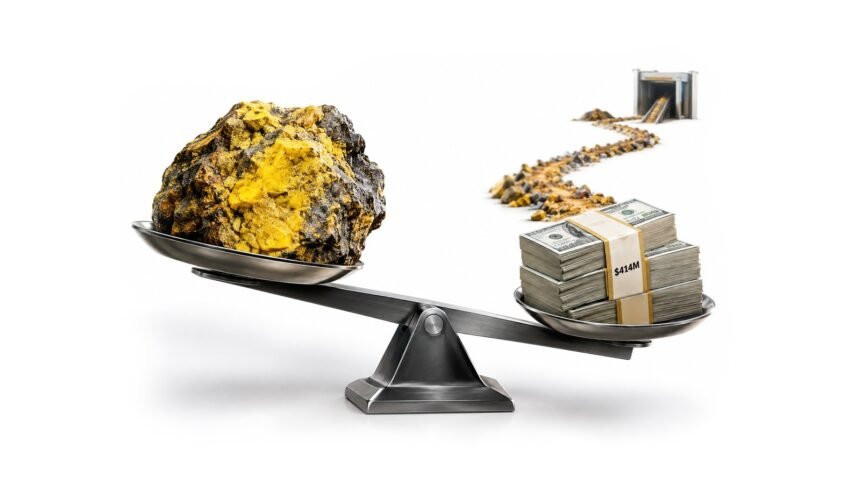
Two years ago, Niamey expelled the boots of an empire’s army; this week it welcomed the money of an empire’s bank. The US Development Finance Corporation’s approval of up to $414 million in financing for Canadian miner Global Atomic’s Dasa uranium project marks one of the more striking recalibrations in the post-coup Sahel: a government that ordered American troops out in 2024 and turned instead to Russian paramilitaries for security is now positioned to receive one of Washington’s largest single commercial commitments on the continent this year. The episode distills a paradigm that recurs across resource-rich Africa: the tension between genuine assertions of sovereignty, expressed through the expulsion of foreign militaries and the rebalancing of old colonial-era mining relationships, and the persistent gravitational pull of great-power capital toward strategic minerals, regardless of who currently governs the ground beneath them. Niger’s uranium, among the highest-grade deposits on the continent, sits at the center of a contest between Washington, Moscow and Paris’s Orano, each seeking a durable claim on a resource newly classified as critical to the energy transition. Whether this investment represents genuine partnership or merely a new patron replacing an old one is the question Niamey’s government, and its neighbors watching the precedent, must now answer.
A Debt Facility Two Years in the Making
The DFC’s financing, structured as a debt facility for Global Atomic’s Dasa project, was described by people familiar with the negotiations as a diplomatic and commercial breakthrough achieved only after months of quiet groundwork. Sources briefed on the matter said the US ambassador to Niger pushed Washington to rebuild ties with the military government that seized power in 2023, framing the project as an opportunity to secure strategic mineral access before it fell further into the orbit of rival powers. A breakthrough reportedly came this summer when Global Atomic’s chief executive, Stephen Roman, traveled to Washington to resolve the remaining sticking points holding up approval. Niger’s government did not respond to a request for comment on the deal, leaving the diplomatic calculus on Niamey’s side largely to inference: a military junta that relied on Russian security partners for two years, while simultaneously courting the capital of the country whose forces it expelled, is charting a distinctly transactional form of sovereignty, one measured less by ideological alignment than by which financing terms best serve the state’s immediate interests.
Uranium’s New Strategic Architecture
The timing is structurally significant. Uranium was added to the US critical minerals list last year, a classification that recalibrated Washington’s institutional appetite for African uranium exposure and positioned Niger, the world’s seventh-largest producer, as a supply-chain asset rather than merely a post-coup governance concern. The Dasa investment offers the US a foothold at a moment when Orano, the French state-backed miner that long dominated Niger’s uranium sector, remains locked in an international arbitration dispute with Niamey’s government after losing control of key mining assets. That dispute, still unresolved, illustrates the fragility of the old extractive architecture built under French colonial and post-colonial arrangements, an architecture Niger’s junta has spent two years dismantling, deposit by deposit, even as it searches for replacement patrons capable of financing extraction at comparable scale. Washington’s entry does not resolve that asymmetry; it merely substitutes one external financier for another, with Niger’s own downstream processing and refining capacity still largely undeveloped.
Corridors Under Threat
Even with financing secured, the Dasa project faces a landlocked country’s oldest constraint: how to move uranium out. Jihadist attacks have repeatedly targeted Niger’s security forces over the past year, and mutinous soldiers attacked a key military airbase and the presidency just last month, underscoring the fragility of the political order underwriting this deal. Traditional export corridors to the West African coast have grown increasingly risky, prompting Global Atomic to explore alternative routes, including a path north through Algeria and across the Sahara, a corridor made newly plausible by warming ties between Niamey and Algiers, evidenced by Algeria’s dispatch of aircraft to help the government respond to the latest coup attempt. That a uranium supply chain critical to US energy strategy now depends on security cooperation between two Sahelian and North African states, neither fully aligned with Washington, illustrates how thin the connective tissue of this “breakthrough” remains: the financing exists, but the logistical sovereignty required to realize it is still being negotiated on the ground, mine by mine, checkpoint by checkpoint.
Reclaiming the Terms of Extraction
For Niger and the wider Sahel, the Dasa financing is a test case for whether post-coup resource nationalism can produce better terms than the colonial-era arrangements it replaced, or whether it simply substitutes new external capital for old without shifting the underlying asymmetry of who profits from extraction. The DFC’s investment, if paired with meaningful local processing, employment and revenue-sharing commitments, could mark a genuine recalibration of Niger’s structural position in the global uranium market. If it instead reproduces the extractive logic of the Orano era under an American flag, the sovereignty asserted in 2024 when US troops departed will prove to have been more symbolic than structural. Niamey’s leaders, and the citizens who cheered the expulsion of foreign forces, will be watching closely which outcome this $414 million commitment ultimately delivers.