




The Pan-African Paradigm of Strategic Infrastructure and Economic Resilience
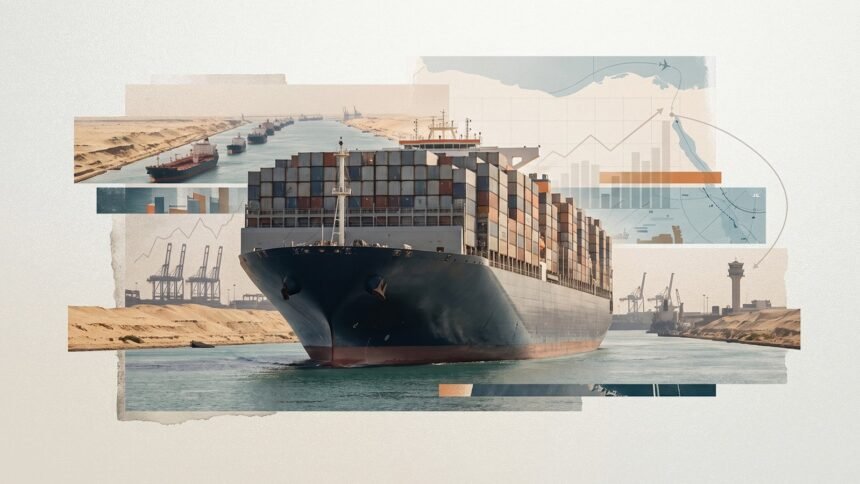
Ships are moving again through Suez in numbers Cairo has not recorded since before the Red Sea crisis began, and the canal authority wants the world to notice. Fifty-six point seven percent is the year-on-year jump in Suez Canal revenue that Egypt’s canal authority announced this week, alongside a formal declaration that the waterway is secure and traffic is flowing normally. The figures, released by Suez Canal Authority chairman Osama Rabie during World Maritime Day ceremonies in Alexandria, mark a notable recovery for infrastructure that has spent much of the past two years absorbing the costs of a Red Sea security crisis it did not create. For Egypt, whose foreign-currency reserves depend heavily on canal transit fees, the rebound carries weight well beyond shipping logistics: it is a test of whether a strategically vital African chokepoint can reassert its centrality to global trade even as the security dynamics around it remain volatile, and a signal to global shippers that Egyptian control over one of the world’s most consequential waterways has weathered its most difficult stretch since regional tensions began redirecting vessel traffic around the Cape of Good Hope.
The Numbers Behind the Declaration
August revenue reached $567.1 million, up from $326 million in the same month of 2025, a rise Rabie attributed to stabilizing maritime traffic rather than a one-off surge. The canal transited 1,358 vessels in August, a 27 percent increase over the 1,070 vessels recorded a year earlier, while net tonnage climbed 51.1 percent to 68.3 million tonnes from 45.2 million tonnes. Fiscal-year revenue for 2025/2026 reached $4.67 billion, a 23 percent increase over the prior year. Rabie emphasized that navigation had remained stable throughout and that canal pilots were operating “with the highest levels of readiness and professionalism,” language calibrated as much for international shipping insurers and underwriters, who price Red Sea risk into every transit decision, as for a domestic audience.
A Recovery Still Short of Its Former Scale
The rebound, however, is measured against a badly depressed baseline rather than full restoration. Average daily transits stood at roughly 40.8 vessels between January and August 2026, compared with 73.7 per day in 2023, meaning traffic remains barely more than half of pre-disruption levels even as year-on-year percentages look dramatic. Egyptian Foreign Minister Badr Abdelatty has previously put a figure on the underlying damage, estimating that Red Sea tensions cost Egypt roughly $11 billion in lost canal income since disruptions began. That framing matters for how the August numbers should be read: not as evidence that the crisis has passed, but as evidence that the canal’s core value proposition- speed, reliability, geographic necessity- is reasserting itself gradually, even while the security calculus shippers must weigh against those advantages remains unresolved.
Sovereignty Measured in Transit Fees
The Suez Canal has functioned as a marker of Egyptian sovereignty since its nationalization in 1956, and every fluctuation in its revenue carries political as well as economic weight in Cairo. A canal authority able to point to rising transit numbers and stabilizing revenue is making an implicit argument about state capacity: that Egypt can secure and manage critical infrastructure independent of the regional volatility surrounding it, even when that volatility originates in conflicts over which Cairo has limited direct control. The canal’s dual identity, as both a sovereign asset and a piece of global trade infrastructure whose reliability the entire shipping industry depends upon, means Egypt’s recovery narrative must simultaneously satisfy domestic audiences concerned with national prestige and international audiences calculating insurance premiums and routing decisions.
What the Rebound Signals Beyond Cairo
For the broader continent, the Suez Canal’s fortunes are a bellwether disproportionate to Egypt’s individual economic weight: canal revenue funds a meaningful share of Egypt’s development spending, and Egypt’s stability as a Nile-basin and Red Sea power has knock-on consequences for regional trade routes serving East and Horn of Africa economies that rely on Suez-adjacent shipping lanes. A fully recovered canal would represent not just an Egyptian fiscal win but a restoration of one of the continent’s few genuinely globally indispensable pieces of infrastructure, leverage African governments have historically used sparingly but which remains, even amid regional volatility, one of the clearest examples of an African-controlled asset the rest of the world cannot route around. Whether August’s numbers mark the beginning of a full recovery or merely a plateau along a longer, harder climb back to 2023 levels will depend on factors well beyond Cairo’s control. But for now, the canal authority’s declaration of security, backed by verifiable transit and tonnage figures, is itself a claim worth taking seriously: that Egyptian stewardship of this artery remains intact, whatever turbulence surrounds it.