





The Pan-African Paradigm of Fragile Peace and External Interference
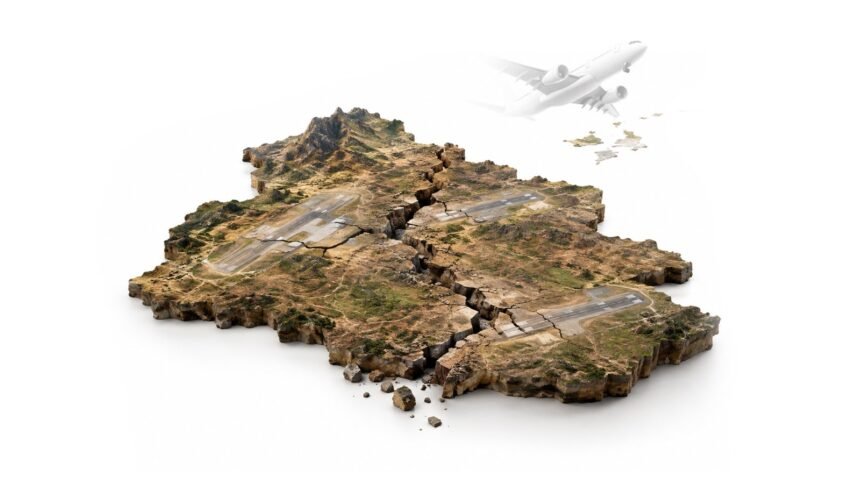
Three airports changed hands in a single Wednesday morning, and with them, the four-year armistice that had held Ethiopia’s north together. Forces loyal to a hardline faction of the Tigray People’s Liberation Front seized control of the region’s air links and clashed with federal troops in multiple locations, ending the uneasy calm imposed by the 2022 Pretoria Agreement and reopening a war that killed hundreds of thousands of people the first time. For a continent that has spent decades negotiating its own peace deals only to watch them dissolve under the weight of unresolved grievances and outside patronage, Tigray’s collapse is a familiar and painful pattern: sovereignty deferred rather than secured, agreements imposed rather than owned. What is unfolding in Ethiopia’s north cannot be read in isolation from the wider Horn, where Gulf rivalries, a resurgent Eritrea and the machinery of a foreign-backed war in Sudan are all pressing against the same fragile seams. The task ahead is not simply to restore a ceasefire but to build a peace architecture that Ethiopians themselves control, insulated from the competing patronage of external powers who have long treated the Horn as a theatre for their own contests. Reclaiming that agency, rather than merely pausing the guns, is what genuine stability in the region will require.
The Pretoria Agreement’s Unraveling
The peace that ended the 2020-2022 Tigray war was never as settled as its signatories claimed. Both Addis Ababa and the TPLF have spent the past several months accusing each other of violating the Pretoria deal’s terms, and the fractures inside the Tigrayan movement itself proved just as consequential as the disputes with the federal government. A hardline faction of the TPLF broke from an interim administration that had been installed to manage the region’s transition, reasserting direct control over Tigray’s institutions and, this week, its airspace. That faction has since built an alliance with six other armed groups drawn from across Ethiopia, including movements that fought against Tigray during the earlier war, a coalition explicitly aimed at removing Prime Minister Abiy Ahmed’s government. The scale of Wednesday’s coordinated seizures suggests a degree of organization that had been building for months beneath a surface of formal calm, and it leaves Addis Ababa confronting not a single rebellious region but a loose national front assembled from old enemies now sharing a common target.
Asmara’s Long Shadow
No actor looms larger over the unfolding crisis than Eritrea, whose relationship with Addis Ababa has cycled between reconciliation and open hostility since independence in 1993. Abiy won a Nobel Peace Prize in 2019 for ending two decades of Ethiopian-Eritrean hostility, and Eritrean forces backed the federal army when the first Tigray war broke out the following year. But Asmara was excluded from the Pretoria process despite its role in that fighting, and relations have deteriorated steadily since. Ethiopia’s government accuses Eritrea of bankrolling the new anti-Abiy alliance, a charge Asmara denies. At the same time, the dispute over Red Sea access, specifically the port of Assab, lost to Ethiopia when Eritrea broke away, remains an unresolved wound that Addis Ababa considers existential to its long-term security. Washington’s decision earlier this month to lift sanctions on Eritrea’s defense forces, widely read as a signal to Asmara over its strategic coastline opposite Saudi Arabia, adds another external variable to a relationship already defined by mutual suspicion and unfinished business.
A Region Already at Its Limit
Tigray’s renewed war does not arrive in a vacuum; it lands on a Horn of Africa already absorbing more instability than its institutions can easily contain. Sudan’s civil war grinds on with no resolution in sight, Somalia remains chronically unstable, and Ethiopia itself stands accused, allegations it denies, of backing the Rapid Support Forces paramilitary group against Sudan’s army, a position consistent with its close ties to the United Arab Emirates, the most assertive Gulf power operating in the region and one which UN experts say is also supporting the RSF. Eritrea, for its part, has drawn closer to both Sudan and Egypt, Ethiopia’s longstanding rival over the waters of the Nile and the Grand Ethiopian Renaissance Dam. Each of these fault lines interacts with the others, meaning a conflict that reignites in Tigray does not stay contained to Tigray; it feeds directly into a regional matrix of proxy interests, water disputes and Gulf competition that leaves little room for a purely domestic resolution.
Reclaiming the Horn’s Own Peace
What Ethiopia’s renewed war exposes, beyond the immediate human cost, is the fragility of peace processes engineered without full buy-in from every stakeholder and without insulation from external interference. The Pretoria Agreement ended a war but did not resolve the underlying contest over Tigray’s autonomy, nor did it account for an Eritrea excluded from the table but never absent from the calculus. As the alliance of armed groups now arrayed against Addis Ababa demonstrates, unresolved internal grievances compound quickly when neighboring powers see strategic advantage in prolonging instability rather than ending it. A durable peace for the Horn will depend on African-led mediation capable of holding all relevant parties, including Eritrea, accountable to terms they helped shape, rather than terms imposed and later abandoned. Until regional actors build that architecture of ownership, the cycle risks repeating: ceasefires negotiated abroad, violated at home, and reignited each time an outside patron calculates that a fractured Ethiopia serves its interests better than a stable one. Reclaiming sovereignty over the Horn’s peace, not merely its war, is the unfinished task ahead.