
The Pan-African Paradigm of Bodily Sovereignty and Protection of the Vulnerable
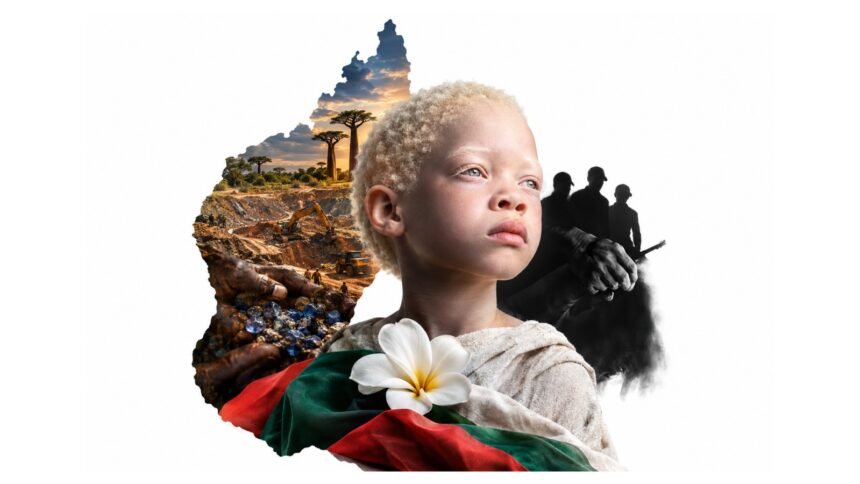
Landricia was eighteen months old. In late May, three men broke into her family’s room on the outskirts of Toliara, struck her father with a piece of wood and an axe, and wrenched the child from her mother’s back. Days later, her decapitated body was found at a witch-doctor’s home. She is among 13 people with albinism killed in Madagascar this year, according to the advocacy group Albinos Madagascar, and every victim was beheaded. If sovereignty means anything, it must begin with the state’s obligation to protect the bodily integrity of its most vulnerable citizens. A Guardian investigation published September 29 documents how that obligation is failing, and why reclaiming it demands both security and social transformation.
A Record Year and a Spreading Geography
Albinos Madagascar, established in 2022, says this is already the worst year on record. All but three of the victims were children, aged from nine months to 14 years. Fulgence Soja, the association’s president, who lives with albinism himself, calls the situation very critical and says people feel deeply unsafe. Researchers and UN officials describe a geographic spread: attacks once concentrated in the deep south have been observed in the south-east, south-west, midwest and north, and now affect cities rather than only remote rural areas. Soja recalls first hearing of such a beheading in 2017, and the UN independent expert on albinism, Muluka-Anne Mitti-Drummond, began receiving reports in 2021, documenting more than 28 attacks between late 2020 and 2022. The trajectory is one of escalation, not containment.
Belief, Markets and Poverty
The killings are driven by harmful superstitions that body parts bring wealth, political success and good fortune; in Madagascar the eyes are especially sought, and children are targeted because their perceived innocence is thought to strengthen potions and because they are easier to abduct. Large sums, life-altering for impoverished families, are paid to those who procure them, and entire networks are often involved. Sources told the Guardian that senior politicians and business figures are probably commissioning some of the killings, and violence is said to increase before elections. The UN expert has noted that in many cases only intermediaries are caught while masterminds remain unknown. The context is severe deprivation: about 80 percent of Malagasy live on less than 2.15 dollars a day, and a UN human rights adviser, Sabina Lauber, says desperation for survival is pushing some people toward harmful practices.
Mining Zones and Political Turbulence
A UN human rights officer, Tohovery Razakamanana, says a significant share of attacks have occurred in or near mining areas, particularly those for precious stones and gold. Madagascar holds substantial resources, producing at least 40 percent of the world’s sapphires, and one of the 18 people currently in custody over Landricia’s killing is a Sri Lankan national involved in mining. The political backdrop is unsettled: youth-led protests toppled President Andry Rajoelina in October 2025, and Col Michael Randrianirina heads a transitional government that he has said would last 18 to 24 months. Climate stress compounds vulnerability, with a lean season and El Niño threatening emergency conditions in the south. Instability, scarcity and lucrative illicit demand form a dangerous combination.
Terror in Daily Life
For families, the consequences are measured in fear. Odette, 20, in a northern city, lost her cousin Marcellin, 14, beheaded in February, with his head never found; she now shares a mattress with about a dozen relatives in a mud hut because she fears for her own safety. Nine-year-old Veroline and her seven-year-old brother live under armed guard at the mayor’s house after their brother Rakotombelo, 14, was killed in May; 14 people were detained there, though the mayor admits there is no proof against some of them. Nicole Soalala, Landricia’s mother, rarely leaves home and cannot sleep. These accounts show how insecurity narrows a child’s world, and how imperfect investigations, including allegations that suspects were tortured, risk undermining justice.
From Emergency Response to Lasting Protection
The government has responded visibly: the president deployed his personal guard to hunt perpetrators, the first lady has promised a refuge center in the south, and Soja now advises the president. The Guardian could not independently verify claims in presidential social-media posts. Advocates argue that the priority is to stop the killings, followed by a national action plan covering security, education and health, and by a census to establish how many people with albinism live in the country. Awareness campaigns must also explain that albinism is a genetic condition. Protecting these children is a test of the state’s basic reach; meeting it would restore a measure of trust that no rhetoric can supply.