





The Pan-African Paradigm of Public Health Sovereignty and Civic Trust
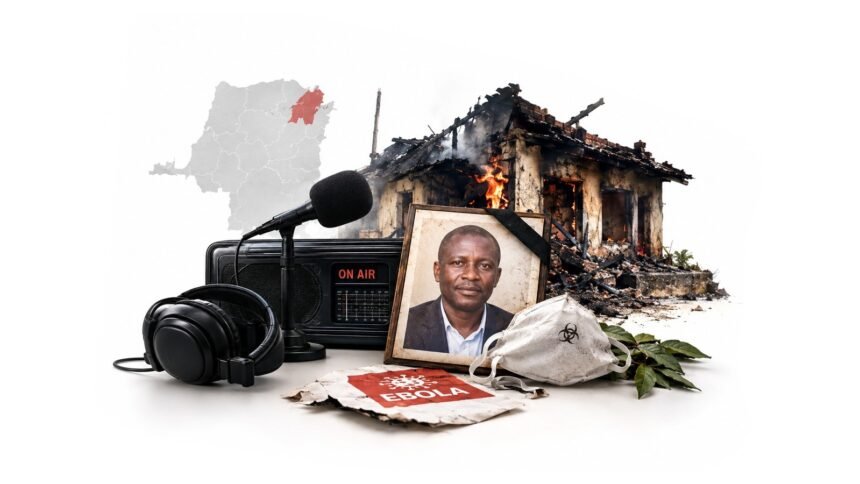
What does it cost, in Butembo, to say aloud that Ebola is real? For Marie-Célestin Karondwa, a senior official of Congo’s ruling UDPS party, the answer was his life: beaten by residents of his own neighborhood after appearing on a radio program to promote Ebola prevention, his house looted and set alight, dead within days of his injuries. His killing sits at the intersection of two crises that recur across the continent whenever epidemic response meets fractured governance: a health emergency that demands collective compliance, and a population whose trust in the state has been so depleted by decades of conflict and broken promises that even lifesaving information is received as a hostile intrusion. The structural sovereignty question this raises is not medical but political: can any government mount an effective epidemic response in territory where its own legitimacy is contested block by block? Congo’s answer, written in Karondwa’s death, is a warning the continent cannot afford to leave unexamined.
Butembo’s Breaking Point: A Killing Foretold by a Pattern of Violence
Karondwa’s death on Sunday was not an isolated act of mob violence but the latest in a documented series of attacks on Ebola response infrastructure in North Kivu. A day earlier, armed men attacked a hand-washing checkpoint in nearby Beni territory, killing at least one person and wounding several others, according to a local civil society group. Butembo itself has become a hotspot in an outbreak the government says has now infected 8,067 people and killed 3,901 since it was declared on May 15, a Bundibugyo-strain epidemic that the World Health Organization confirmed last week had spread to two additional health zones, bringing the total to sixty-three across seven provinces. The UDPS federation in Butembo described Karondwa as “an innocent victim for having defended the party’s position on the existence of the Ebola virus disease,” language that itself reveals the depth of the denialism response teams are working against.
Denialism as Structural Legacy, Not Isolated Ignorance
Mistrust of outbreak response in eastern Congo did not emerge with this epidemic; it is the accumulated residue of decades in which the state’s presence in North Kivu has meant militia violence, extraction, and broken infrastructure promises rather than protection. Response teams during the 2018-2020 Ebola outbreak in the same region faced similar attacks, prompting international epidemiologists to conclude that community engagement, not enforcement, was the only durable path to containment. That lesson appears to have been only partially applied. When his own neighbors can kill a political figure defending public-health messaging, it signals that the underlying architecture of trust between citizen and state remains structurally unrepaired, regardless of how many treatment centers Médecins Sans Frontières and government health workers erect in Butembo and Beni.
The Asymmetry of International Response Versus Local Reality
Global health institutions have mobilized around this outbreak with a speed that reflects lessons learned from West Africa’s 2014 crisis: the WHO’s rapid classification of new health zones, continued MSF field presence, and sustained donor attention. Yet this international apparatus, however well-resourced, cannot substitute for the granular, door-to-door legitimacy that only a trusted local government can provide. The mayor of Butembo’s failure to immediately respond to requests for comment on Karondwa’s killing is itself a small but telling data point in this asymmetry, a local administration seemingly unable, or unwilling, to publicly confront the violence undermining the very campaign it is meant to be leading. Structural health sovereignty cannot be outsourced indefinitely to international NGOs operating parallel to, rather than through, functioning local institutions.
A Continental Pattern of Response-Team Violence
Congo’s outbreak is not the first African epidemic response to face violent resistance, nor is it likely to be the last as long as the underlying trust deficit goes unaddressed. Ebola responders faced comparable attacks during the 2018-2020 North Kivu outbreak, and cholera and mpox response teams elsewhere on the continent have reported similar episodes of community hostility rooted less in disbelief of the disease itself than in accumulated resentment toward state and international actors perceived as arriving only in crisis, never in ordinary times. Structural sovereignty over public health, in this reading, is inseparable from the everyday presence- clinics, roads, reliable electricity, functioning courts- that a state either provides consistently or does not. Epidemic response teams inherit whatever trust deficit years of absence have already built, and no amount of emergency-phase messaging can fully substitute for it in the middle of an active outbreak.
Reclaiming the Right to Be Believed
Congo’s Ebola crisis, and the killing that has now become entangled with it, poses a question that outlasts any single outbreak: what does self-determination mean for a population that no longer trusts the institutions meant to protect it? Rebuilding that trust is not a public-relations exercise but a precondition for effective governance of any kind, health-related or otherwise. It requires investment not only in vaccines and isolation wards but in the political architecture of accountability, visible, consistent proof that the state stands with, rather than merely broadcasts at, the communities it claims to serve. Until Congo and its partners treat that trust deficit as the primary battlefield, radio programs like the one Karondwa appeared on will remain dangerous acts of civic courage rather than routine public health messaging, and the continent’s fight against epidemic disease will keep losing ground it cannot spare.