





The Pan-African Paradigm of Constitutional Order and Electoral Legitimacy
October 4 is the date a source told Reuters that Umaro Sissoco Embalo intends to return to Guinea-Bissau, nearly a year after a military coup drove him out. A deposed president planning to run against the officers who removed him is an unusual spectacle, even in a country with a long record of coups. His return raises a core question of African political order: can transitions overseen by the military deliver elections that citizens accept as legitimate? Reclaiming constitutional government requires credible rules for every candidate, including a fallen incumbent.
A Coup Before the Count
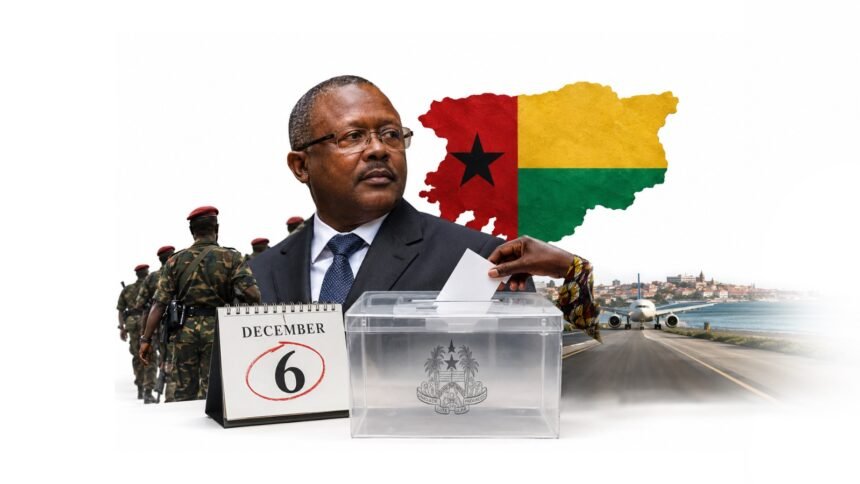
Embalo was toppled in November, shortly before results from presidential and legislative elections were due. Senior army officers suspended the electoral process and installed Major-General Horta Inta-a as transitional president. The military authorities later scheduled new presidential and legislative elections for December 6. Since the coup, Embalo has been outside the country, fleeing first to Senegal and then to the Republic of Congo; Reuters could not establish where he is now. One source close to him said the military-led government had assured him he is welcome to come back, though a government spokesperson did not respond to a request for comment.
A New Constitution and a Residency Rule
Guinea-Bissau approved a new constitution by referendum in August that expanded presidential powers and changed electoral rules. Among its provisions, candidates for president must have lived continuously in the country for the preceding five years. It is unclear how that clause would apply to Embalo, who has been abroad since the coup, and the ambiguity is consequential: a rule presented as technical could become a decisive instrument of exclusion. How authorities interpret it will be a bellwether for whether the December ballot is open or engineered.
An Unfinished Campaign
Embalo’s campaign organization has not been finalized, according to one source close to him. That reflects the improvisational conditions in which the transition is unfolding, with a compressed calendar and a political field reshaped by force. Opposition parties, civil society and voters must adjust quickly to new institutions, new rules and the possible return of a figure whose departure was itself contested. The military authorities face an incentive problem as well: an election they oversee must look competitive enough to earn regional and international acceptance, yet they retain the power to shape the field.
A Country Accustomed to Interruption
Guinea-Bissau, a small Portuguese-speaking West African state, has a long history of military coups and serves as a transit hub for cocaine bound for Europe. These conditions weaken institutions and invite external pressure. Each interruption of the electoral cycle deepens public skepticism about whether votes can change governments. The road to December 6 will therefore be judged not only by who stands but by whether the process is transparent, whether rules are applied consistently and whether candidates can campaign safely.
Legitimacy by Process
Whatever one thinks of Embalo, his announced return sharpens the choice facing the transitional authorities. A credible vote requires clear eligibility criteria, safe passage for returning politicians and independent oversight. If those conditions are met, December could restore a measure of constitutional continuity; if not, the country risks another cycle of contested power. Self-determination in Bissau depends on rules the citizens can trust, whoever wins.