




The Pan-African Paradigm of Gendered Speech and State Punishment
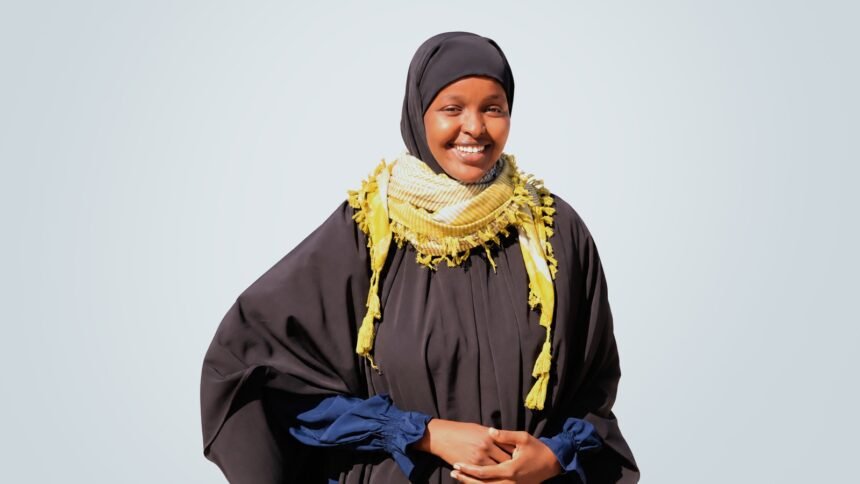
Why don’t you drive your tuk-tuk and do your work? According to Sadia Moalim Ali, that is what a judge in Mogadishu asked her after videos from her social media accounts were shown in court. The question, recounted in her first-person account published by the Guardian, sums up a whole theory of citizenship: a working woman’s place is behind the handlebars, not in public debate. What followed, by her account, was abduction, imprisonment, torture, sexual assault, a conviction and finally an acquittal on appeal.
Her testimony has not been tested in court as a claim against named officials, and the Guardian piece does not include a response from Somali authorities. It should be read as one woman’s account. But it is detailed and consistent, and it raises questions about speech, gender and detention that go well beyond one case.
Speech as Offense
Ali describes herself as a rickshaw driver and social activist. She writes that she had spoken on TikTok and Facebook about forced evictions in Mogadishu, high fuel prices and nepotism in government. She also described being told on three occasions, when applying for work in hospitals and government departments, that she would have to give a sexual favor in return. These are matters of public interest, the kind of everyday accountability that social media has opened to people outside formal politics.
Her account of the response is severe. She writes that two police officers abducted her and forced her into a vehicle, that she was slapped and had her head hit against a wall at a police station, and that she had no access to a lawyer and faced no formal charges. Two days later, a judge ordered her held in custody pending investigation.
Inside the Female Wing
Her description of Mogadishu Central prison is the most detailed part of the testimony. She writes that the female wing held about 120 women, with about 30 in her cell, in a colonial-era building with no windows or lights and a toilet without a door. Meals were tea and a slice of stale bread, then half a plate of rice; going outside for sunlight required bribing guards. She was held alongside members of al-Shabaab, alongside two girls aged 13 and 17, and alongside women jailed for debt or unpaid fines, many without lawyers. One woman, she writes, gave birth in the cell to a daughter who is now 18 months old.
This is the hidden architecture of the case. Detention systems built for security suspects also hold poor women, debtors and children, so that one prison combines counter-terrorism, debt enforcement and the punishment of speech. Ali writes that she began teaching fellow prisoners to read and write, an act of solidarity that also shows how little education many of them had received.
Punishment for Publicity
The most troubling part of her account concerns what happened when she spoke out from inside. Ali writes that an hour after a local radio interview she gave by phone was broadcast, men took her to a room used for punishment, where the prison commander stripped and beat her while her hands were tied, in a room fitted with CCTV cameras. After she then spoke to the Guardian, she writes, she was threatened with rape and later sexually assaulted by three men, an attack she says was recorded on a mobile phone.
If accurate, this pattern is a form of reprisal designed to deter publicity. Each time she reached the outside world, the punishment escalated. Under any standard, including the African Charter on Human and Peoples’ Rights, allegations of this kind demand an independent investigation.
The Court as Instrument and as Remedy
The judiciary appears in her account in two roles. She writes that after a month she gained access to a lawyer, that the prosecution produced the Guardian’s article about her torture as evidence of anti-government propaganda, and that on 25 June she was convicted of insulting government institutions and sentenced to three years in prison. Then, on 12 August, the Banadir regional court of appeal overturned the conviction and sentence, and she was released the same day.
That reversal matters. It shows that Somalia’s courts can still correct abuses, and that legal representation and public campaigning, which Ali credits for giving her hope, can change outcomes. But a remedy that comes after months of detention and alleged torture protects the principle more than the person.
Exile and the Insurgent’s Offer
The final turn is perhaps the most revealing. Ali writes that after her release she kept receiving threats and pressure to stop talking, and that members of al-Shabaab, having followed her case, wanted her to join them. Fearing for her safety, she left Somalia. When she was reunited with her daughter, whom she had been breastfeeding when she was taken, the child did not recognize her.
This shows the political cost of repression. When a state punishes peaceful critics, it hands insurgents a recruitment pitch. A government fighting al-Shabaab has every reason to protect those who criticize it openly rather than drive them towards those who reject the state entirely.
Toward Structural Sovereignty Grounded in Rights
Somalia’s long effort to rebuild state authority is usually measured in territory recovered and institutions restored. Ali’s testimony suggests another measure: whether a woman can criticize evictions, fuel prices, and sexual extortion without being jailed for it. Structural sovereignty that rests on silencing such voices is fragile, because it surrenders legitimacy to the very forces the state is fighting. An independent inquiry into her allegations, reform of pre-trial detention, separate facilities for children, and an end to jailing people for debt would show a different path. Ali says she is writing a book and campaigning for the women she left behind. Whether the state answers with accountability or with denial will say a great deal about Somalia’s trajectory.