





Policing, Organized Crime and Public Trust
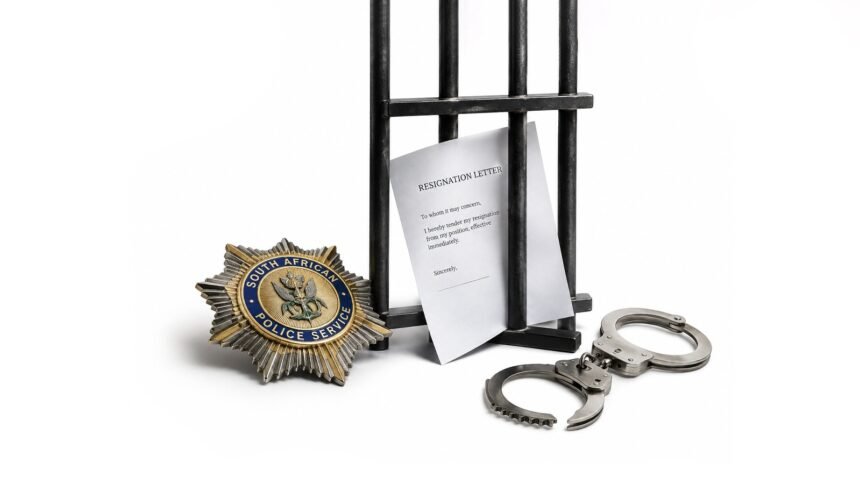
The man who was once responsible for detecting crime across South Africa resigned on Monday from a prison cell. Lt Gen Shadrack Sibiya, the country’s deputy national police commissioner, has been in custody for three weeks, since his arrest on charges of sexual offenses. His lawyer handed in his resignation letter at the opening of a police disciplinary hearing, just as the process meant to decide his future in the force was due to begin.
The police service did not let him leave quietly. Spokesperson Athlenda Mathe said in a post on X that his departure would be treated as a dishonorable discharge, because he was still facing a disciplinary case when he resigned. Sibiya, 59, has been suspended since September last year over separate allegations that he had links to organized crime bosses.
The Charges and the Denials
Sibiya is accused of sexually grooming a 16-year-old girl and of raping an 18-year-old woman, and he also faces a charge of human trafficking. He denies all the charges. He says he did have sex with the 18-year-old but that it was consensual. His bail application has been postponed until 13 October. None of the allegations have been tested in a criminal trial, and he is entitled to the presumption of innocence.
The Madlanga Commission and a Year of Revelations
The accusations about his links to crime bosses surfaced at the Madlanga Commission, a judicial inquiry into alleged police corruption and collusion with criminal networks that has transfixed South Africa over the past year. Sibiya was accused there of interfering with investigations into political killings in KwaZulu-Natal province, and of receiving a cash gift and 20 impalas from an alleged criminal kingpin in exchange for a police contract. In his testimony, he denied receiving large sums of money and gifts from alleged criminals.
President Cyril Ramaphosa set up the commission after the KwaZulu-Natal police chief held a press briefing in which he accused the then police minister, Senzo Mchunu, of working with criminal gangs. Mchunu denies the allegations against him but has been suspended. In other words, the inquiry was born of a public accusation by one senior officer against the political head of the police, and it has since reached one of the most senior figures in the service.
A Continental Problem of Captured Policing
South Africa is not alone in confronting the fear that parts of its security forces have been captured by the criminals they are meant to pursue. From West African drug trafficking cases to cross-border smuggling networks in the Great Lakes, a recurring pattern across the continent is that organized crime thrives where it can buy protection inside the state. What sets South Africa apart is the openness of its response: a public judicial commission, criminal charges against a sitting deputy commissioner, and a police spokesperson publicly calling his exit dishonorable. That transparency is painful, but it is also a sign of institutions that still function.
Why a Dishonorable Discharge Matters
The label attached to Sibiya’s resignation is more than symbolic. By treating it as a dishonorable discharge, the police service signals that resigning cannot be used to escape the consequences of a pending disciplinary case. Resignation is sometimes used by officials facing misconduct proceedings to leave before any finding can be made. Monday’s decision closes, at least rhetorically, that route for an officer of his rank. The disciplinary process may now end, but the criminal case continues, and the commission’s work has not finished.
Rebuilding Trust in the Force
The resignation comes at a sensitive moment for South African policing. The country has been grappling with violence against women and with the political killings in KwaZulu-Natal that the commission is examining, and public confidence in the police depends on whether those at the top are seen to be above the law or subject to it. The fact that a senior officer now faces charges of sexual violence against young women will be read by many South Africans against that background.
A State That Polices Itself
For a constitutional democracy, the ability to hold its own security chiefs to account is a core measure of self-government. A state whose police can be bought cannot claim full control over its territory or protect its citizens, whatever its formal powers. South Africa’s choice to air these allegations in public, through a judicial commission and the courts, is the harder path, and the more credible one.
What happens next will matter more than Monday’s letter. The bail hearing, the criminal trial and the commission’s final findings will show whether the allegations against Sibiya are proven or not, and whether the system that investigated him can follow the evidence wherever it leads. Until then, the image of a deputy police chief resigning from a cell is a measure of how far the inquiry has already reached.