


When a Window of Opportunity Looks Like a Gap in Care
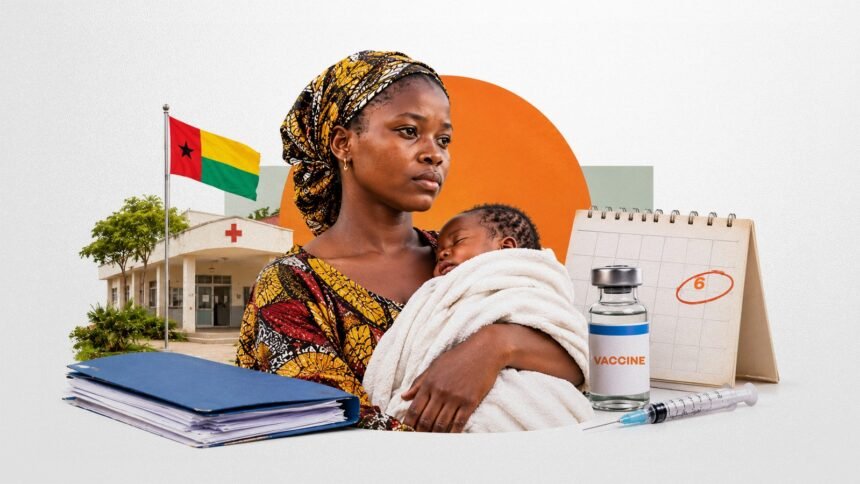
Who gets to decide that thousands of babies in one of the world’s poorest countries should wait six weeks for a shot that more than a hundred other countries give at birth? In Guinea-Bissau, the answer this week came from the government that hosts the trial, not from the funders who paid for it. A proposed United States-funded study of hepatitis B vaccination in newborns has been stopped. Police in mid-October raided the Bandim Health Project in Bissau and seized vaccine batches. A researcher on the team later wrote that the hepatitis B-NSE trial would not move forward because it lacked the necessary governmental approval.
The project had drawn global criticism since it was announced. Critics said it would withhold a World Health Organization-recommended birth dose from half of roughly 14,000 infants for research purposes. The WHO representative in Guinea-Bissau called that design unethical. The researchers said they were not testing whether the vaccine prevents hepatitis B, but whether prevention comes at what they called a “prohibitive price” in other health outcomes. Officials in Bissau have not issued a full public autopsy of the decision. The facts that are on the record are already enough to reopen an old argument about whose children carry the risk in global health experiments.
What the Protocol Would Have Done
The design was straightforward on paper and explosive in practice. One randomly assigned group of newborns would receive a hepatitis B vaccine at birth. The other would receive it at six weeks, the point at which Guinea-Bissau currently includes hepatitis B in its routine schedule, because the country has not yet been able to afford a universal birth dose. Researchers planned to follow health outcomes for five years.
Nearly a fifth of Guinea-Bissau’s 2.2 million people live with hepatitis B. Infants infected at birth are the most likely to develop chronic infection, which can lead to liver failure or liver cancer and kills up to a quarter of those chronically infected, according to figures cited in coverage of the dispute. The WHO recommends a birth dose for all babies, with boosters later. Bissau has been working toward introducing that birth dose for everyone by 2028; officials have also discussed bringing it forward into early 2027.
Bandim argued that the years before a national birth-dose program created a unique research window. Critics answered that the window existed only because the state is poor, and that using poverty as a control arm is not science that wealthy countries would accept for their own newborns.
Who Paid, Who Led, Who Objected
The United States Centers for Disease Control and Prevention awarded about 1.6 million dollars to the University of Southern Denmark under Health Secretary Robert F. Kennedy Jr., who has a long public record of vaccine skepticism. The Bandim Health Project, based in Bissau since 1978 and chaired by scientists Christine Stabell Benn and Peter Aaby, was to run the work. Both have spent decades studying what they describe as unintended effects of vaccines. Danish colleagues have accused them of downplaying or delaying results that do not fit their theses; one older diphtheria-tetanus-pertussis study was published only after a Danish newspaper investigation.
Walter Kazadi Mulombo, the WHO representative in Guinea-Bissau, told interviewers that the agency became concerned after finding no publicly available protocol and after questions poured in. The vaccine, he noted, has been used for more than thirty years in more than 115 countries. Withholding it from newborns in a high-prevalence setting, he said, is unethical. Magda Robalo, a former Guinea-Bissau health minister, said the researchers took advantage of weak local research capacity and a thin critical mass of public health professionals who can parse the politics of global health.
Bissau’s Line, and Denmark’s
Guinea-Bissau paused the project in January and opened a review with Africa CDC and WHO. Health Minister Quinhin Nantote said in October that the Council of Ministers had never lifted the suspension, after media reports suggested the trial might proceed on the back of an updated proposal. “We are outraged because even I, as the minister responsible for this sector, was not informed,” he said. The transitional government that took power after a November coup also said it had not been part of any original approval.
The University of Southern Denmark said its own research ethics committee had given a positive assessment and that a revised protocol had received ethical approval from relevant authorities in Guinea-Bissau, a claim Nantote denied. Dean Jakob Grauslund stressed that university ethics clearance never replaced Bissau’s own authorization, that the trial never started, and that no babies were enrolled. On 19 October, the judicial police seized vaccines at Bandim. Police said the seizure alone did not prove the doses were defective.
An Old Shadow Over New Protocols
Comparisons to the Tuskegee syphilis study in the United States, where treatment was withheld from Black men for decades, have circulated among critics. Researchers reject the analogy and accuse opponents of closing the door on legitimate questions about vaccine effects beyond pathogen prevention. Kennedy has praised the Danish team in the past. A later study by some of the same researchers found no evidence of a previously reported harmful effect, a detail that cuts both ways in the public argument.
What Bissau has done is simpler than the rhetoric. It has refused to host a trial that would randomize delay of a proven birth dose while a national birth-dose program is still being built. That is a sovereign public-health choice, whatever one thinks of Bandim’s scientific curiosity.
Who Sets the Terms of African Trials
African science needs trials, funding and partnerships. It does not need protocols that treat the absence of a service the WHO already recommends as a convenient control group. Guinea-Bissau’s halt, and the police seizure that preceded the researcher’s admission that approval never came, put the decision back where it belongs: with the ministry that answers for Bissau-Guinean children, not with a foreign ethics committee or a grant line in Washington. Real self-determination in health research means African regulators saying no, early, in public, and with the power to make the no stick.