





A Primary Without a Party Left Standing
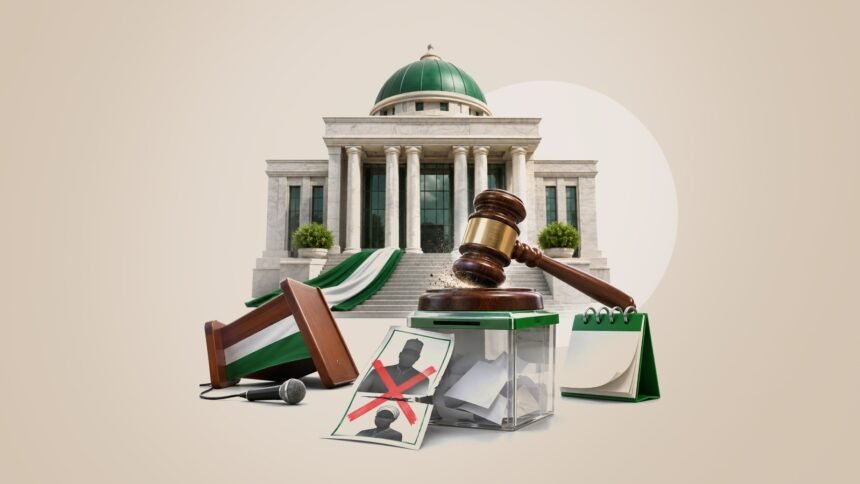
Twenty-nine percent. That was Atiku Abubakar’s share of the presidential vote in 2023, enough for second place and not enough for the villa. On Thursday, a federal high court in Abuja told him that even the chance to try again in January 2027 is, for now, legally void. Judge Peter Lifu sacked the African Democratic Congress leadership under former Senate President David Mark, voided the presidential primary that produced Atiku as flag bearer, and directed the Independent National Electoral Commission not to recognize decisions of the party’s July 2025 National Executive Committee meeting. Every ADC candidate presented to the commission for the 2027 elections was swept out with the leadership.
The judgment lands two months before Nigerians vote and a day after Atiku launched his campaign with a rally in Sokoto. The ADC says it will appeal. Its spokesman called the ruling another attempt to cripple the opposition. A spokesman for President Bola Tinubu’s All Progressives Congress said the ruling party was not involved. Whatever the appeals court eventually holds, the immediate effect is uncertainty for voters who thought they knew at least one major northern name on the ballot.
How a Leadership Fight Became a Ticket Fight
The suit was brought by Nafiu Bala Gombe, a former ADC deputy national chairman for the North-East, who challenged the process by which Mark and others assumed party leadership. Defendants included the ADC, the electoral commission, Mark, national secretary Rauf Aregbesola, and Ralph Nwosu. Lifu held that the Mark-led caretaker committee that ran the presidential primary was illegal. Because the primary sat on that committee, Atiku’s nomination fell with it.
The quarrel is not new. Appellate courts had already wrestled with interim orders over the same leadership fight. In April, the Supreme Court restored Mark’s leadership on an interim basis and sent the case back to the Federal High Court in Abuja to finish what it started. Thursday was that finish, at least at first instance. An appeal will almost certainly climb back toward the Supreme Court before January.
What the Opposition Hears
Bolaji Abdullahi, the ADC spokesman, said the timing was no coincidence. Atiku said the same in his own statement. Earlier this year, the federal government backed a separate suit over the ADC’s eligibility to contest at all. Tinubu spokesman Daniel Bwala told interviewers the APC “is not involved at all” in the leadership case that produced Thursday’s decision.
Also on Thursday, Peter Obi’s party, the other major opposition presidential contender, said its meetings were being disrupted by last-minute hotel cancellations in Abuja and blamed the APC. Bwala denied that too, saying Abuja hotels are privately owned. None of those accusations has been proven in court. Together they sketch the atmosphere in which Thursday’s judgment will be read: every procedural loss looks, to the losing side, like a political siege.
The 2023 Hangover
European Union election observers wrote after the 2023 poll that excessive pre-election litigation exposed pervasive intra-party conflicts. Among at least 1,200 court cases, some were seen as politicized, others too technical, and some overlapped with voting itself, risking trust in the process. Thursday’s ADC ruling fits that pattern with uncomfortable neatness: a party primary, a leadership feud, a high-court order, and a national election eight weeks away.
If Atiku cannot run and no other major northern candidate fills the gap, the presidential field loses a regional balance that Nigerian politics treats as structural, not decorative. Atiku has sought the presidency seven times. On Wednesday in Sokoto, he promised to restore security and to reinstate fuel subsidies as households grind through the cost-of-living shock that followed Tinubu’s reforms. Those pledges are now campaign lines without a confirmed ticket.
INEC, Appeals and the Calendar
The electoral commission validated Atiku’s candidacy before Thursday’s order. It did not immediately comment on the judgment. Lifu’s direction that the commission ignore the Mark-era NEC decisions puts administrators in a bind familiar from past cycles: obey the high court, await the appeal, and try not to reprint ballot papers twice.
For the ADC, the practical question is brutal. An appeal that restores Mark and Atiku before candidate lists lock would leave the party battered but on the ballot. An appeal that fails would leave one of the main vehicles trying to unseat the APC without a presidential nominee and without the slate it filed. Party lawyers say they will move quickly; the calendar may move faster. Either way, January’s voters inherit a contest shaped as much by chambers in Abuja as by rallies in Sokoto.
Who Chooses Nigeria’s Opposition
Courts must settle party disputes; that is not the scandal. The scandal is a calendar in which those disputes still climax inside the final two months before a presidential vote, leaving citizens to guess whether the name they intended to choose will still be printed. Nigerian self-determination at the polls means opposition parties finishing their internal wars early enough that the electorate, not a late judgment, decides who stands. Until that discipline holds, every voided ticket will look, fairly or not, like someone else’s strategy.