
From a Lawyers’ Strike in 2016 to a Separatist Insurgency
In October 2016, lawyers and teachers in Cameroon’s English-speaking Northwest and Southwest regions went on strike. Their complaint was specific: French-speaking judges and teachers were being appointed to courts and schools in Anglophone areas, which they saw as part of a wider marginalization by a Francophone-dominated government. The protests began peacefully, with thousands demanding greater recognition for the English-speaking minority. Rights groups accused the security forces of answering them with excessive force, and critics say that the crackdown helped give birth to an armed separatist movement.
By 2017, a dozen armed groups had emerged, according to the International Crisis Group, seeking independence for the two regions as a breakaway state they call Ambazonia. Nearly ten years on, the conflict has killed at least 6,000 people, according to Human Rights Watch, and forced nearly half a million from their homes, according to UN data published this year. It rarely makes headlines outside Cameroon, yet it is one of Africa’s longest-running crises rooted in a colonial-era language divide, a reminder that borders and languages drawn by former empires still shape who feels represented by the state.
The Night of 7 April 2018
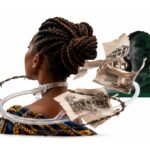
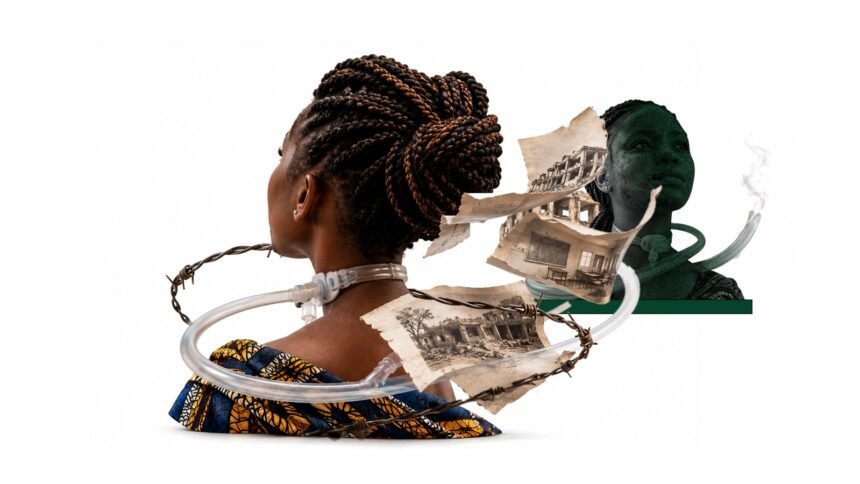
Median Bah was 15 and ill in bed when armed men stormed her family’s compound in the Southwest region on 7 April 2018, shooting indiscriminately. Her brother escaped through a window. Too weak to follow, she went through the door and came face to face with two of the attackers in the backyard. They shot her in the thigh and then fired several more rounds that destroyed much of her face. “I kept pleading with them not to kill me, that I wasn’t feeling well,” she recalls.
Her jawbone was damaged, most of her teeth destroyed, and much of her mouth severely injured. Over eight years, she has undergone at least four reconstructive operations in Cameroon, Ghana and India, with more planned for next year. A tracheostomy kept her breathing through a tube in her neck for eight years; it was only recently removed. Now 23 and still living in Cameroon, she says: “I have defeated death. I don’t think there’s anything that can stop me.”
Abuses on Both Sides
Rights groups have documented serious abuses by both camps. Separatist fighters are accused of targeted killings, kidnappings for ransom, torture, and attacks on schools and other public and private facilities. Government forces face allegations of arbitrary arrest and detention, torture and unlawful killings. Both sides deny the accusations, though each has in some instances acknowledged responsibility for abuses.
Some of the violence that displaced civilians came from soldiers. Glory Akom, 44, a mother of two who lives with a disability from burns unrelated to the conflict, says troops deployed to her area of the Southwest pursued residents into the bush in 2017, forcing them to abandon their homes. “We were sleeping in the bush, as we were always running,” she said. “If you slept in your house, they could kill you there.”
Across the Border in Ogoja
More than 70,000 Cameroonians have sought refuge in neighboring Nigeria, according to the UN refugee agency, UNHCR. Akom now lives in Ogoja, a town in Nigeria’s Cross River State near the border, which hosts about 15,000 refugees across three settlements, according to Richard Effiong of UNHCR. The agency has built brick houses with tin roofs, and Akom relies on $67 a month in UNHCR cash assistance to support her children, one of whom has sickle cell disease and needs regular care. She says the money barely covers food and medical bills, and that her life in Cameroon, where she ran a business, was far better.
Maurine Mangha, 21, fled Akwaya in the Southwest with five relatives after separatist fighters opened fire during celebrations of what they called their independence on 1 October 2017. “They shot a lot of people, and we had no choice but to run into the bush,” she said.
A Generation Kept Out of Class
Schools have been a frontline. A separatist-imposed education boycott in 2017 relied on threats and attacks against schools and against those who defied it. More than 200,000 children are out of school in the conflict regions, and nearly 2,500 learning institutions remain closed, according to UNICEF, citing Cameroonian education authorities. Mangha had already stopped attending school months before she fled. In Nigeria, she won a UNHCR-managed scholarship and now studies microbiology at a polytechnic, but she says she thinks often of friends at home who never got the chance.
Dialogue Again, Grievances Unanswered
The government wants the fighters to lay down their arms. In September, it launched a community dialogue initiative, with Prime Minister Joseph Dion Ngute urging residents in Buea and Bamenda to persuade the separatists that it is time to leave the bush. At both events, nearly 60 people described as former fighters were presented as having surrendered. A similar initiative in 2019 failed. As of November 2026, almost 1,500 former separatist fighters were in disarmament, demobilization and reintegration centers in the two regions, according to an official from the agency running the program. Clovis Naseri, a former commander with the White Tigers of Ribbons group, says many fighters have been killed or have surrendered and abandoned the independence ideology. Attacks nonetheless continue.
Roland Fru, a researcher on the crisis, says the authorities have never shown that they grasp its causes. “I’ve not heard even once the government explain things in such a way that helps me understand that they even understand the problem,” he said. President Paul Biya, in power since 1982, said last November that reconstruction efforts backed by international partners were helping restore normality and praised the security forces’ professionalism.
Whose State, in Whose Language
The Anglophone conflict is at heart a dispute about self-government within an African state: who appoints the judges, who sets the school curriculum, and whether a minority can be heard without taking up arms. Surrenders and dialogue events can reduce the number of fighters, but they do not by themselves answer the grievances of 2016. A durable settlement would need Cameroonians in the Northwest and Southwest to see their own institutions reflected in the state, and accountability for abuses committed by every side.