


West Africa Moves From Drug Corridor to Drug Factory
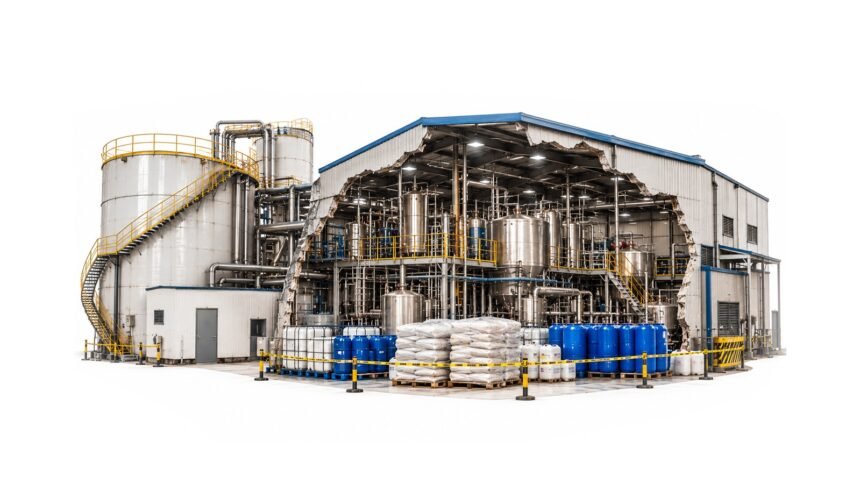
“Nigeria is not your laboratory. It is not your warehouse, and it is not your transit route.” With that warning to foreign cartels, Mohamed Buba Marwa, head of Nigeria’s National Drug Law Enforcement Agency (NDLEA), set out on Wednesday in Abuja the details of the country’s latest methamphetamine bust: an industrial-scale laboratory in the south-eastern state of Enugu, more than 1.5 tonnes of the drug, and five Mexican nationals arrested while, the agency says, they were producing it.
The NDLEA values the seized drugs at $227 million. It is the fourth industrial-scale meth laboratory with alleged links to Mexican cartels found in Nigeria in recent months, after similar sites in Ogun, Oyo and Ebonyi states. The case sits inside a broader shift that worries law enforcement across the region. West Africa has long been a transit corridor for cocaine and other drugs heading elsewhere. Synthetic drugs change that equation, because they can be cooked close to cheap chemicals and new markets, turning a corridor into a factory floor.
Seven Months of Watching
According to the NDLEA, the arrests followed a seven-month investigation involving several countries. The agency began monitoring a 63-year-old Nigerian businessman, Chuks Enoch Ezeike, also known as “Over Size”, in April, after intelligence allegedly linked him to Oscar Ramos-Cardenas, a Mexican national suspected of specializing in large-scale meth production. The agency describes Ramos-Cardenas as the leader of the group. The other four Mexicans it named are Juan Antonio Sarabia-Cabrera, Luis Enrique Garcia-Amador, Jose Alejandro Renteria-Reyes and Salomon Cabanillas-Torres.
Ezeike is accused of setting up the laboratory and smuggling the five men into Nigeria on forged Argentine, Colombian and Chilean passports. The NDLEA says he has admitted owning the laboratory and bringing the Mexicans in to produce the drug. These are the agency’s allegations; it has not said whether the six suspects have been formally charged, and none has yet been tried.
Turned Away in August, Let In on Purpose
The most striking detail in the agency’s account concerns the border. In August, the five Mexicans were refused entry at Abuja’s international airport and sent back to Mexico. Less than a month later they tried again, traveling through Colombia and France to neighboring Benin, where, the NDLEA says, they were given forged passports. This time Nigerian officials deliberately let them in.
“We wanted the whole network: the meth specialist, the financier, the factory and the product. Sending them home a second time would only have postponed the problem,” Marwa said. The men were allegedly met by Ezeike in Lagos and taken to Enugu, where they were kept under surveillance. The laboratory stood behind an oil company and included living quarters, allowing the men to live and work on site without drawing attention.
On 11 November, more than 200 anti-narcotics officers raided the laboratory and a hotel where Ezeike was staying in simultaneous operations. Ezeike told investigators the Mexicans had been due to leave Nigeria two days later. Alongside the finished and in-process drugs, officers seized nearly seven tonnes of chemicals used to make meth and industrial equipment.
A Business Model, Not a Single Gang
Investigators believe the Enugu site was one node in a wider international network in which a Mexican cartel recruits and pays specialist cooks. At the same time, local partners provide premises, cover and logistics. The NDLEA has not named the cartel it suspects. The latest operation brings to ten the number of suspected Mexican meth production specialists arrested in Nigeria in recent months, according to the agency; five arrested in earlier operations are in custody awaiting trial.
Part of the meth produced in the region supplies a growing local market, and traffickers also aim at more lucrative overseas markets, particularly in Europe and Asia. The pattern is not limited to Nigeria. In August, two Mexicans were arrested when police uncovered a large meth laboratory on a farm in South Africa, a sign that the same model of imported expertise and local premises is being tried at both ends of the continent.
What the Enugu Case Tests
Allowing suspects into the country to map a network is a calculated risk, and this time the agency says it paid off. The harder test comes next: whether prosecutors can turn surveillance and seizures into convictions, whether the financiers above Ezeike can be traced, and whether the forged-passport route through Benin can be closed with cooperation from neighbors. Synthetic drug production also leaves a chemical footprint, and seven tonnes of precursors raise questions about how such quantities were imported and stored without earlier detection.
Keeping the Production Line Out
For West African states, the stakes go beyond one laboratory. A region that becomes a production base for transnational cartels risks seeing criminal money shape local politics, policing and public health, as it has elsewhere in the world. Marwa’s message was a statement of national control over territory and borders. Making it stick will depend on regional intelligence sharing, scrutiny of chemical imports, and courts able to see complex cases through, so that decisions about what is made on Nigerian soil stay with Nigerians rather than with distant cartels.