

One of 25 African Agreements Under Washington’s New Health Strategy
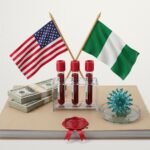
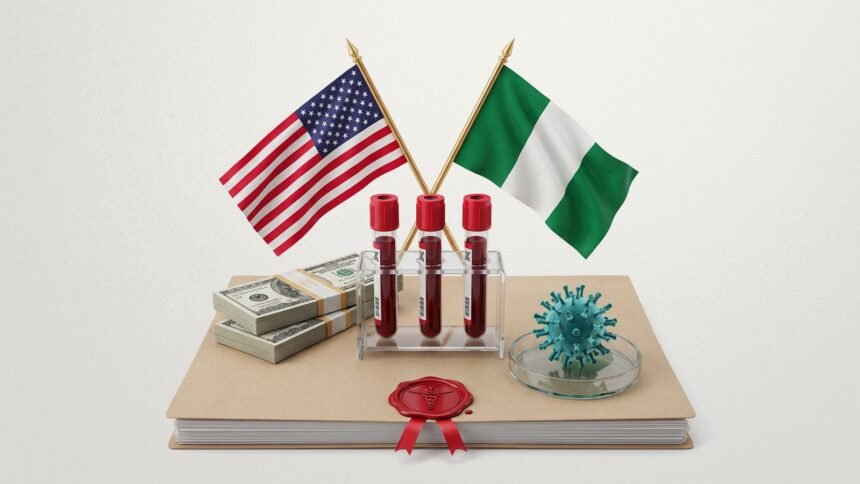
What does a country owe when it accepts $2.08 billion in health aid? For Nigeria, the answer is now on paper, and it reaches well beyond money. Under a five-year memorandum of understanding signed in Abuja on 19 December 2025, and a separate specimen-sharing agreement that entered into force on 18 January 2026, Nigeria must share biological specimens, samples, genetic sequencing data and related information on emerging infectious diseases with the United States, begin doing so within five days of a request, spend about $3 billion more of its own money on health, and open its facilities to American monitoring.
The agreements were signed by Richard Mills, the US ambassador to Nigeria, and Muhammad Pate, Nigeria’s Coordinating Minister of Health and Social Welfare. Their full contents were not public at first. They were briefly posted on the US State Department’s Freedom of Information Act library on 13 March 2026, alongside agreements with Ethiopia, Kenya, Mozambique and Uganda, and removed days later, according to Human Rights Watch. Human Rights Watch and Public Citizen later published copies of Nigeria’s memorandum and the specimen-sharing agreement. A detailed review of those documents, published on Thursday, sets out what each side has promised.
The deal is part of the America First Global Health Strategy released by President Donald Trump’s administration on 18 September 2025, which moves US health aid into bilateral agreements tied to American security, diplomatic and economic interests and requires partner countries to carry more of the cost. As of 8 October 2026, the State Department said it had signed 36 such agreements, 25 of them with African countries. Nigeria’s terms are a test case for the continent.
Samples on Request, and Kept After Exit
The specimen-sharing agreement covers samples and genetic data on new and emerging diseases with epidemic or pandemic potential. Under Article Two, Nigeria must start sharing requested materials within five days of a US request, unless both sides agree otherwise. It may provide sequencing data through a public database instead of or alongside direct transfers.
Nigeria has also agreed that the US government may pass the specimens and data to American non-governmental entities developing diagnostics and medical countermeasures, provided Washington notifies Abuja in writing each time. In return, if products are developed mainly from Nigerian materials, the US shall, subject to available funds and applicable law, facilitate Nigeria’s priority access and may donate relevant countermeasures.
One clause stands out. Article Five states that termination by Nigeria “shall NOT affect the use by the US government of any specimens and related data previously shared under this Agreement”. Leaving the arrangement would stop future transfers, not undo past ones.
A Data Agreement Nobody Outside Has Seen
The main memorandum goes further than specimens. It provides for an integrated digital health information system linking electronic medical records, HIV and tuberculosis databases, laboratory systems and surveillance platforms, with electronic records in 20 percent of facilities in 2026 rising to 100 percent by 2030. It also refers to a separate data-sharing arrangement between the two governments, which suggests that Nigerians’ electronic health data could be shared with the US government.
That separate agreement is not in any of the published copies. Appendix Five, where it is referenced, contains only the words “See attachment” and the marking “NOT FOR PUBLIC RELEASE”. Without it, exactly what categories of personal health information will flow abroad cannot be independently established. The memorandum also allows monitoring visits and audits: Nigeria must give data access or on-site access in up to 5 percent of randomly selected or jointly identified facilities, clinics, laboratories and programs.
A Bill That Shifts to Abuja
The money runs in opposite directions over time. In 2026, the US plans to provide about $501 million against Nigeria’s additional $345 million. By 2030, US assistance falls to about $237 million while Nigeria’s extra contribution rises to about $845 million. If Nigeria falls short, Washington may cut its share: in the agreement’s own 2030 example, if Nigeria adds $720.3 million instead of $845.4 million, US aid could drop by $100 million. Only government-raised funds, including loans, count; donor grants do not.
Nigeria also takes on the people and supplies that US aid has carried. The plan supports 25,696 frontline health worker positions in 2026, declining until Nigeria absorbs them by 2030, and transfers procurement of HIV, tuberculosis, malaria and maternal and child health commodities to Nigeria’s pooled procurement system, Medipool. Minister Pate has said Nigeria’s contribution will stay in the country, support its own priorities and be measured by actual spending rather than budget announcements.
Faith Clinics and a Pending Lawsuit
About 10 percent of US funding, an estimated $208 million, is reserved for faith-based providers. The US Embassy has said this covers about 900 clinics and hospitals, mostly Christian, serving more than 30 percent of the population regardless of religion. The opposition African Democratic Congress asked in January whether the arrangement favored Christian institutions. Pate has maintained that eligible Christian and Muslim providers can both benefit and that no religion is preferred.
A lawyer, Bernard Okpi, has challenged the agreements at the Federal High Court in Abuja, arguing they could breach the National Health Act 2014, the Nigeria Data Protection Act 2023 and the constitutional right to privacy by allowing sensitive health information to leave the country without individual consent. The case is before Justice Peter Lifu and adjourned to February 2027. Pate says the Attorney-General cleared the memorandum and that it is legally non-binding; Section 6.9 states it does not create legal rights or obligations, even as it sets out detailed financial and operational commitments.
Other Capitals Said No
Not every African government accepted similar terms. Zimbabwe withdrew from negotiations in February 2026 over concerns about sensitive health data and biological resources, and Ghana rejected its proposed agreement in April over access to health information.
Who Owns Nigeria’s Biological Data
Pathogen samples and genetic sequences are among the most valuable things a country can hold in an epidemic: they decide who develops the tests and vaccines, and who waits in line for them. Nigeria’s deal offers priority access on paper but leaves the decisive data agreement out of public view and lets past transfers outlive any exit. For a country that is taking over the bill for its own health workers and medicines, the case for parliamentary scrutiny and full publication is strong. Health self-reliance means paying for the system, and it also means deciding, openly and under Nigerian law, who may use what that system collects.