





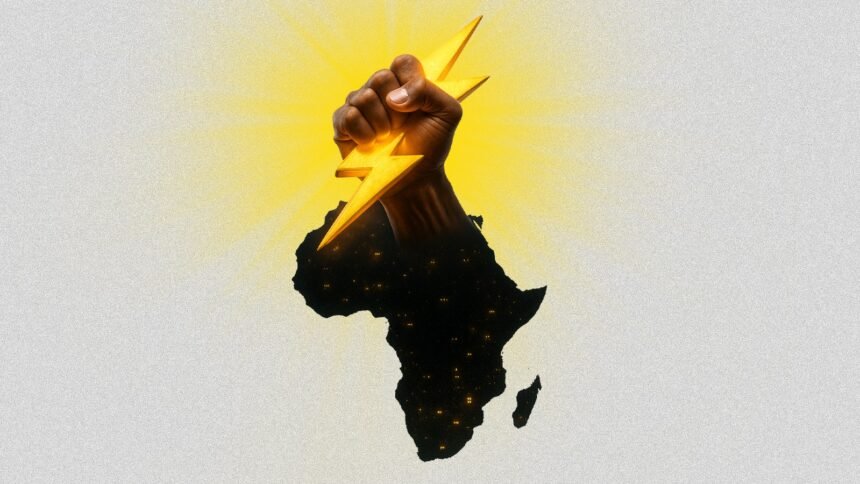
Africa faces pressure to fast-track efforts to provide reliable electricity to 300 million people by 2030, as experts warn that current progress is insufficient to meet the continent’s energy needs. The warning came during Mission 300 Day, a side event of the Africa Investment Forum Market Days, on November 25, where development banks, energy ministries, and private sector players convened to discuss solutions.
Under the theme Powering Africa, Mission 300, driven by the World Bank and the African Development Bank, focuses on Africa because it accounts for nearly 80 per cent of the world’s population without access to electricity.
Launched in 2024 by the World Bank and the African Development Bank, Mission 300 aims to close the continent’s electricity gap, with only 32 million people reached to date. Officials emphasised that scaling up decentralised systems such as mini-grids, enacting consistent policies, and attracting private investment are essential to achieving the ambitious target.
“Technology and financial models already exist. What Africa needs is political commitment and regulatory certainty. Inconsistent rules, slow approval processes, and unclear tariffs continue to impede deployment. At the same time, currency volatility and high financing costs remain critical barriers,” said Demba Tandia, Vice President for Structuring and Sales for Sub-Saharan Africa at TCX, the Currency Exchange Fund.
The event also highlighted the importance of local currency solutions to mobilise domestic savings for infrastructure investment. “Matching revenues with costs in local currency is vital for scaling projects effectively, while still allowing investors to repatriate earnings,” Tandia added.
Several speakers encouraged countries to leapfrog traditional fossil-fuel energy and invest directly in renewable-first electrification, combining solar, mini-hydro, and battery storage. Manoj Sinha, the CEO of Husk Power Systems, said decentralised energy resources could quickly bring power to remote areas while supporting productive economic activities.
“The fastest and most capital-efficient way to also reach remote areas is through decentralised energy resources, which can power both homes and productive activities. The African market allows us to start with 90–95 per cent renewable energy assets, skipping the fossil-fuel stage seen in the Global North,” he said.
Highlighting success stories, Nani Juwara, Minister of Petroleum and Energy in Gambia, pointed to his country’s progress in electrification, which increased access from 1.6 per cent to nearly 100 per cent over 10 years.
“Through our national electrification program, we increased access from just 1.6 per cent to 99.9 per cent in ten years. This shows that these targets can be achieved if we put in the effort. When we talk about energy access, the impact goes beyond megawatts. It’s a catalyst for economic growth,” said Juwara.
Experts underscored that electricity access is closely tied to broader socio-economic development, including digital inclusion, healthcare, and employment for Africa’s growing youth population. Strategic partnerships, innovative financing models, and country-led delivery units were cited as essential to accelerating progress.
Henry Paul Batchi Baldeh, Director of Power Systems Development at the African Development Bank, stressed the importance of financially stable national utilities for regional power integration.
“If the utility cannot pay its bills, there is no functioning national or regional market. National master plans must align with regional master plans to optimise economies of scale and scope. Public projects are significant because the private sector will not easily invest in transmission infrastructure on its own; government-led initiatives are essential to drive regional power integration.”
The partners aim to mobilise $90 billion from development banks, private companies, and philanthropic organisations to support electrification efforts, create jobs, and drive economic growth across Africa.


