




On a blistering afternoon outside Dakar, the solar panels seem endless, a sea of blue glass stretching toward the horizon. Technicians weave between the rows, wiping dust from the modules and checking wiring as the temperature pushes past 40 degrees Celsius. This site, they say, is part of Africa’s clean energy future.
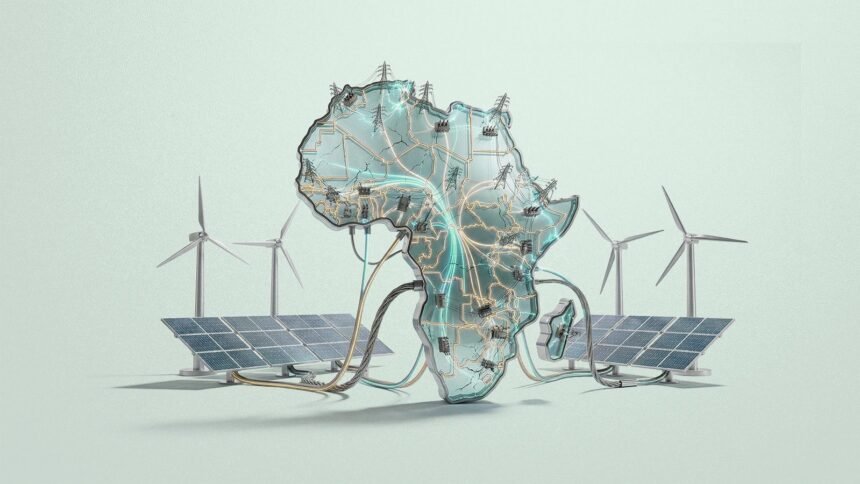
Yet the numbers tell a more sobering story. Recent energy‑transition research suggests that, despite a surge of projects like this one, Africa is unlikely to reach even 50 percent of installed power capacity from renewable sources by the mid‑2030s.
At the same time, carbon capture, utilization, and storage, the technology many see as essential to curb emissions from fossil fuels, remains in its infancy across the continent, with only a handful of projects in early development.
The result is an uncomfortable tension: a region with some of the world’s best solar and wind resources is still on track for a slower, more uneven transition than many had hoped, even as climate impacts intensify.
Background and Stakes
The core question is not whether renewables are coming to Africa; they are, but whether they are coming fast enough and in the right way to transform power systems that have long been underbuilt and deeply unequal.
Over the past decade, African governments have announced ambitious targets, launched competitive auctions for solar and wind power, and opened power markets to greater private investment.
Hydropower has anchored many grids for decades, while new utility‑scale solar parks and onshore wind farms are beginning to change skylines from Morocco to South Africa.
Still, analysts now project that renewable energy will account for approximately 46 percent of Africa’s installed capacity by around 2035, up from less than one‑third today, but still below half.
That shortfall reflects several stubborn constraints identified in recent studies and industry reports:
- Chronic underinvestment in transmission and distribution networks limits the amount of variable renewable power that grids can absorb.
- High financing costs and perceived political and currency risks make capital far more expensive than in wealthier regions.
- Rising electricity demand is being met by both renewables and fossil fuels, rather than clean sources replacing fossil generation.
- The continued political and economic pull of fossil fuels, particularly natural gas, is seen by many governments as vital for industrialization.
For policymakers, the stakes are high. Power plants and grids built in the 2020s will shape emissions, industrial competitiveness, and energy access for decades. Falling short of a renewables‑dominated system could lock in higher‑carbon infrastructure just as the rest of the world races to cut emissions.
Human Stories and Real‑World Examples
In a peri‑urban neighborhood outside Lagos, the energy transition feels less like a sweeping global shift and more like a series of improvisations. Small solar home systems glint from tin roofs, powering a few light bulbs and phone chargers.
Diesel generators rumble to life each evening when the grid goes down, a sound still woven into daily life across much of the continent.
For families here, the promise of renewables is tangible: fewer fumes, less noise, lower costs over time. But the path to scaling up is anything but straightforward. Household systems are paid for in cash or through pay‑as‑you‑go plans, often at interest rates that would shock consumers in Europe or the United States.
Larger solar mini‑grids that could power small industries face licensing delays, uncertain tariffs, and weak local distribution networks.
Elsewhere, in North Africa, vast solar complexes feed power into national grids and feature prominently in plans to produce green hydrogen for export. These showcase projects appear in glossy brochures and at global climate summits.
Yet many rural communities nearby still rely on unreliable supply or are not connected at all, underscoring the persistent access gap in a region where hundreds of millions of people lack reliable electricity.
On the fossil side, workers in gas‑rich regions of Mozambique or Senegal watch as new pipelines, liquefied natural gas plants, and gas‑fired power stations promise jobs and revenue.
Officials describe gas as a “transition fuel” that can stabilize grids and support factories, echoing a broader African position that natural gas and other low‑carbon fuels will play a “crucial role” in expanding modern energy access in the short to medium term. For them, pressure from rich countries to “skip” gas altogether can sound like a demand for permanent underdevelopment.
Policy Debate and Expert Views
This is where the politics of the energy transition in Africa become most fraught. Many African leaders argue that the continent, which has contributed the least to historical emissions, should not be bound to the same rapid phase‑out pathways as industrialized economies.
They insist on a “just transition” that prioritizes energy access, jobs, and economic diversification, and official positions repeatedly emphasize that Africa will “deploy all forms of its abundant energy resources,” including gas and nuclear, alongside renewables.
Critics counter that large new investments in fossil fuel infrastructure risk creating stranded assets and undermining global climate goals. They note that solar and wind are now often the cheapest forms of new power generation, and that Africa’s world‑class resources could anchor new green industries if grids, regulations, and finance catch up.
CCUS sits uneasily in the middle of this debate. On paper, Africa’s oil and gas basins offer significant potential to store captured carbon dioxide underground.
In practice, according to recent industry research, CCUS deployment across the continent remains “nascent,” with only a small number of projects in development, mostly at the early‑stage study stage linked to specific industrial sites.
High costs, unclear carbon pricing, limited technical capacity, and regulatory uncertainty all slow deployment.
Some industry voices promote CCUS as a way to “clean up” fossil fuels and preserve their role in the energy mix. Many climate advocates, however, worry that leaning too heavily on a technology that is still marginal in Africa could delay more urgent work:
scaling renewables, improving efficiency, and expanding access. They argue that scarce public and concessional finance should first support proven solutions that cut emissions and deliver power today.
What Comes Next
The trajectory is not fixed. Analysts say that with cheaper finance, stronger regional power pools, and more investment in transmission, storage, and grid management, Africa could move closer to, or eventually surpass, the 50 percent renewable‑capacity mark in the decades ahead. Strategic, targeted use of CCUS for hard‑to‑abate industrial sectors, rather than as a blanket lifeline for fossil fuels, could also play a role.
But time matters. Every gas plant built without a clear plan for eventual decarbonization, every delayed grid upgrade, narrows future options. Every village that remains in the dark or dependent on diesel is a reminder that the transition is not only about gigawatts and percentages, but also about people’s health, livelihoods, and dignity.
Back at the solar field in Senegal, the sun begins to drop, casting long shadows over the panels. The site manager watches as output peaks, then starts to fall, and diesel units elsewhere in the grid prepare to ramp up. The promise of a cleaner, more resilient energy system is right there, shimmering in the late‑afternoon heat.
Whether it becomes the norm rather than the exception will depend on choices made far beyond these rows of glass and steel, in cabinet rooms, boardrooms, and negotiation halls, in and outside Africa.