





The Pan-African Paradigm of Energy Sovereignty and Structural Leverage
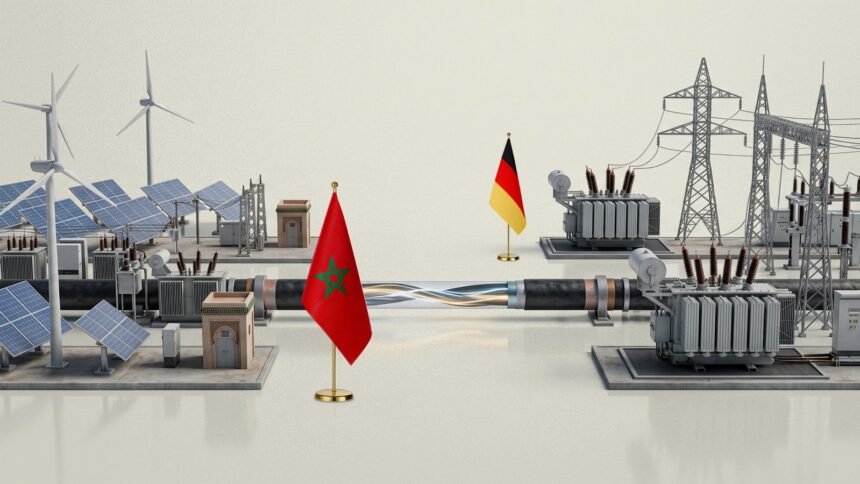
Across the African landscape, the question of who controls the continent’s abundant renewable resources has moved from technical footnote to geopolitical centerpiece. Morocco’s ambition to become the anchor of a transcontinental power architecture linking Rabat’s deserts to Berlin’s grid represents the latest and most consequential test of this paradigm. The proposed Sila Atlantik project, a $30 billion, 4,800-kilometer subsea cable system capable of delivering up to 5% of Germany’s annual electricity demand, is not merely an infrastructure play. It is a referendum on whether African nations will supply the raw materials for Europe’s energy transition on terms dictated by Brussels and Berlin, or insist on structural parity: binding intergovernmental guarantees, bidirectional flows, and long-term state backing that treats Morocco as a co-architect rather than a mere exporter. The stalling of talks over governance and reciprocity is, in this reading, less a bureaucratic hiccup than an assertion of sovereignty. As European capitals scramble to diversify away from fossil fuels and geopolitically exposed suppliers, Morocco’s insistence on formal state-to-state commitments signals a broader continental recalibration: Africa’s energy wealth will no longer be extracted through informal understanding, but negotiated through institutional architecture that safeguards long-term national interest and reclaims the continent’s leverage over its own resource trajectory.
Structural Sovereignty and the Guarantee Impasse
At the center of the Sila Atlantik dispute lies a demand that goes to the heart of structural sovereignty: Moroccan officials, according to four sources familiar with the negotiations, are pressing Berlin to formally endorse an intergovernmental agreement rather than rely on the informal commercial assurances that underpinned the now-collapsed Xlinks proposal with the United Kingdom. This is a deliberate architecture of protection, ensuring that a $30 billion infrastructure commitment cannot evaporate on the whims of political weather in either capital. Sila Atlantik, the German entity created to steward the project following Xlinks’ collapse a year ago, has publicly maintained that discussions are “progressing in line with its technical, commercial, regulatory and financial roadmap,” language that studiously avoids confirming the depth of the impasse. Yet the reluctance of Moroccan authorities to allocate the 150,000 hectares in the Guelmim-Oued Noun region, previously promised to Xlinks, until firmer guarantees materialize, illustrates the tangible cost of ambiguity. This is sovereignty exercised through patience: land, and the leverage it represents, withheld until the institutional scaffolding matches the scale of the ask.
The Bidirectional Demand and Africa’s Energy Trajectory
Perhaps the most structurally significant element of Morocco’s negotiating posture is its push for a two-way cable, rejecting the export-only model that has historically defined Africa’s role in global energy architecture. A German source conceded the reversal is “technically feasible, but economically… more costly,” an admission that reframes the entire negotiation. Morocco is not simply offering excess solar and wind capacity for sale; it is insisting that the infrastructure itself be built to serve Moroccan energy security as much as German demand, a recalibration of the traditional asymmetric relationship between African producers and European consumers of clean power. This bidirectional insistence echoes a wider continental trend, visible also in Morocco’s expanding web of interconnections, a planned 700-megawatt link with Spain, a Portugal connection potentially requiring 735 million euros, and prospective ties to France, all coalescing under the EU’s T-MED program, which aims to mobilize 25 billion euros for renewable cooperation. Morocco’s existing interconnection with Spain, which proved critical during Madrid’s major blackout last year, already demonstrates the strategic value Rabat commands. The push for reciprocity across all these ventures suggests a template: Africa as indispensable partner, not passive conduit.
Regional Ripple Effects and the Guelmim-Oued Noun Question
The stalled negotiations carry consequences far beyond Rabat and Berlin’s negotiating rooms. Southern Morocco’s Guelmim-Oued Noun region, an arid expanse identified for massive solar and wind buildout, has effectively become a bellwether for the country’s broader renewable energy trajectory. A senior regional official’s confirmation that land allocation remains frozen pending clearer commitments underscores how local development, jobs, infrastructure, and the promise of an export economy hinge on decisions made in distant capitals. This dynamic reflects a familiar continental tension: the gap between the macro-level diplomacy of sovereign energy deals and the lived, granular reality of communities awaiting the material benefits those deals are meant to deliver. Morocco’s Energy Ministry, for its part, has emphasized that “regional integration is a key pillar” of its energy transition strategy, gesturing toward a multi-partner future that extends well beyond any single German relationship, a hedge that itself signals confidence in Morocco’s structural bargaining position, even as the flagship deal with Berlin remains unresolved.
Reclaiming the Continental Grid
As the Sila Atlantik saga continues to unfold, it stands as an instructive case study in the evolving architecture of Afro-European energy relations. Morocco’s refusal to finalize a landmark agreement without ironclad guarantees signals a continent increasingly unwilling to accept legacy terms of engagement, however lucrative the headline figures. The outcome of these negotiations will likely inform how other African nations structure their own future dealings with resource-hungry partners abroad. What emerges from Rabat’s current standoff with Berlin is not simply a story about cables and kilowatts, but about the slow, deliberate construction of a new paradigm in which African nations negotiate from a position of structural parity rather than historical deference. Whether Sila Atlantik ultimately proceeds as originally envisioned, is renegotiated into a bidirectional partnership, or collapses like Xlinks before it, the episode will be remembered as a marker of Africa’s growing insistence on reclaiming sovereignty over the terms, not just the substance, of its continental energy future.