



I have lost count of how many times I have heard the phrase “Africa is rising” over the last decade. It tends to surface in glossy investment decks, donor conferences, and airport lounges more than in the ministries where hard fiscal choices are made.
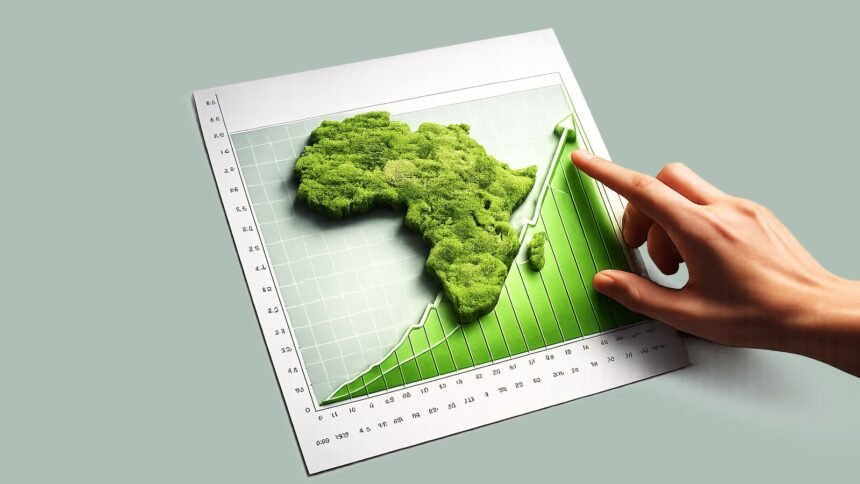
But when the African Development Bank quietly released its latest Macroeconomic Performance and Outlook for 2026, the numbers did not sound like recycled optimism. They pointed to something real: African growth stabilizing above 4 percent, inching higher in 2027, and a dozen economies among the fastest‑growing in the world.
I have seen versions of this story before, from Accra to Addis Ababa. Construction cranes move, tech hubs buzz, bond roadshows fill hotel ballrooms. Then a shock hits commodity prices collapse, a currency slides, a conflict erupts, and the narrative swings back to fragility.
What feels different in this AfDB outlook is not just the 4.3 percent growth projection, but the explicit admission that Africa is expanding in “choppy waters”: wars shaping energy prices, tightening global credit, and climate‑amplified floods and droughts. The continent is not growing because the world is benign; it is growing despite the world.
This story matters now because African governments are reaching an inflection point: they can no longer finance resilience on external goodwill while pretending that domestic politics are incidental to economics.
The AfDB report frames this moment bluntly through three levers, fiscal discipline, domestic revenue mobilization, and regional integration, that will decide whether this growth cycle hardens into transformation or fades into another lost opportunity.
I argue that the politics of these three levers, who pays tax, who loses subsidies, and who benefits from integration, will do more to shape Africa’s economic future than any headline GDP figure the AfDB publishes. Growth is now the backdrop, not the plot. The plot is whether African leaders are willing to spend political capital on reforms that are good for the continent but uncomfortable for their coalitions.
Africa’s Growth Rebound and Its Uncomfortable Foundations
Walk into a finance ministry in Lagos, Nairobi, or Dakar this year, and you will likely find two contradictory moods. On the one hand, technocrats point proudly to improved growth numbers, revived sectors, and new investments in digital infrastructure, energy, and logistics.
On the other hand, they quietly worry about debt‑service schedules, currency pressures, and rising subsidy bills that crowd out social spending. The AfDB outlook captures that tension neatly: Africa is resilient, but its fiscal buffers are thin, and its room to maneuver is shrinking.
The foundations of this growth rebound are uneven but visible. I have watched African services sectors, from fintech in Kenya to creative industries in Nigeria and tourism rebounds in Rwanda, pull economies forward while older commodity‑based models falter. Manufacturing clusters are emerging around industrial parks in Ethiopia and automotive and battery value chains in countries like Morocco and South Africa.
Agriculture, for all its vulnerabilities, is still the largest employer and a crucial anchor in countries from Côte d’Ivoire to Tanzania. This mix helps explain why the AfDB can talk credibly about a continent outpacing global growth in the medium term.
But resilience is not immunity. Many governments entered this cycle carrying heavy debt loads accumulated during the previous decade of low global interest rates. Pandemic‑era spending and subsequent crises deepened those obligations.
Now, higher global borrowing costs mean every new Eurobond or syndicated loan is more expensive, and every rollover is a political choice between schools and debt service, between clinics and prestige projects. I have sat in closed‑door meetings where ministers openly admit that their economic strategy is to “buy time” until conditions improve.
This is why the AfDB’s insistence on fiscal discipline and debt management is not technocratic nagging; it is a survival plan. I do not interpret discipline as austerity for its own sake. I interpret it as a call to reorder priorities: cutting wasteful, politically convenient spending so that scarce resources can flow into infrastructure, health, and education.
The quiet scandal of African public finance is not only that there is too little money, but that what exists is too often misallocated to protect political incumbents rather than future generations.
Ground‑Level Realities
When I travel across the continent, the phrase “domestic revenue mobilization” feels remote to the people it ultimately touches. In a Nairobi informal settlement, it means a street vendor is asked to pay new levies while still bribing local officials.
In a Lagos market, it is the small trader who suddenly finds that digital tax systems make it harder to evade payments but do not yet make government more accountable. This is the lived interface where the AfDB’s policy language collides with everyday African reality.
I believe that how governments approach taxation in the coming years will be a litmus test of their social contract. Raising more revenue by squeezing the informal sector and consumption taxes alone will deepen resentment and widen inequality.
Expanding the tax base into politically sensitive zones, landowners in booming cities, high‑net‑worth individuals, and profitable sectors that enjoy exemptions requires a different kind of courage. I have watched parliaments quietly shelve such reforms when they threaten powerful interests. The risk is that African states become better at taxing the powerless than the powerful.
Regional integration, meanwhile, looks very different from the vantage point of a border post or a small factory. At an ECOWAS crossing between Ghana and Togo, truck drivers still lose days to paperwork, informal payments, and overlapping regulations that make a mockery of trade protocols.
Yet in conversations with manufacturers in East Africa, I hear genuine enthusiasm for the promise of larger regional markets, especially under the African Continental Free Trade Area. They know scale is their only route to competing with imports from Asia or Europe.
Across these ground‑level realities runs a common thread: the benefits of reform are rarely immediate or visible, while the costs are concentrated and politically noisy. Removing fuel subsidies in Nigeria, rationalizing electricity tariffs in South Africa, or formalizing cross‑border trade in the Sahel creates losers who can mobilize quickly, from transport unions to middle‑class commuters.
The winners, future businesses, future workers, future taxpayers, have no lobby. The question is whether leaders are willing to govern for constituencies that do not yet exist.
Policy Fault Lines
The AfDB’s triptych of recommended actions, fiscal discipline, better revenue, and deeper integration, sounds technocratic on paper.
On the ground, each point maps directly onto political fault lines. I have seen governments celebrate macro‑stability in international forums while quietly reversing reforms at home under pressure from street protests or elections. The problem is not that African leaders do not understand what needs to be done; it is that their time horizons are shorter than the reforms they are asked to own.
On fiscal policy, I argue that the central fault line is not simply between spending and cutting, but between transparency and opacity. When citizens can see where money goes, discipline becomes a shared project rather than a demand from lenders or regional banks.
When budgets are negotiated behind closed doors, the easiest cuts are those that hurt the least organized: rural clinics, teacher recruitment, and maintenance of public infrastructure. The unforgiving truth of African public finance is that opacity is itself a form of taxation on the poor.
Revenue mobilization exposes another fault line: between narrow political bargains and inclusive growth. It is easier to raise VAT than to redesign property taxes in urban areas where politically connected landlords own swathes of real estate.
It is simpler to introduce new fees on small businesses than to close loopholes that benefit import cartels. I have watched this pattern repeat from Lusaka to Kampala. If domestic revenue reforms follow this path again, the AfDB’s call will produce numbers on spreadsheets but not legitimacy in society.
Regional integration reveals perhaps the deepest divide of all: between national political survival and continental economic logic. The AfCFTA makes perfect sense on slides in conference halls in Addis Ababa or Johannesburg.
Yet when a government fears losing customs revenues, local jobs, or political control, non‑tariff barriers creep back in under different names. I have seen trucks stuck at borders not because regional rules are absent, but because national politics remains stronger than continental commitments. The hidden reality is that Africa often negotiates integration in public while renegotiating protection in private.
As I look across the continent, from Morocco’s bet on industrial value chains to Kenya’s digital finance experiment and Ghana’s debt restructuring struggles, I see the same question repeating: will African leaders treat this growth moment as a cushion to avoid change, or as cover to implement it?
In the end, the AfDB’s projections are not a guarantee; they are a conditional offer. Africa can grow through this turbulent decade, but only if it aligns its politics with its economics. The next five years will show whether this is another fleeting cycle or the start of a more durable continental shift.
The strategic question I keep coming back to is simple: who in Africa will spend political capital now so that a future they may never personally govern can inherit an economy that is not just bigger, but fairer and more shock‑resilient?