



The Pan-African Paradigm of Donor Dependency and Bodily Self-Determination
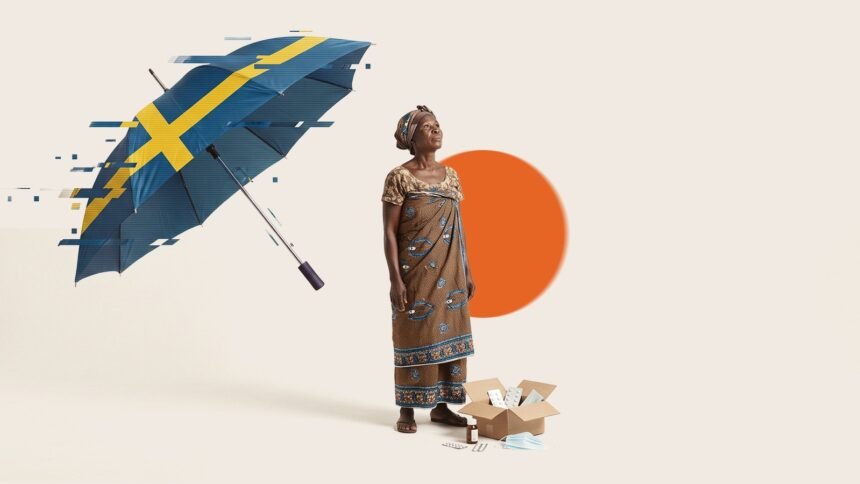
What does bodily sovereignty mean for a woman whose access to contraception depends on a line item in a foreign ministry’s budget half a continent away? Liberia’s experience since 31 August 2026, watching Sweden lower its flag on a partnership that began in 1961 and deepened dramatically after the civil wars, exposes the fragility of a continental health and rights architecture built substantially on rotating external patronage. Sweden was not a marginal donor: it was Liberia’s second-largest, after the United States, and its most vocal champion of gender equality and sexual and reproductive health and rights. Its departure, compounding the earlier dismantling of USAID that has already emptied clinic shelves of contraceptives, forces an uncomfortable continental question: can reproductive and gender-based-violence services survive when they are structured as line items in a donor’s foreign policy rather than as an institutional right undergirded by domestic revenue and law? Liberia’s answer, still being written by advocates in Monrovia and Margibi, will test whether reclaiming reproductive sovereignty is possible when the money leaves faster than the mission does.
A Departure Two Decades in the Making
The scale of what is ending on 31 August is easy to understate. Sweden’s development partnership with Liberia, formalized in 2008 in the aftermath of back-to-back civil wars, channeled more than 5.77 billion Swedish kronor, roughly £445 million, into infrastructure, democratic institutions, humanitarian response, and natural resource management over nearly two decades. It was an early and consistent backer of Liberia’s post-war recovery and played a substantial role in the response to the 2014-2016 Ebola epidemic that devastated the region. Above all, Sweden became Liberia’s most vocal institutional champion of gender equality and sexual and reproductive health and rights, with more than a quarter of its 2025 aid allocation directed toward women’s rights, family planning, HIV care, and programs addressing gender-based violence; by the Swedish government’s own account, 78 percent of its Liberia portfolio carried at least one gender-responsive target as of 2023. The government’s official explanation for the closure cites a reallocation of resources toward what it has termed the greatest security challenge of the era, a reference to continued support for Ukraine. Whatever the merits of that European calculus, its downstream effect in Monrovia is to remove, virtually overnight, one of the few sustained external anchors for a rights agenda that Liberia’s own domestic budget has never come close to funding independently.
The Human Cost Measured in Clinics, Not Communiqués
The practical consequences are already visible in the organizations Sweden funded. The Amplifying Rights Network, a coalition of ten Liberian civil society groups working to expand access to family planning and rights education, retains a bridging grant that will cover roughly eighteen months of operations before its financial future becomes uncertain, according to the coalition’s leadership. The Promotion of Women’s Power and Rights in Liberia project, run by the Swedish organization Kvinna till Kvinna and considered among the country’s most consequential women’s rights initiatives, will not see its funding renewed. Over five years, the project reached more than 16,000 women across nine counties. It supported over 400 survivors of gender-based violence in securing some measure of justice, according to its country director. Advocates working on sexuality education describe Sweden’s exit as a loss that extends beyond money: Swedish diplomats and agencies were, in the assessment of local rights organizers, among the few international partners willing to publicly defend contested positions such as bodily autonomy and the right to choose, lending political cover to Liberian activists operating in a conservative domestic environment.
The Arithmetic of Unsafe Abortion
The stakes of this withdrawal are inseparable from Liberia’s underlying demographic and legal reality. Liberia remains one of the world’s poorest countries, its social fabric still marked by two civil wars between 1989 and 2003 that killed an estimated 250,000 people and normalized sexual violence with near-total impunity for perpetrators. Against that backdrop, one study found that 46 percent of pregnancies in the country are unwanted, and roughly a third of those end in abortion, procedures that remain severely restricted under Liberian law, permitted only in narrow circumstances such as rape, incest, threats to the mother’s life or health, or severe foetal defects, and even then requiring sign-off from two doctors that is frequently impossible for poor or rural women to obtain in practice. An estimated 38,000 illegal abortions occur annually, accounting for an estimated 10 to 15 percent of the country’s maternal deaths, a figure rights advocates believe understates the true toll because abortion-related deaths are often recorded under other causes. At a single clinic in Marshall, Margibi County, which sees up to 100 women and girls daily for family planning, antenatal care, and HIV treatment, staff report treating at least ten cases of complications from unsafe abortion every month, disproportionately among girls under eighteen with limited power to negotiate contraceptive use within their relationships.
A Legislative Battleground: The Public Health Bill and Its Opponents
The immediate political fight now centers on Liberia’s proposed public health bill, sweeping legislation covering pandemic preparedness, vaccination policy, and nutrition alongside two of its most contested provisions: legalizing abortion up to eighteen weeks and mandating comprehensive sexuality education in schools. In June, the Amplifying Rights Network organized a two-day youth gathering in Monrovia that drew hundreds of participants for discussion, music, and advocacy, timed deliberately to counter a rival conference held at the same moment at the capital’s ministerial complex. That gathering, convened by the Church of Jesus Christ of Latter-day Saints under the banner of family strengthening, featured arguments from a US-based lobby group disputing the effectiveness of comprehensive sexuality education in reducing teenage pregnancy, claims Liberian rights advocates publicly characterized as dangerously misleading and designed to dismantle protections against exploitation and abuse. With Sweden’s funding and political backing now withdrawn, Liberian advocates face this legislative battle with considerably less institutional weight behind them, at precisely the moment the bill’s fate is being decided.
Toward a Sovereignty That Funds Its Own Rights
Liberia’s predicament crystallizes a challenge facing reproductive and gender-rights movements across the continent: agendas built substantially on the generosity of shifting foreign budgets remain permanently vulnerable to decisions made in capitals with no accountability to the communities affected. Reclaiming genuine reproductive sovereignty will require Liberia, and states like it, to begin treating sexual and reproductive healthcare as a domestically financed institutional right rather than a donor-dependent program subject to the fortunes of European security budgets or the political theology of visiting lobbyists. That transition cannot happen overnight, and the immediate gap left by Sweden’s departure will be measured in clinics without contraceptives and survivors without recourse. But the longer-term project, for Liberia and the wider region, is unmistakable: building health and rights infrastructure resilient enough that no single donor’s exit can determine whether a woman in Margibi County receives the care she needs.